TheBestEOR

Best Employer of Record in Brazil

Written by Lucia AparicioFact-checked by Michael Ennis
Picture of Lucia Aparicio
Lucia Aparicio

Senior Editor and HRIS Specialist

Our top employer of record in Brazil for 2026 is RemotePeople, from USD 499 per employee a month, ahead of Deel and Rippling.

We tested all 10 providers with paid client accounts, real quotes and a live hire run through payroll. Brazilian employees receive a 13th salary each year plus an extra 1/3 of vacation pay, and employers add social security, a severance fund and work risk charges.

Flag of Brazil

Hiring in Brazil at a glance

Currency
BRL
Brazilian real
Pay cycle
Monthly
By the 5th business day of the following month
Working hours
44 hours
Max 8 a day, overtime paid separately
Annual leave
30 days
Calendar days after 12 months, absences can reduce it
Extra pay
13th salary
Plus an extra 1/3 of vacation pay on leave
Employer costs
Social security
Plus severance fund and work risk charges
Before you hire:
Ask which union agreement covers the role and when the EOR collects 13th salary and vacation funds.

Country hiring overview · Brazil

Hiring in Brazil, at a glance.

Compare payroll costs, extra salary and the exit terms.

Brazil has its own employer charges and obligations by law for a registered employee. The main ones include social security (INSS), 13th salary, vacations, tax deductions (IRRF), employee severance fund (FGTS) and others.

I compare published fees, employment arrangements, onboarding and visa sponsorship with those obligations in mind.

An Employer of Record (EOR) in Brazil has its own legal entity or a local partner that employs the staff there so you can hire without opening a local entity. The EOR runs monthly payroll, pays national social security contributions (INSS) and FGTS severance deposits, deducts income tax (IRRF) from the employee’s salary, reports to the government through eSocial and pays the 13th salary and vacation bonus.

Choose a hiring solution

Need a local employer?

Compare an EOR arrangement for your role before opening your own entity.

Already have a local employer?

Compare payroll and HR support against adding an EOR.

EOR service fee

Fees vary by provider.

Your quote should state the currency, fee per employee, minimum charge and billing commitment.

Onboarding

Paperwork affects the start date.

The contract, right-to-work checks, registrations and payroll deadlines all affect when employment can begin.

Employment costs

Include salary and leave costs.

INSS social security, FGTS severance-fund contributions and insurance add to the employment budget. The quote should also show amounts set aside for salary and leave payments.

Annual leave

Leave can reach 30 calendar days.

The general CLT entitlement is up to 30 calendar days after 12 months of service. Unexcused absences can reduce the allowance.

Check before choosing

When choosing an EOR provider, check how they manage the 13th salary (Brazil law requires it to be paid in two halves), their onboarding times, vacation payments, local reporting and which entity will sign the required local documentation. Some questions for the 13th salary could be: when they charge it, whether they charge it all before or after the first half, all at once after the second half, or in another way.

Also compare onboarding times from contract to first payroll, so you can plan start dates around the provider’s timing.

What your quote should include

Employment costs and service fees

1
Gross salary and agreed pay schedule
2
INSS, FGTS, insurance and salary/leave accruals
3
EOR fee: currency, per-employee billing, minimums and commitment
4
Setup, foreign exchange, extras and exit costs

Deposits and payroll funding

1
Amount and payment deadline
2
Whether funds are refundable or credited to payroll
3
Release conditions and refund timing
Show these separately from recurring expenses.

Key takeaways for hiring in Brazil

Check which obligations stay with you

The EOR is the employer, but a covered outsourcing arrangement can leave the client subsidiarily liable for employment obligations arising during the service. Have the proposal identify the actual arrangement and the documents the employer supplies to demonstrate payment.

Budget a payment calendar as well as a monthly average

Cash requirements peak during the year: vacation remuneration is due before leave begins, and the thirteenth salary has its own payment calendar. Ask for a twelve-month funding schedule that shows accrued reserves, actual payments and any remaining balance when employment ends.

Count thirteenth salary month by month

For the proportional thirteenth salary, a month with at least fifteen days of service counts as a complete month. A mid-month joiner therefore needs a month-by-month calculation, not an automatic annual fraction based only on the start month.

Recalculate notice before using the exit example

For a dismissal requiring proportional notice after three completed years, the statutory calculation is thirty days plus nine, or thirty-nine days. At the example’s R$10,000 monthly salary, that notice component is R$13,000. Recalculate the remaining settlement using the actual service dates and payroll records before treating the illustration as an exit quote.

Agree leave early enough to fund it

The employer communicates the dates in advance and pays vacation remuneration before the leave starts. Build that process into approval workflows so a manager’s late approval does not leave payroll trying to make an overdue payment.

Global shortlist

What is the best EOR in Brazil?

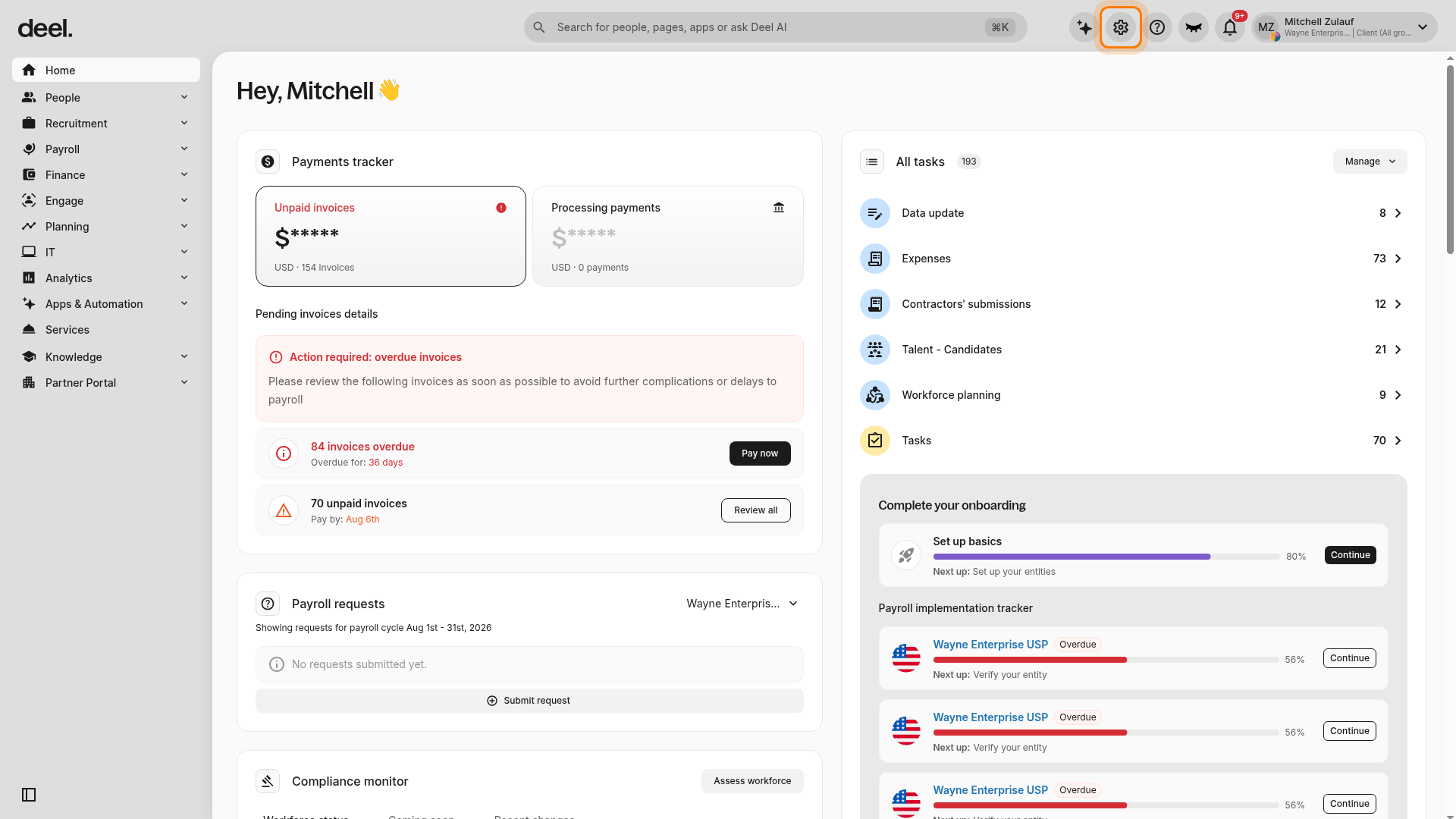
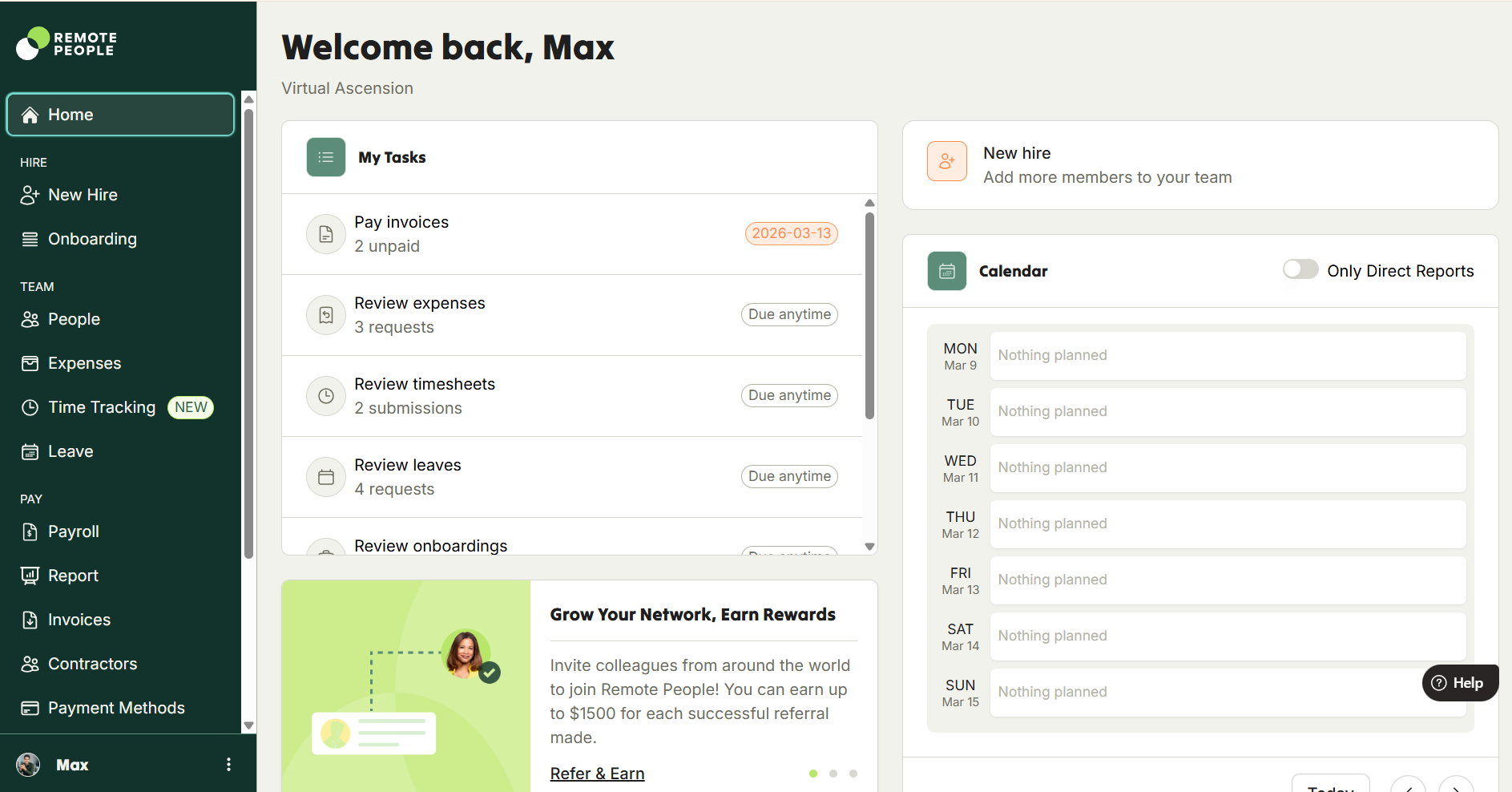
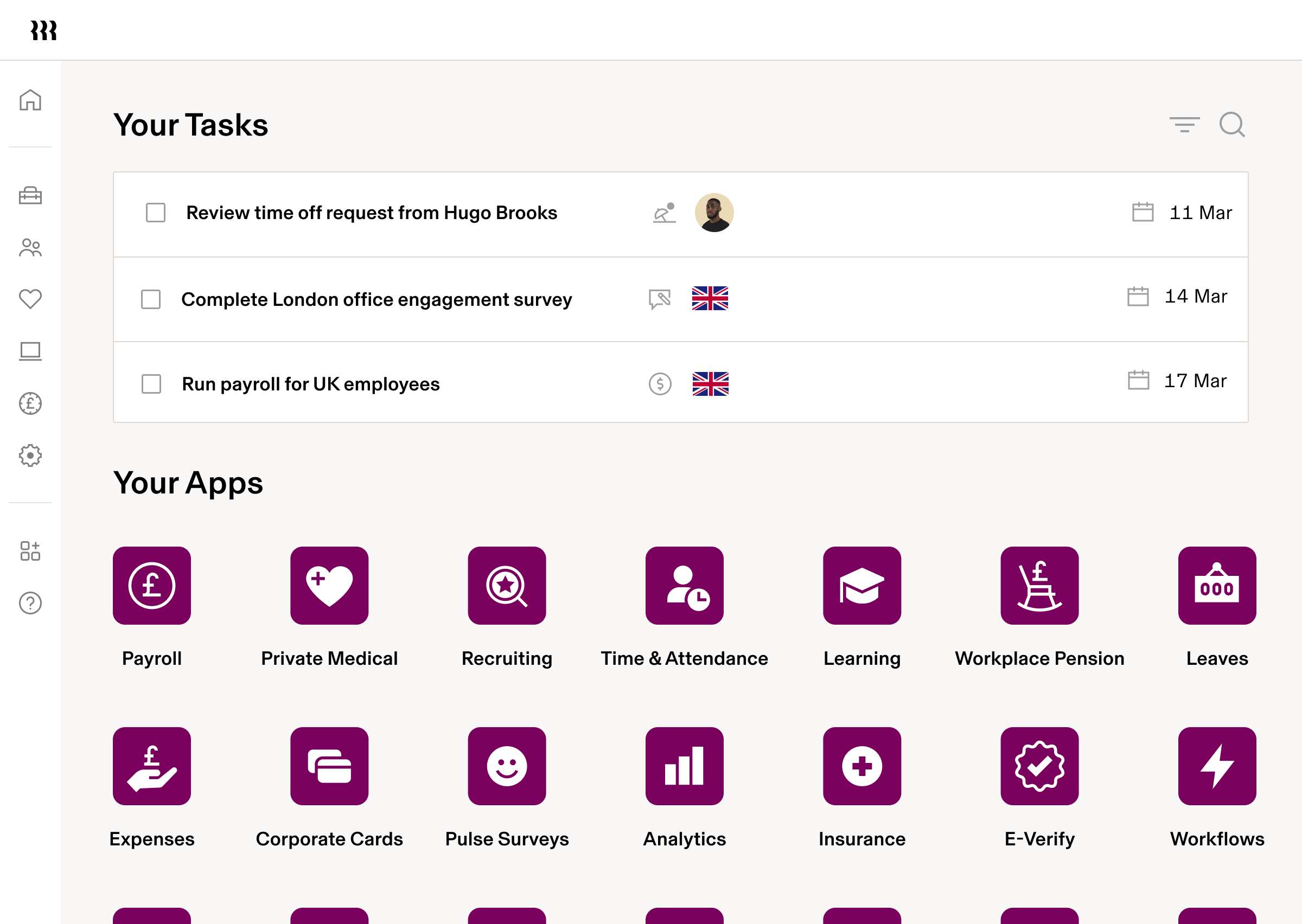
My top three: Deel, RemotePeople and Rippling.

For Brazil, start with the service you need. Compare Deel when you want EOR, contractor and payroll services across countries; RemotePeople when you want a named account contact and may also need recruitment; and Rippling when the employee should join an HR and IT system you already use. The detailed comparison below explains other options and their tradeoffs.

Ask every shortlisted provider for the Brazilian employer’s name, the applicable collective agreement, the local support contact and an itemised twelve-month quote. Compare gross salary, employer charges, 13th salary, the vacation supplement, benefits and the EOR fee, then check deposits, foreign exchange and exit costs separately. The Brazil cost example below shows the structure of that budget; its payroll assumptions are an illustration, not a rate that applies to every employer.

1
Deel logo

4.7/5

Deel

Paying employees and contractors on one platform

Starting fee
$599

per employee / month

Countries
130+
where you can hire

Plus a mandatory Employer Liability Cost.

Deposit
1–1.5 months

of gross salary

Deposit refund
Within 60 days

of offboarding

Why consider it

EOR, contractor management and payroll for your own entities.

Month-to-month EOR service pricing available.

Check the fit

Ask for the country-specific Employer Liability Cost in your quote; it is mandatory.

Before signing: Confirm the Employer Liability Cost amount, benefit costs and any additional products. Employment notice, severance and other exit obligations still apply under monthly service terms.

The EOR pricing page lists 130+ countries. Broader platform coverage figures may include other services.

Legal employer in Brazil
✓ Verified on register

Employing entity
Deel Brasil Assessoria Empresarial Ltda, São Paulo
CNPJ 41.741.209/0001-93 · CNAE 78.10-8-00 · Deel states it employs through its own Brazilian entity

Local office
Av. Brigadeiro Faria Lima 3144, Sala 32, São Paulo – SP
Register address

Visit Deel ↗

2
Editorial pick
RemotePeople logo

4.9/5

RemotePeople

Hiring in new markets with local HR support

Starting fee
$499

per employee / month

Countries
150+
where you can hire

EOR Select from $199 for eligible hires.

Deposit
1 month

of gross salary

Deposit refund
Within 5 days

of the final payment

Why consider it

Recruitment and EOR services through one provider.

Dedicated account manager in both EOR plans.

Check the fit

Recruitment is separately priced. Confirm its fee and payment schedule.

Before signing: Confirm quote currency, billing commitment, deposits, funding deadlines and refund terms. EOR Select eligibility depends on the hiring country and employee salary.

Both EOR plans list local contracts, payroll and tax administration, and statutory benefits administration. Salary, employer contributions and benefit costs are separate.

Legal employer in Brazil
✓ Verified on register

Employing entity
Own Brazilian Ltda, Barueri (São Paulo)
CNPJ 50.032.678/0001-24 · registered for labour selection and placement (CNAE 78.10-8-00)

Local office
Calçada das Margaridas 163, Sala 02, Conj. 27, Centro Comercial Alphaville, Barueri – SP, CEP 06453-038

Visit RemotePeople ↗

3
Rippling logo

4.5/5

Rippling

Setting up payroll, laptops and app access for new hires

Starting fee
$499

per employee / month

Countries
115
where you can hire

Plus the Rippling Platform, from $8 per employee / month.

Deposit
Per quote

based on gross salary

Deposit refund
Per contract

set in your agreement

Why consider it

EOR, payroll, HR records and benefits administration in one platform.

Shared workflows and reporting for domestic and international teams.

Check the fit

Ask for an itemised quote showing the required platform and each HR or IT module.

A paid Rippling Platform subscription is required on top of the EOR fee, from $8 per employee per month plus a monthly base fee. Rippling EOR starts at $499 per employee per month. Other HR and IT products are priced separately.

Rippling’s EOR page lists 115 countries. Confirm your hiring country and legal employer.

Employing entity
Rippling Brazil Ltda, Barueri (São Paulo)
CNPJ 48.508.955/0001-80 · CNAE 78.30-2-00 · Rippling does not confirm on its site that EOR hires are employed through this entity

Local office
Confirm in your quote
Register address is Alameda Rio Negro 503, Sala 2020, Alphaville, Barueri – SP

Visit Rippling ↗

No provider pays for a position on this page; some outbound links pay a referral fee. See the funding model and methodology.

Entity and payroll speed, side by side

All 10 EOR providers for Brazil, side by side

August 2026 dollar fees are converted to Brazilian reais.

Fees are USD list prices per employee per month, about R$5.07 to the dollar in August 2026.

For Brazil, I weigh the employing entity, service and fees when comparing EOR proposals. In the global EOR ranking you will also find the comparison of these providers side by side. For a wider shortlist, browse EOR providers for Brazil.

Provider

Best For

Starting feeDepositOnboarding
1 Deel logo Deel 4.7/5 Rating Paying employees and contractors on one platform Starting fee: $599 USD / monthDeposit: 1–1.5 monthsOnboarding: 7 days

My take

Deel’s Brazilian EOR employees are covered by a collective bargaining agreement.

Its employment-cost estimate includes meal vouchers, life insurance and a union bonus, with childcare allowance where applicable.

In my experience hiring contractors through Deel, the PJ model was straightforward for those who already had their PJ set up. Most of the professionals I hired preferred PJ and already had their own company. There was also a small group that didn’t really know how they wanted to be hired and needed additional guidance.

Deel’s global EOR service starts at USD 599 per employee per month, with month-to-month pricing available. Mandatory Employer Liability Cost is charged separately and varies by country. Salary, employer contributions, benefits and any additional services sit outside the starting service fee.

When this provider fits

I’d choose Deel when its Brazilian proposal gives the benefits and CCT explanation your team needs alongside the integrations you will use. Compare alternatives when a simpler arrangement covers the same obligations at a lower complete cost.

Ask before signing

Which company employs this worker, which CCT applies, and which benefits are additional to the statutory illustration?

Deposit

1–1.5 months

Entity model

Owned entity

First year, one hire

$7,188 in service fees

Reviewed by Lucia AparicioFact-checked by Michael Ennis

Starting fee

$599

Month-to-month billing. Mandatory Employer Liability Cost is charged separately.

Against the 10 starting fees

$199 lowest$699 highest
2 RemotePeople logo RemotePeople 4.9/5 Rating Hiring in new markets with local HR support Starting fee: $499 USD / monthDeposit: 1 monthOnboarding: 6 days

My take

RemotePeople becomes the legal employer through its own Brazilian Ltda in Barueri, São Paulo (CNPJ 50.032.678/0001-24; CNAE 78.10-8-00 for labour selection and placement).

Its Corpay case study demonstrates support for scaling from initial hires in Brazil and South Africa to around 400 employees across more than 40 countries in two years.

Both RemotePeople EOR plans include employment contracts, payroll and tax administration, statutory benefits administration, a dedicated account manager and ongoing employment support.

EOR Global starts at USD 499 per employee per month. EOR Select starts at USD 199 for eligible countries and employee salary ranges. Salary, employer contributions and benefits are separate; the proposal sets the applicable plan, billing commitment, deposit and payroll funding terms.

When this provider fits

I’d consider RemotePeople when you want a named person to coordinate the employment file. Compare a wider platform if its reporting or HR integrations are central to your operation.

Ask before signing

Who will send the first-year funding calendar and answer a CCT or termination question?

Deposit

1 month

Entity model

Own entities in core markets

First year, one hire

$5,988 in service fees

Reviewed by Lucia AparicioFact-checked by Michael Ennis

Starting fee

$499

EOR Global. EOR Select starts at $199 where the country and employee salary qualify.

Against the 10 starting fees

$199 lowest$699 highest
3 Rippling logo Rippling 4.5/5 Rating Setting up payroll, laptops and app access for new hires Starting fee: $499 USD / monthDeposit: Per quoteOnboarding: 7 days

My take

EOR employees share HR records and workforce reporting with the rest of the organisation. App access and device management are separate products.

Rippling EOR starts at USD 499 per employee per month, plus the required Rippling Platform from USD 8 per employee per month plus a monthly base fee. Billing commitment and optional HR or IT modules are quote-specific.

When this provider fits

I see Rippling as most relevant when the Brazilian hire belongs in an HR and IT system you already use.

Ask before signing

Can you show the approval and payroll handoff for vacation paid before the employee takes leave?

Deposit

Per quote

Entity model

Own entities and local partners

First year, one hire

$5,988 in EOR fees

Reviewed by Lucia AparicioFact-checked by Michael Ennis

Starting fee

$499

Plus the required Rippling Platform, from $8 per employee per month and a monthly base fee. Confirm the billing terms and selected products.

Against the 10 starting fees

$199 lowest$699 highest
4 Oyster logo Oyster 4.5/5 Rating Using one onboarding process for hires across countries Starting fee: $699 USD / monthDeposit: ~1 monthOnboarding: 10 days

My take

Oyster’s automated Global Hiring workflow supports Team Member onboarding and electronic signature in Brazil. Automated agreements are unavailable in this workflow for Brazil.

Oyster’s month-to-month EOR rate is USD 699 per employee per month. Annual seats are quoted separately. Standard annual billing is prepaid and non-refundable; quarterly or semiannual payment is available at a higher seat price. A seat can be reused for a replacement hire. Salary, employer costs, deposits and optional services are additional.

When this provider fits

I’d use Oyster’s quotation approach to help plan a first Brazilian hire. Consider another provider when the same detail is available at a lower complete price.

Ask before signing

Which estimate lines change once the employing entity, CCT and employee details are known?

Deposit

~1 month

Entity model

Own entities and vetted partners

First year, one hire

$8,388 in service fees

Reviewed by Lucia AparicioFact-checked by Michael Ennis

Starting fee

$699

Monthly billing. Annual seats are quoted separately, prepaid and non-refundable.

Against the 10 starting fees

$199 lowest$699 highest
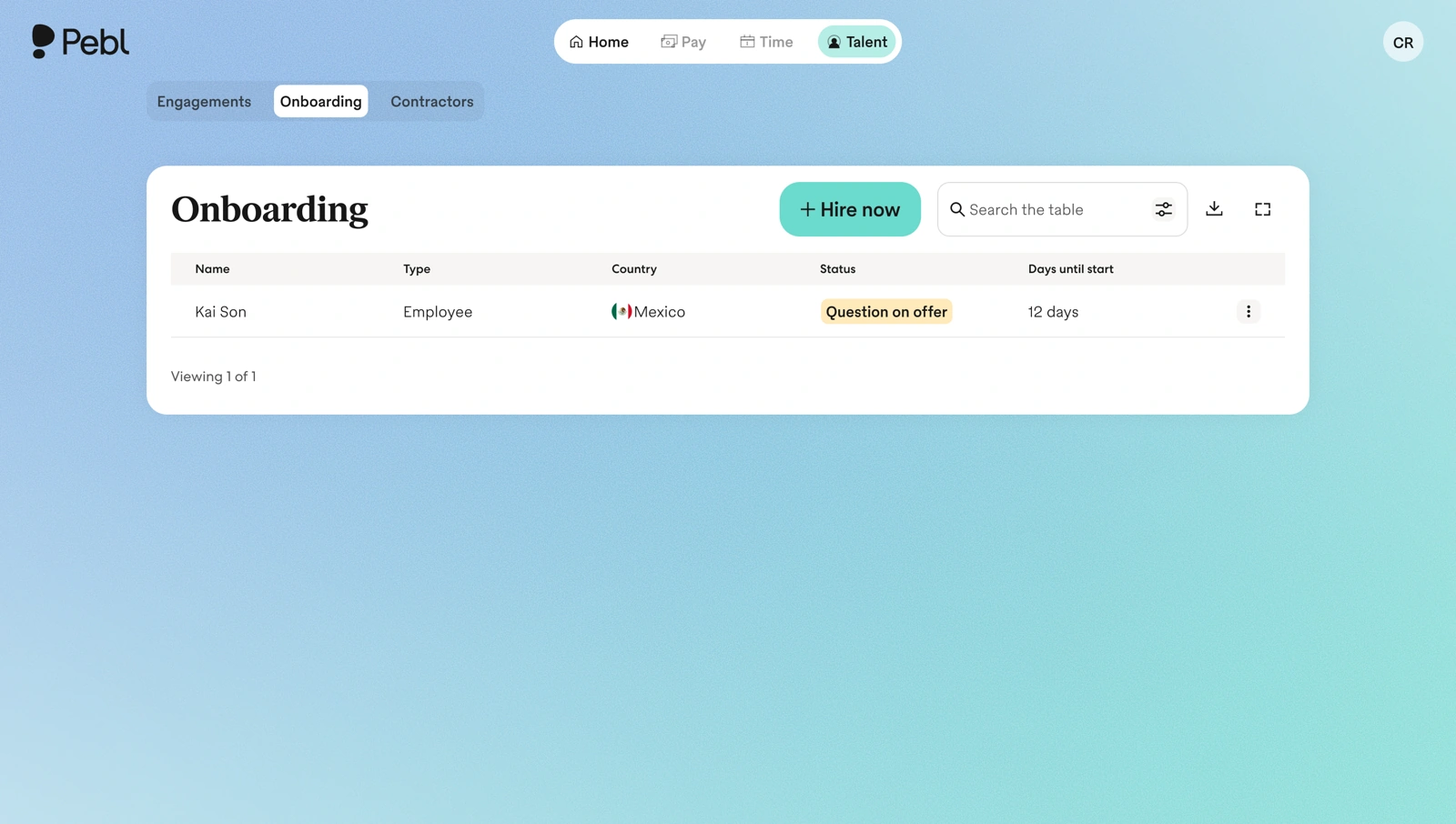
5 Pebl logo Pebl 4.2/5 Rating Hiring people who need visa or relocation support Starting fee: $399 USD / monthDeposit: Per quoteOnboarding: 7 days

My take

Pebl, formerly Velocity Global, offers payroll and benefits administration together with employment support.

Immigration support and supplementary benefits are available as additional services.

Pebl lists an EOR fee of $399 per employee per month, but the general price does not specify the dollar currency or billing commitment. The country proposal determines availability, any offer period and renewal terms; salary, employer costs and additional services are separate.

Deposit

Per quote

Entity model

Affiliates and local partners

First year, one hire

$4,788 in service fees

Reviewed by Lucia AparicioFact-checked by Michael Ennis

Starting fee

$399

Confirm the country price and billing commitment.

Against the 10 starting fees

$199 lowest$699 highest
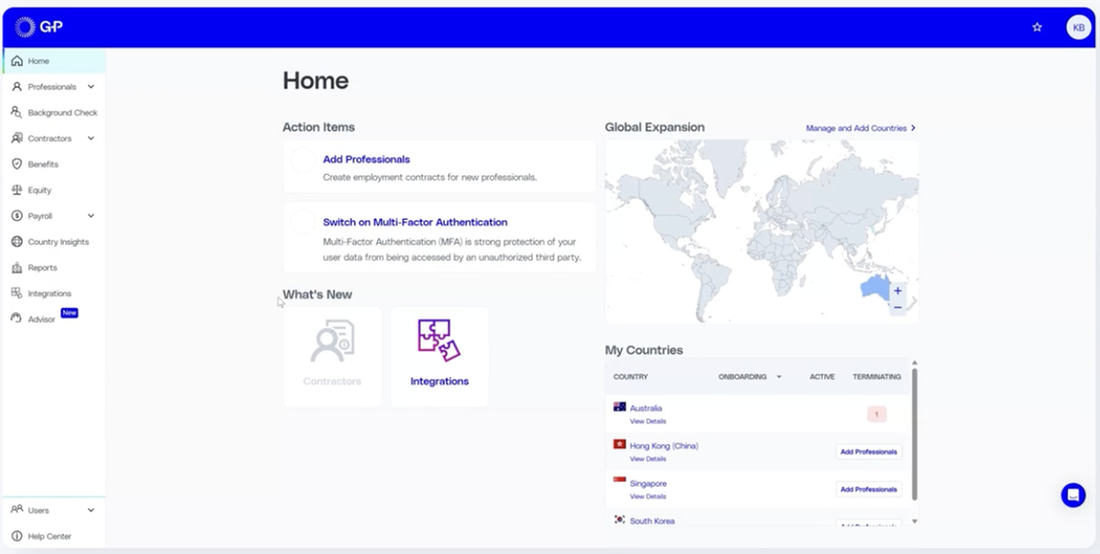
6 G-P logo G-P 4.2/5 Rating Hiring abroad while keeping your existing HR system Starting fee: $599 USD / monthDeposit: 1–2.5 monthsOnboarding: 12 days

My take

G-P offers optional visa support, background checks and equity payroll management alongside its employment service. Additional services have their own eligibility and charges.

G-P’s global EOR fee starts at USD 599 per employee per month, with a tailored country proposal. There is no minimum duration for an EOR hire; the client’s billing, cancellation and employee exit terms remain separate contract terms.

Deposit

1–2.5 months

Entity model

100+ own entities, plus partners

First year, one hire

$7,188 in service fees

Reviewed by Lucia AparicioFact-checked by Michael Ennis

Starting fee

$599

Confirm the included services and billing terms in your country quote.

Against the 10 starting fees

$199 lowest$699 highest
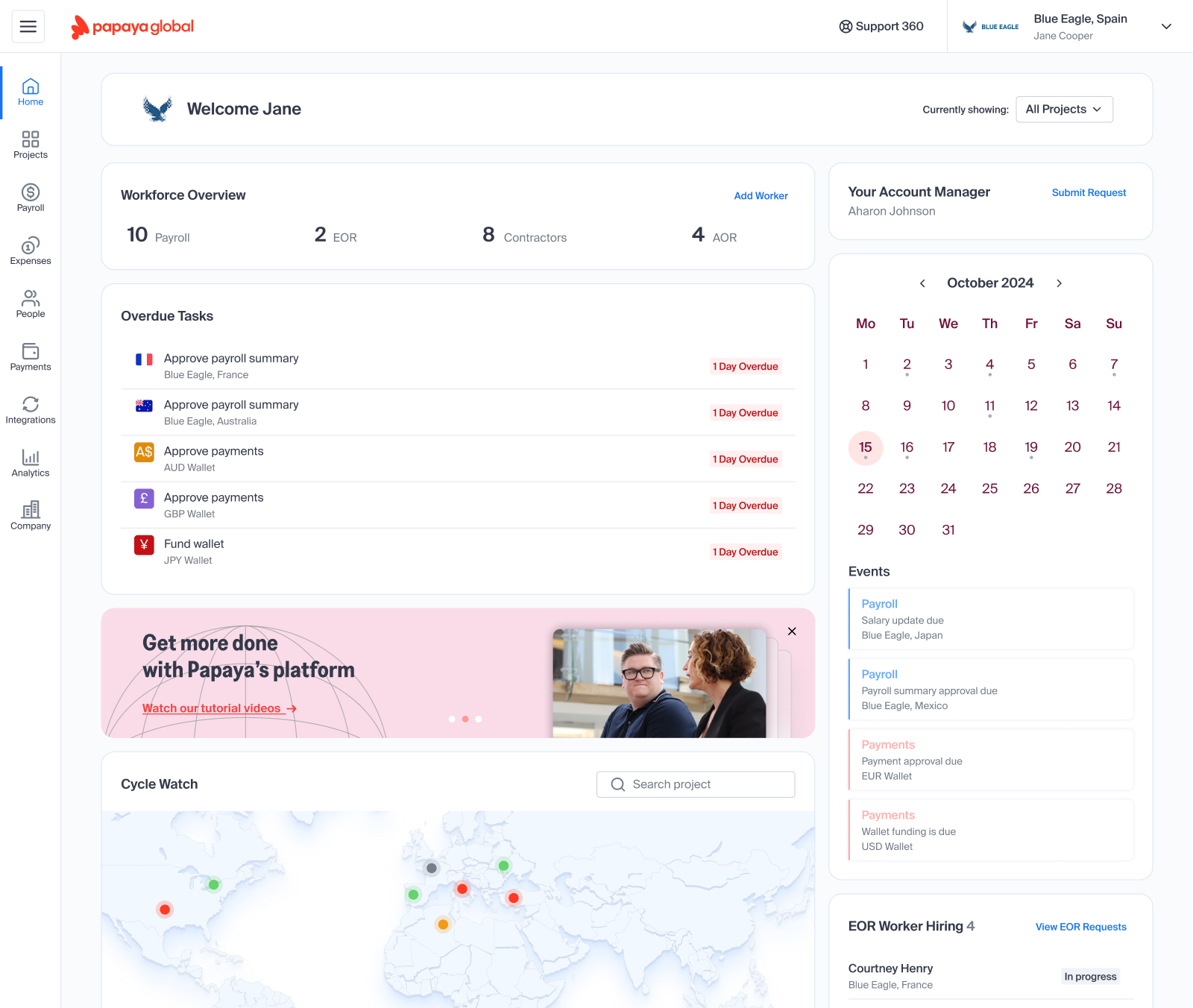
7 Papaya Global logo Papaya Global 4.1/5 Rating Comparing payroll costs across countries in one report Starting fee: $499 USD / monthDeposit: 1–2 monthsOnboarding: 10 days

My take

Papaya offers payroll processing for a company’s own employees as well as EOR employment.

The former serves a business that already employs staff through its Brazilian entity; the latter provides a legal employer.

Papaya’s EOR service starts at USD 499 per employee per month. The country quote must identify the billing commitment and any additional services. Salary and employer costs are separate.

Deposit

1–2 months

Entity model

Partner model; confirm employer

First year, one hire

$5,988 in service fees

Reviewed by Lucia AparicioFact-checked by Michael Ennis

Starting fee

$499

The country quote sets the billing terms. Payroll-only processing is priced separately.

Against the 10 starting fees

$199 lowest$699 highest
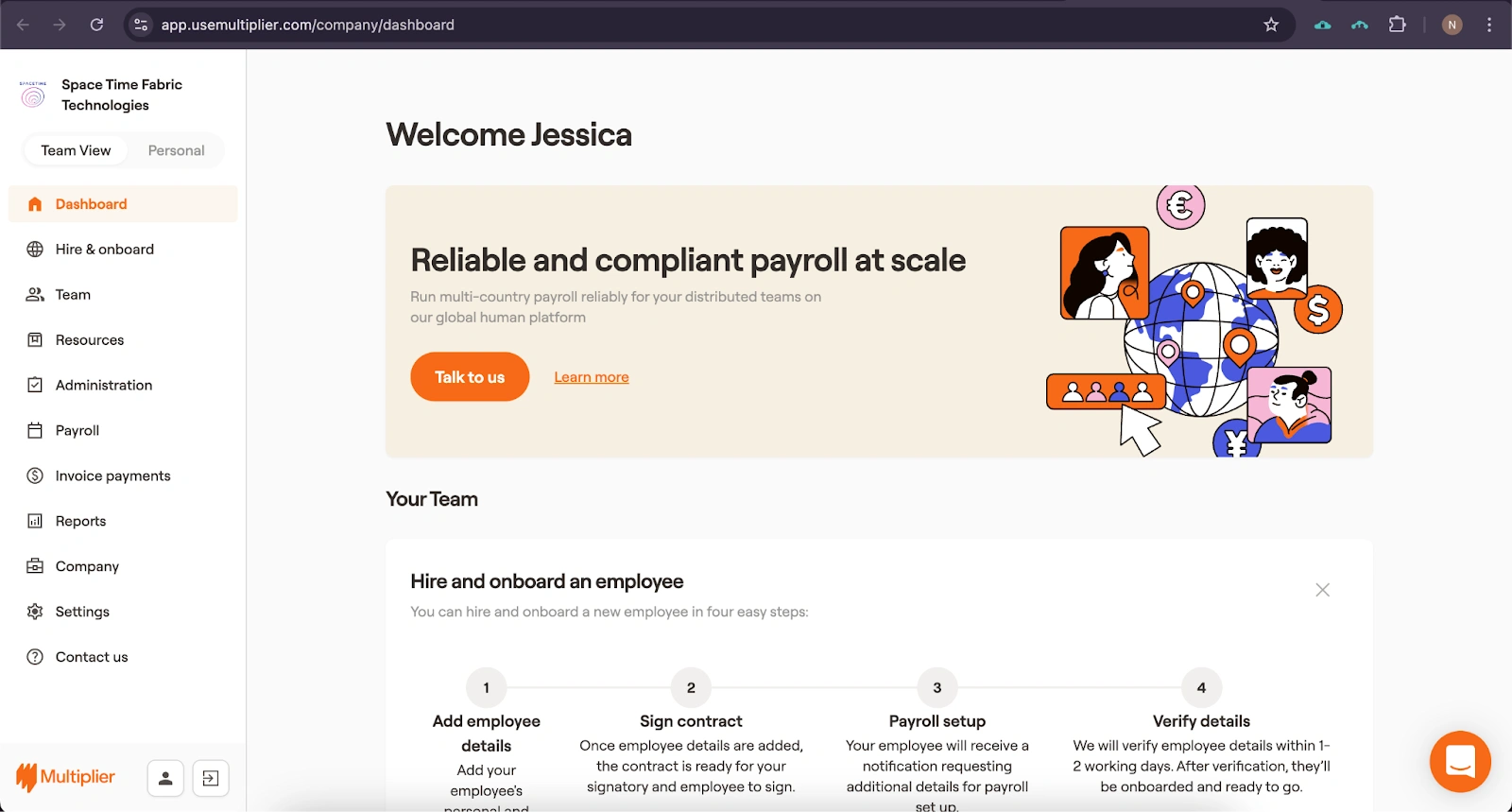
8 Multiplier logo Multiplier 4.1/5 Rating Managing payroll, leave and expenses in one place Starting fee: $459 USD / monthDeposit: 1+ monthsOnboarding: 7–10 days

My take

Multiplier Core starts at $499 per employee per month on monthly contracts, or $459 per employee per month billed annually.

The dollar currency is not specified. Country variations and compliance add-ons affect the quote. Growth adds integrations, custom reports and open API access. Implementation fees may apply, although the FAQ says setup is free; the quote must resolve that charge.

Deposit

1+ months

Entity model

Own entities and partners

First year, one hire

$5,508 in service fees

Reviewed by Lucia AparicioFact-checked by Michael Ennis

Starting fee

$459

Core plan billed annually, or $499 per month on monthly billing. Confirm the dollar currency.

Against the 10 starting fees

$199 lowest$699 highest
9 Borderless AI logo Borderless AI 4.0/5 Rating Getting 24/7 help with overseas payroll and HR Starting fee: $579 USD / monthDeposit: 1.5–3 monthsOnboarding: 8 days

My take

A refundable deposit is due before onboarding. Borderless AI’s standard calculation is 1.5 months of gross salary plus employer costs, benefits and platform fees for ACH or three months for wire and other methods, with country variations.

Balances unpaid for 15 days, or more than two late payments during the term, can raise the deposit to six months. Refunds follow account closure and settlement of outstanding balances.

Borderless AI’s standard fee is USD 579 per employee per month. Eligible companies headquartered outside Canada can pay USD 399 on fees billed through 31 December 2026; USD 579 applies from 1 January 2027, including promotional customers. Some countries and employment types are priced separately. Salary and employer costs are additional.

Deposit

1.5–3 months

Entity model

Own entities

First year, one hire

$6,948 in service fees

Reviewed by Lucia AparicioFact-checked by Michael Ennis

Starting fee

$579

Eligible companies headquartered outside Canada can pay $399 on fees billed through 31 December 2026.

Against the 10 starting fees

$199 lowest$699 highest
10 RemoFirst logo RemoFirst ⚠ Trustpilot warning 0.5/5 Rating Making a first overseas hire on a tight budget Starting fee: $199 USD / monthDeposit: About 1 monthOnboarding: 7 days

My take

We moved RemoFirst to last place on 8 November 2026: Trustpilot has suspended its rating for a breach of its guidelines and removed fake reviews.

RemoFirst says it works exclusively with vetted in-country partners. Here, that means a local partner company, not RemoFirst, would normally employ your hire, and payroll changes, questions and exits pass through both companies, which can slow answers. US$199 is RemoFirst’s starting fee and varies by country, so get this country’s quote before you compare. RemoFirst’s free contractor tier covers administration, including contract management and identity checks. Contractor payments cost USD 25 per contractor in months when a payment is processed; payment-provider and transfer fees may also apply.

RemoFirst’s global EOR fee starts at USD 199 per employee per month, with no minimum contract term or employee count. The country fee, deposit, payroll funding and add-ons depend on the proposal. Salary and employer costs are additional.

When this provider fits

I’d include RemoFirst in a price comparison. A lower fee is useful only when the proposal also explains the same CCT, payroll and exit obligations as the other shortlisted offers.

Ask before signing

Who handles a disputed CCT classification or dismissal, and is that advice included?

Deposit

About 1 month

Entity model

Partners, not own entities

First year, one hire

$2,388 in service fees

Reviewed by Lucia AparicioFact-checked by Michael Ennis

Starting fee

$199

RemoFirst advertises no minimum contract term or employee count. Confirm any country-specific charges.

Against the 10 starting fees
$199 lowest$699 highest
Which provider to choose

For Brazil, I start with two questions: who will employ the person, and what will the arrangement cost?

If the entity weighs more in the decision, maybe for liability, high audit requirements, or the need to keep a top level of procurement and data control in markets with complex labour situations, choose a provider that names its Brazilian company as the employer in writing. For this, you could evaluate Deel, which has registered Brazilian companies ($599, the deepest tooling), or Rippling (request an itemized EOR and platform quote if you already use it). On the other hand, if price and onboarding speed matter most, RemotePeople has its own company in Brazil, onboards in about 6 business days, and assigns a dedicated person to support all the onboarding. EOR Global starts at $499; Select starts at $199 where country and salary eligibility requirements are met. No matter which you choose, use the EOR budget guide to understand what it involves, identify cost components and obtain an itemised quote before committing.

Contractors could fit better for independent and project-based positions or requirements, while EOR fits employment-type roles, such as long-term positions that are key to the structure. EOR could also work in markets where the team doesn’t have experience and the country is known for highly complex labour laws. It could also be an option when the person prefers CLT.

Finally, confirm with your provider that the company your hire will work with has the legal nature to provide the service. For EOR, that means a Brazilian company that is active and registered for supplying and managing staff for third parties. You can check this yourself on the Receita Federal’s free public company registry. A provider whose Brazilian company is registered only for software or consulting may be routing your contract through a partner instead.

When choosing an EOR, make sure you know your company’s needs, the budget that you have for expansion, the countries where you operate, the kind of roles you will search for and hire in each country and the expected growth in each country. This matters in Brazil because it is the largest market in South America, with highly specialised talent and rates that vary by experience, location and industry.

If you have a varied team, you may need a mix of EOR and contractors. In Brazil and other LATAM countries, don’t assume every candidate has their paperwork ready and updated or already knows what type of contract they want. In my experience, some candidates who wanted to work as PJ still had to open their company first, and that added extra days to the hiring process.

In Brazil, contractors can work either as PJ, with their individual company that issues the invoices, or as individual contractors. Some roles fit the contractor model, but classification depends on the actual working relationship. Just be sure the role and preferences fit. On the other hand, EOR is safer because the provider takes care of the legal and documentation part.

If you are a large company with the budget for it, several systems to integrate and operations in many countries, Deel is probably your best option. If you want to start with a solid option with dedicated support, I would recommend RemotePeople. Either way, be sure to choose a provider that has experience with local laws and documents, and gives you a team that can answer all your questions.

Contractor status depends on the actual working relationship. A PJ company or a candidate’s preference does not change that.

Check the arrangement behind the CNPJ

An active CNPJ identifies a registered business. The proposal still needs to explain how that business will employ and supply this particular worker. Law 6,019 contains separate provisions for outsourced services and temporary work, including specific conditions and duration rules for the latter. A permanent role should not be justified only by a general reference to a staffing registration.

For covered outsourced services, Article 5-A provides for subsidiary responsibility of the contracting company for employment obligations during the service. The contract should therefore say what payroll and contribution evidence the EOR supplies, how missed payments are escalated and how the parties handle a worker claim. A commercial indemnity can allocate costs between companies; it does not erase statutory rights.

Use this distinction to compare proposals without assuming that an owned entity is automatically better than a partner. In either model, the useful answer identifies the legal employer, the contractual arrangement, the records available to the client and the named party responsible for resolving a payroll or employment problem.

Local Brazilian alternatives (researched, unranked): These are some local options that offer EOR or CLT payroll services. Europortage, founded in Fortaleza in 2003 with operations in cities such as Rio de Janeiro, São Paulo and Belo Horizonte, specializes in EOR in Brazil. Europartner, since 2009, is more like an accounting and BPO firm, with offices in São Paulo, Rio de Janeiro and Belo Horizonte. In its EOR services, it takes charge of the contract, payroll, social-security filings and terminations. Wide Brazil, a specialized Brazilian EOR with 10 years in operation, states that its onboarding takes 3-5 business days. Ubiminds, based in Florianópolis, places and manages software talent for US clients without a CNPJ. If your only expansion plans are in Brazil, this may be a better fit than global platforms such as Deel or RemotePeople.

Get your EOR discount

Get up to 30% off eligible EOR service fees. Your quote confirms the discount and terms.

Employment framework

Employment and payroll in Brazil

Check the CLT contract and the collective agreement.

A Brazilian hire brings together a CLT employment contract, monthly payroll filings and the applicable collective agreement. Each affects the employer’s obligations and your budget.

Apply the relevant collective agreement

Brazil layers a second set of rules on top of the federal CLT: sector-level collective bargaining agreements, each a convenção coletiva de trabalho (CCT) negotiated by the relevant union (sindicato).

A CCT can raise the wage floor, add benefits such as meal and transport vouchers, and set its own rules on overtime, profit-sharing and dismissal, and it binds every employer in that category whether or not it joined the negotiation. A national EOR maps your hire to the correct union category and applies the CCT.

CLT contract and employment records

The EOR’s Brazilian entity becomes the legal employer under a CLT employment contract. The Consolidação das Leis do Trabalho has governed Brazilian employment since 1943 and sets minimum requirements for employment records (carteira de trabalho), the 13th salary, vacation and termination. You direct the work. The EOR handles the CLT employment relationship and the eSocial, INSS and FGTS filings.

Before choosing a provider: request the legal employer’s name and registration details.

Monthly payroll and filing deadlines

eSocial reporting

Each month the EOR reports the employee through eSocial, the unified portal for federal labour, social-security and tax data.

Employee INSS and IRRF

It calculates payroll from gross pay, deducting the employee INSS contribution and IRRF income tax before paying net salary.

From January 2026, employee INSS uses progressive bands of 7.5%, 9%, 12% and 14% on monthly contribution pay up to R$8,475.55.

Employer contributions and employee ceiling

The EOR also remits employer INSS, FGTS, RAT and Sistema S payments.

The R$8,475.55 figure is an employee contribution-base ceiling, not a salary limit or a cap on the standard employer payroll contribution.

Contribution and salary deadlines

FGTS is deposited monthly through FGTS Digital by the twentieth, and INSS and IRRF are remitted around the twentieth of the following month.

Salaries themselves must be paid by the fifth business day of the following month.

Coordinate the employment file and payment calendar

1

Agree the offer and confirm the immigration route

Confirm salary, the intended start date and the candidate’s details.

For a hire who needs immigration permission, confirm the applicable residence and visa route, the employing entity’s eligibility, the named sponsor and the application responsibilities before setting a firm start date.

2

Complete employment records and registrations

The EOR prepares the CLT contract, collects identity, CPF and bank details, handles the digital carteira de trabalho and registers the worker in eSocial.

3

Set the salary and benefit calendar

Include monthly salary, INSS, FGTS and IRRF payments, eSocial events and the two annual instalments of the 13th salary. You manage the work and approve timesheets or expenses where relevant.

Employer cost

Statutory employer contributions in Brazil

Workplace accident rates vary by sector.

Every mandatory employer line, with its rate and basis. All figures as of 2026. The per-payment employer load is about 35 to 37 percent of gross, depending on the sector’s RAT rate; adding the 13th salary and the vacation bonus pushes the fully loaded annual cost to roughly 1.5 times base pay.

Fig. 2 · Where the ~35–37% goes: employer contributions as a share of gross

Contribution Employer rate Basis / cap Agency
Contribution

INSS (social security)

Employee: progressive 7.5–14%; contribution pay capped at R$8,475.55/month from January 2026
Employer rate
20% standard payroll regime
Basis / cap
On contributory remuneration; employee ceiling does not apply
Agency
Receita Federal / INSS
Contribution

FGTS (severance fund)

Plus 40% fine on no-cause dismissal
Employer rate
8%
Basis / cap
On full gross, deposited monthly
Agency
FGTS Digital / Caixa
Contribution

RAT / SAT (work-accident)

Adjusted by the FAP factor 0.5–2.0×
Employer rate
1–3%
Basis / cap
On gross, by sector risk
Agency
Receita Federal
Contribution

Sistema S + salário-educação

SESI/SENAI/SEBRAE/INCRA + education levy
Employer rate
~5.8%
Basis / cap
On gross, by sector (~3.1% Sistema S + 2.5% educação + ~0.2% INCRA)
Agency
Receita Federal

Fig. 3 · Mandatory employer contributions in Brazil, 2026 rates

For a R$10,000 salary in a low-risk (tech) sector: INSS 20% = R$2,000, FGTS 8% = R$800, RAT 1% = R$100, Sistema S plus salário-educação ~5.8% = R$580, a total of about R$3,480, or roughly 34.8 percent on top of gross per payment, rising toward 37 percent in higher-risk sectors. That figure excludes the 13th salary and the 30-day vacation plus its one-third bonus, which together add roughly another month and a third of pay across the year; once those accrue, the all-in cost of a Brazilian employee runs about 1.5 times base salary. The EOR fee sits on top of all of this.

Working time & leave

Working hours, overtime and statutory leave

Budget for the one-third vacation bonus.

The CLT sets a 44-hour week and a generous leave floor: 30 calendar days of annual vacation, the constitutional one-third vacation bonus, and 120 days of paid maternity leave.

Hours and overtime

Standard week 44 hours
Standard day 8 hours
Overtime (normal) +50% hourly
Sunday / holiday work +100%
Overtime cap 2 hrs/day
Public holidays/yr ~12 national + state/municipal

Fig. 4 · Hours and overtime under the CLT · overtime capped at two hours a day

Overtime is capped at two hours per day and paid at a 50 percent premium, or 100 percent on Sundays and public holidays, with collective agreements often setting higher rates. Brazil gazettes roughly twelve national holidays, and states and municipalities add their own, so a hire in São Paulo and one in Salvador can have different totals.

Statutory leave

Annual vacation
after 12 months
30 days + 1/3 bonus
Sick leave (first 15 days) employer-paid
Sick leave (16th day on) INSS auxílio-doença
Maternity 120 days
Paternity 5 days

Fig. 5 · Statutory leave in Brazil · 30 days’ vacation plus the one-third bonus after 12 months

Vacation accrues after twelve months of service and must be taken within the following twelve; it can be split into up to three periods, one of at least fourteen days. The employer pays the first fifteen days of sick leave; from the sixteenth, INSS pays the auxílio-doença. Maternity leave is 120 days, extendable to 180 under the Empresa Cidadã program, and is reimbursed to the employer through INSS.

Ending employment

Probation, notice and severance in Brazil

Dismissal without cause can trigger the FGTS fine.

Notice scales with tenure, and a dismissal without cause triggers the 40 percent FGTS fine on top of accrued entitlements. Brazil has no at-will employment, so the EOR documents every exit.

Tenure Notice (aviso prévio) FGTS fine on no-cause dismissal
Tenure
Year 1
Notice (aviso prévio)
30 days
FGTS fine on no-cause dismissal
40% of FGTS balance
Tenure
Each additional year
Notice (aviso prévio)
+3 days/year
FGTS fine on no-cause dismissal
40% of FGTS balance
Tenure
Cap (after ~20 years)
Notice (aviso prévio)
90 days
FGTS fine on no-cause dismissal
40% of FGTS balance
Tenure
Mutual agreement
Notice (aviso prévio)
50% of indemnified notice pay
FGTS fine on no-cause dismissal
20% of FGTS balance

Fig. 6 · Notice and the FGTS fine by exit route · mutual agreement halves indemnified notice pay and cuts the FGTS fine to 20%

Aviso prévio is 30 days minimum, plus three days for each completed year of service to a 90-day cap, and can be worked or paid in lieu. A dismissal without cause also pays out accrued 13th salary, accrued and proportional vacation with the one-third bonus, and the FGTS balance plus the 40 percent fine; under a mutual-agreement termination the FGTS fine drops to 20 percent and indemnified notice pay is halved. Brazil has no at-will employment: a dismissal the courts find abusive can be challenged at the labour tribunal (Justiça do Trabalho), so the EOR builds the documented case first. Probation (contrato de experiência) is capped at 90 days. All termination payments are due within 10 days of the end of the contract under Article 477 of the CLT.

 
No-cause dismissal of a 3-year employee on R$10,000/month Daily wage = R$10,000 / 30 = R$333.33
Notice (aviso prévio)
30 + (3 completed years × 3) = 39 days, paid in lieu
R$13,000
Proportional 13th salary
Assume 6/12 months accrued in the year
R$5,000
Proportional vacation + 1/3
Assume 6/12 accrued = R$5,000 + R$1,667 bonus
R$6,667
FGTS 40% fine
Salary-only illustration: 40% of R$28,800. The actual base requires the employee’s complete FGTS record, including other covered payments.
R$11,520
Subtotal of the displayed assumptions
Plus the released FGTS balance the worker withdraws
R$36,187

Under the displayed salary-only FGTS assumption, a qualifying mutual-agreement termination would give a R$5,760 fine and half of the R$13,000 indemnified notice pay. The actual settlement must use the employee’s dates and complete FGTS record. To set this exit bill against the same dismissal in other markets, use the guide on termination across jurisdictions.

Payroll & tax

Payroll cycle and income tax in Brazil

Plan for the mandatory 13th salary alongside monthly pay.

Monthly payroll, monthly tax withholding, reais throughout, with a mandatory 13th salary as a second annual payment. The EOR pays by the fifth business day, remits INSS and IRRF by around the 20th, deposits FGTS through FGTS Digital and runs both 13th-salary installments.

Brazilian payroll begins with the employee’s admission record. eSocial records the worker’s identity and contract information and provides specific admission and reporting processes. The EOR should explain which admission submission it will use before the employee begins work.

Budget the BRL salary and the 13th-salary instalments separately from the EOR fee. Reconcile the payslip deductions with the social-contribution, tax and FGTS payments applicable to the actual employment. Ask for the first admission receipt, the recurring payroll calendar and the treatment of a joiner partway through a pay period.

The employment contract

Contract requirements and 13th-salary rules

When are the 13th salary instalments due?

The CLT contract is written in Portuguese, the working language Brazilian courts and eSocial require, and the EOR supplies a bilingual version where you need to read it. The employment relationship is formalised by signing the digital carteira de trabalho (CTPS) linked to the worker’s CPF, and the contract states the role, salary, working hours, the applicable collective agreement, and the benefits. Allowances and vouchers that are habitual can be treated as part of remuneration, so the contract sets out clearly which payments are salary and which are non-wage benefits.

Fixed-term contracts are permitted but tightly limited: a contrato de experiência (probation) runs up to 90 days, and other fixed terms are confined to genuinely temporary work and capped at two years. Brazilian labour courts treat repeated renewals of a fixed term for permanent work as an open-ended employment relationship, with the full unfair-dismissal exposure that brings.

The 13th salary (décimo terceiro) is mandatory, not customary as in many countries. The thirteenth salary accrues by calendar month; a month with at least 15 days of service counts as a full month for the proportional calculation, and it is paid in two installments: the first half, with no deductions, by 30 November, and the second half, net of INSS and IRRF, by 20 December. FGTS applies to both installments. On termination the accrued 13th is paid out in the final settlement. The EOR calculates, withholds and pays all of it through payroll, so the obligation never falls to you to track. Profit-sharing (participação nos lucros, PLR) is a separate, often CCT-driven payment that is tax-favoured and, where it applies, also administered by the EOR.

Division of responsibility

What the EOR handles, and what stays with you

Who answers at the labour tribunal, and for what.

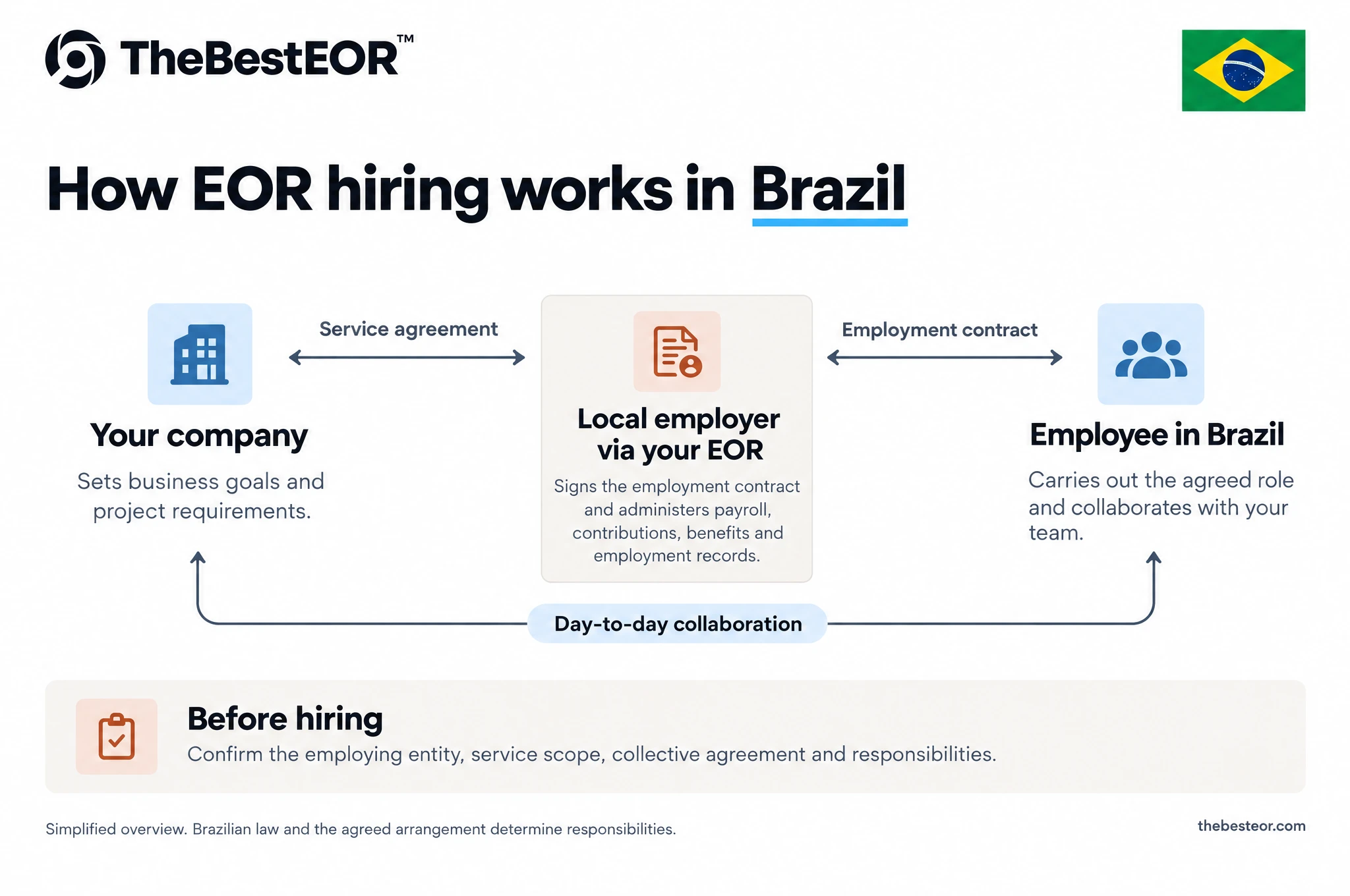
Employer of record in Brazil diagram showing the service agreement, employment contract, and day-to-day collaboration between your company and the employee.
Employer of record in Brazil: how your company, the local employer and the employee work together. Select the image to enlarge.

The EOR handles

1
eSocial reporting for every hire, pay run, leave and exit
2
Employer INSS, FGTS, RAT and Sistema S remittance
3
IRRF income-tax withholding and the annual income report
4
The CLT contract and the digital carteira de trabalho
5
The mandatory 13th salary, vacation and the one-third bonus
6
The correct collective agreement (CCT) and its vouchers
7
VITEM V sponsorship where its entity files the work visa
8
Compliant offboarding, notice and the documented termination case

You keep

1
The actual work: what gets built, by when, to what standard
2
Pay above the CCT floor: base salary, bonus, any allowance
3
Who gets hired, and when a contract ends
4
Performance management, with the documentation Brazil will ask to see
5
Laptops and tooling; a few providers sell device provisioning, but the choice is yours
6
Your contract with the EOR itself, including the IP-assignment language you write into it

Classification needs its own review. Engaging a Brazilian worker as a PJ (pessoa jurídica) contractor when they work set hours under your direction can lead the labour courts to recognise an employment relationship, which exposes you to back INSS, FGTS, the 13th salary, vacation, the one-third bonus and fines. An employment arrangement that meets local requirements can change how the worker is engaged from then on. The misclassification guide covers the tests Brazilian courts apply.

Work permits

VITEM V work visa and the two-thirds rule

Check the sponsor’s workforce mix and the role.

The visa is employer-sponsored, so the EOR’s Brazilian entity files it. Eligibility turns on the candidate’s qualifications and the employer’s Brazilian workforce mix, not on a statutory salary floor.

Permit Key requirement Duration Who sponsors Processing
Permit
VITEM V (local hire)
Key requirement
Qualification and experience criteria under CNIg resolutions; no statutory salary floor
Duration
Up to 2 years, renewable once
Who sponsors
Employer / EOR entity
Processing
~30–45 days
Permit
VITEM V (technical services)
Key requirement
Tied to a technical-services contract with a Brazilian entity
Duration
Project-based
Who sponsors
Contracting entity
Processing
~30–45 days
Permit
Digital nomad (VITEM XIV)
Key requirement
~US$1,500/mo income or savings test (CNIg RN 45/2021)
Duration
1 year, renewable
Who sponsors
Self-sponsored
Processing
Consular

Fig. 8 · Work-permit routes into Brazil · no statutory salary floor; qualifications carry the application

The VITEM V is employer-sponsored, so the EOR’s Brazilian entity files the residence authorization with the Ministry of Justice and the Ministry of Labour, then the consular visa follows. Brazil sets no statutory salary floor for the local-hire authorization: eligibility turns on the candidate’s qualifications and experience under the CNIg’s resolutions, so the offer and the candidate’s credentials carry the application. Brazilian immigration firms still advise offering at least twice the minimum wage, R$3,242 a month in 2026, for a local hire. Brazil also applies the two-thirds rule (regra dos dois terços): at least two of every three employees, and two-thirds of total payroll, must be Brazilian nationals, so an EOR with an existing Brazilian workforce absorbs a foreign hire more easily than a brand-new entity could.

For a Brazilian-citizen or permanent-resident hire, no visa is needed and every provider on the list works.

Salary benchmarks

Indicative salary ranges

Compare gross monthly pay in reais for the same city.

Gross monthly pay in reais, dollars at R$5.07 (August 2026). The ranges blend 2026 data from ERI SalaryExpert, Glassdoor and Howdy; match any offer to the candidate’s location, seniority and role, and verify a current role-specific source.

Check current pay data for the role and location before you make an offer.

Role Gross BRL/month USD/month (approx)
Role
Software engineer
Gross BRL/month
R$8,000–14,000
USD/month (approx)
$1,578–2,761
Role
Senior software engineer
Gross BRL/month
R$15,000–25,000
USD/month (approx)
$2,959–4,931
Role
Product manager
Gross BRL/month
R$14,000–24,000
USD/month (approx)
$2,761–4,734
Role
Accountant
Gross BRL/month
R$5,000–10,000
USD/month (approx)
$986–1,972
Role
Customer support
Gross BRL/month
R$2,500–4,500
USD/month (approx)
$493–888
Role
Sales manager
Gross BRL/month
R$10,000–20,000
USD/month (approx)
$1,972–3,945
Role
HR manager
Gross BRL/month
R$12,000–23,000
USD/month (approx)
$2,367–4,537
Role
Designer (UX)
Gross BRL/month
R$7,000–14,000
USD/month (approx)
$1,381–2,761

Fig. 9 · Monthly salary benchmarks, 2026 · reais first, dollars at R$5.07, August 2026

Salaries cluster in São Paulo, with Rio de Janeiro and the Florianópolis and Recife tech hubs close behind; secondary cities run roughly 10 to 25 percent below São Paulo for the same role. Remember that every monthly figure carries the mandatory 13th salary and the 30-day vacation plus its one-third bonus on top, so a R$10,000 engineer costs closer to R$15,000 a month fully loaded once statutory contributions and those accruals are counted. The statutory floor sits far below every row here: the national minimum wage rose 6.79 percent to R$1,621 a month on 1 January 2026 under Decreto 12.797/2025, from R$1,518 in 2025.

Fully-loaded cost

What a Brazilian engineer really costs per month

See what R$10,000 gross a month costs with accruals.

This illustration uses a software engineer earning R$10,000 gross a month, the contribution assumptions shown in the table, and rounded monthly accruals for the 13th salary and vacation supplement. It is a planning example, not a complete employer quote. Your actual employer’s tax regime, risk classification, collective agreement and benefits can change the result.

The displayed totals exclude additional benefits, setup and exit charges, deposits and any required platform fees not shown. The BRL fee conversions use the page’s illustrative exchange-rate assumption. For a different salary, estimate employer payroll costs in Brazil. Request a dated, itemised EOR quote and funding schedule for the hire.

Software engineer, São Paulo Gross base: R$10,000/month
Gross salary R$10,000

INSS employer (20%)

Assumed standard regime: 20% × R$10,000; employee ceiling does not apply
R$2,000

FGTS (8%)

Deposited monthly via FGTS Digital
R$800

RAT (1%)

Low-risk tech sector, before FAP
R$100

Sistema S + educação (~5.8%)

SESI/SENAI/SEBRAE/INCRA + salário-educação
R$580

13th + vacation accrual

~1.33 months spread over 12, with charges
R$1,500

EOR fee, cheapest

RemoFirst from $199 ≈ R$1,010
⚠ Trustpilot warning: rating suspended for a breach of its guidelines; fake reviews removed
R$1,010

Monthly total, cheapest fee

Annual ≈ R$191,880 (about $37,800)
R$15,990

Fig. 10 · Fully-loaded monthly cost, illustrative software-engineer salary · 13th-salary and vacation accruals spread across the year

Statutory employer cost is R$3,480 per payment, about 34.8 percent on top of gross, and the 13th-and-vacation accrual adds roughly another R$1,500 a month once spread across the year, which is why a Brazilian hire lands near 1.5 times base pay before the fee. At the illustration’s exchange rate, these hypothetical USD monthly service fees change the modelled total: a USD 599 service fee (≈ R$3,035) lands at R$18,015/month (≈ R$216,180/year), and a USD 699 service fee (≈ R$3,545) lands at R$18,525/month (≈ R$222,300/year). The statutory load is the largest component of total cost in Brazil, so pricing the full burden up front matters more here than in lower-tax markets.

Turn annual accruals into a usable funding calendar

Ask for the quote in two views: annual employment cost and month-by-month cash funding. The annual view should distinguish ordinary salary, the thirteenth salary, the vacation supplement, employer charges and the service fee. The cash view should show which amounts the EOR collects in advance and which it invoices when payment is due. A reserve held by the provider is not a second statutory cost.

Check that paid leave is counted once. If the twelve ordinary salary payments in your annual budget already include salary during leave, do not add that same salary again as another expense. Add the applicable vacation supplement and employer charges separately. The Brazilian Labour Ministry explains that annual leave preserves remuneration and carries a supplement of at least one-third of normal salary.

For vacation, CLT Article 145 requires payment up to two days before leave begins. An otherwise routine payroll cutoff may therefore be too late. Agree who passes the approved dates to payroll and how an off-cycle payment is handled.

If the EOR collected monthly reserves, request an employee-level statement showing amounts used, remaining accruals and how unused client funds are returned or credited. Employment entitlements and a refund under the service agreement are different calculations; neither should disappear into an unexplained final invoice.

EOR vs your own entity

EOR or your own Limitada: compare costs

Price payroll and accounting over the same period.

Incorporating a Brazilian entity adds setup and recurring administration costs. Compare a current entity budget with the complete EOR proposal over the same hiring period.

Factor EOR Your own Limitada
Factor
Setup cost
EOR
None
Your own Limitada
Incorporation + legal + accounting setup
Factor
Time to first hire
EOR
6–14 days
Your own Limitada
2–4 months (CNPJ, eSocial, municipal, bank)
Factor
Per-employee cost
EOR
$199–699/employee/mo fee + statutory
Your own Limitada
Statutory only, plus shared overhead
Factor
Ongoing admin
EOR
Provider runs payroll, eSocial & filings
Your own Limitada
Monthly accounting, eSocial, DCTFWeb, your own payroll
Factor
Compliance liability
EOR
The EOR has employer obligations; applicable client liability can remain under the service arrangement.
Your own Limitada
On you and your local administrators

Fig. 11 · Illustrative EOR-versus-entity comparison; the crossover depends on the fee plan, local operating costs and hiring duration.

The illustrative USD 199 monthly service fee adds roughly R$12,100 a year per employee before other EOR charges or entity administration costs. A Brazilian entity’s incorporation is one-off, but mandatory monthly accounting (contabilidade) plus eSocial and DCTFWeb filings add roughly R$30,000 to R$60,000 a year in fixed overhead regardless of headcount, and the compliance liability sits on your local administrators.

Annualise the selected service fee for the hires you expect to keep, then compare it with the Ltda setup, accounting, eSocial/FGTS administration and payroll. Count setup costs over the same hiring horizon and include payroll, benefits, transition and exit charges on both sides. A higher service-fee plan moves the financial crossover earlier; lower recurring entity overhead or a longer hiring horizon can do the same. Short hiring duration, setup costs and the need for local administration can move it later.

FAQ

EOR in Brazil: common questions

How do the 13th salary and FGTS affect the budget?\

Common questions before a Brazilian hire, including the 13th salary, the FGTS fine and the two-thirds visa rule.

What is the best EOR in Brazil?

RemotePeople is our top pick for Brazil in 2026 (4.9/5), followed by Deel (4.7/5) and Rippling (4.5/5). We opened paid accounts with all 10 providers on this page, priced real hires and ran payroll.

RemotePeople offers recruitment and EOR through one provider, with a dedicated account manager on both EOR plans. Its EOR Global plan starts at USD 499 per employee per month, and EOR Select at USD 199 where the hire qualifies. Deel starts at USD 599 plus a mandatory Employer Liability Cost; Rippling starts at USD 499 plus its required platform subscription.

How does an employer of record work in Brazil?

An employer of record in Brazil becomes the worker’s legal employer through a local employing entity, while your company directs the day-to-day work. The EOR manages the CLT employment relationship, reports the employee each month through eSocial and handles the INSS and FGTS filings. Payroll deducts the employee INSS contribution and IRRF income tax before paying net salary.

How fast can an EOR onboard an employee in Brazil?

Estimated onboarding times for Brazil range from 6 to 12 days across the providers we tested. By provider: RemotePeople 6 days, Deel 7 days, Rippling 7 days, Pebl 7 days and G-P 12 days.

For an employee who already has the right to work in Brazil, ask for an admission plan covering the employment contract, payroll registration and the first pay run. Separate the employment start date from the date the employee receives their first salary; neither follows automatically from the global onboarding claim. Agree the salary, applicable collective agreement, required documents and payroll cutoff before accepting a date. A visa-dependent hire needs a separate immigration timetable.

How much does an EOR cost in Brazil per month?
Published service fees for Brazil run from USD 199 to USD 699 per employee per month across the 10 providers we tested: RemoFirst from USD 199; RemotePeople Global from USD 499, or Select from USD 199 only where country and salary qualify; Deel from USD 599 plus mandatory Employer Liability Cost; G-P from USD 599; Oyster USD 699 on monthly billing, with annual seats quoted separately. Multiplier Core advertises $499 monthly or $459 per month billed annually; Pebl advertises $399, with currency and commitment to confirm. Rippling starts at USD 499 plus its required platform from USD 8 per employee, and Papaya Global at USD 499. Borderless AI is USD 579 standard, with an eligible USD 399 promotion on fees billed through 31 December 2026. All amounts are per employee/month; salary and employment costs are separate. On top of the fee you pay the employee’s gross salary plus roughly 35 to 37 percent in employer INSS, FGTS, RAT and Sistema S contributions per payment, before the 13th salary and vacation bonus are added.
What employer contributions are mandatory in Brazil?

Under the standard payroll regime, employer INSS is 20 percent of contributory remuneration without the employee ceiling, FGTS at 8 percent deposited monthly, RAT work-accident insurance at 1 to 3 percent adjusted by the FAP factor, and Sistema S plus salário-educação at roughly 5.8 percent combined. The per-payment employer load is about 35 to 37 percent of gross, depending on the sector’s RAT rate. Adding the mandatory 13th salary and the 30-day vacation plus its one-third constitutional bonus pushes the fully loaded annual cost to roughly 1.5 times base pay. 

Employee INSS is a separate deduction from gross salary: progressive 7.5–14% bands apply to monthly contribution pay up to R$8,475.55 from January 2026. That ceiling does not reduce the standard employer contribution. Confirm the actual employer’s tax regime and applicable exceptions.

Does Brazil have a mandatory 13th salary?
Yes. The 13th salary (décimo terceiro) is one extra month of pay each year, mandated by law and paid in two installments: the first half by 30 November and the second by 20 December. It accrues by calendar month: at least 15 days of service in a month counts as a full month. INSS and FGTS apply to it, and the EOR runs it through payroll automatically.
How much notice and severance applies when terminating in Brazil?
Notice (aviso prévio) is 30 days, plus 3 extra days per year of service to a 90-day cap. A dismissal without cause also triggers the 40 percent FGTS fine on the accumulated balance, plus accrued 13th salary, accrued vacation and the one-third bonus, all due within 10 days. A mutual-agreement termination halves the FGTS fine to 20 percent. For three completed years at R$10,000 a month, 39 days of indemnified notice equals R$13,000. Add the applicable accrued entitlements and the fine calculated from the complete FGTS record to determine the settlement.
 
What currency and payroll cycle does Brazil use?
The Brazilian real (BRL, R$). Payroll runs monthly and salaries are paid by the fifth business day of the following month. INSS and IRRF income tax are remitted around the 20th of the following month, and FGTS through FGTS Digital by the 20th. The 13th salary adds a second annual payment in two installments. About R$5.07 equalled one US dollar in August 2026.
 
Can an EOR sponsor a work visa in Brazil?
Yes, through the VITEM V temporary work visa, which is employer-sponsored, so the EOR’s Brazilian entity files the residence authorization with the Ministry of Justice and the Ministry of Labour. Brazil sets no statutory salary floor for the local-hire authorization; eligibility turns on the candidate’s qualifications and experience under the CNIg’s resolutions. Brazil also applies a two-thirds rule, so at least two of every three employees and two-thirds of payroll must be Brazilian nationals.
 
Can I convert a Brazilian contractor to an EOR employee?
Yes, and conversion is the standard exit from Brazil’s PJ misclassification exposure. A Brazilian PJ contractor who works set hours under your direction can be recognised as a CLT employee by the labour courts, exposing you to back INSS, FGTS, the 13th salary, vacation and fines. An EOR issues a compliant CLT contract, registers the worker in eSocial, and runs INSS, FGTS and IRRF withholding, usually within a week or two. See the contractor misclassification guide.
 
Why is Multiplier ranked lower for Brazil than its global position?
Multiplier says it employs through its own Brazilian entity, and third-party tests put its Brazil onboarding at 7 to 10 business days, behind the leaders. In Malaysia it ranks first; in Brazil it sits eighth.

Sources and as-of dates

Article references

The INSS employee contribution ceiling and its distinction from the standard employer payroll contribution were checked on 23 September 2026. The employee ceiling applies from January 2026.

Hiring facts Checked 2 Oct 2026

Hiring facts

Checked 2 October 2026
Eligibility, local and collective rules apply. EOR fees extra.

Consolidação das Leis do Trabalho (CLT) 4 sources

Decree-Law 5.452/1943, as amended: the carteira de trabalho (Art. 13), annual leave (Art. 130) and notice (Art. 487). The normal 44-hour weekly ceiling comes from Federal Constitution Art. 7 XIII; the full annual-leave entitlement is 30 calendar days, subject to the CLT absence rules.

13th salary 2 sources

Law 4.090/1962 establishes the 13th salary. Under Law 4.749/1965, the first installment is paid between February and November, by 30 November, and the balance by 20 December. As of 2026.

INSS employee ceiling and employer basis 4 sources

from January 2026, employee contributions use progressive 7.5%, 9%, 12% and 14% bands on monthly contribution pay up to R$8,475.55. See the official 2026 INSS table, based on Portaria Interministerial MPS/MF 13 of 9 January 2026. This is not an employer payroll cap: Law 8.212/1991, article 22(I) sets the standard company contribution at 20% of contributory remuneration. These INSS points checked 23 September 2026.

FGTS 4 sources

The standard FGTS deposit is 8% of remuneration, paid monthly through FGTS Digital for covered employers. The dismissal indemnity is 40% of the relevant FGTS deposits, with updates and interest, for dismissal without cause; it is halved to 20% on mutual-agreement termination under CLT Art. 484-A. Special rates and collection routes apply to some categories.

RAT / SAT 2 sources

RAT/SAT is normally 1%, 2% or 3% according to occupational risk, multiplied by the employer’s FAP factor of 0.5–2.0. Additional third-party contributions depend on the FPAS classification and applicable exemptions. A 5.8% total applies to several classifications and includes salário-educação, INCRA and the relevant Sistema S bodies; it is not a universal rate.

Vacation 3 sources

After 12 months, the full CLT entitlement is 30 calendar days, subject to absence rules, plus at least the one-third constitutional vacation bonus. With the employee’s agreement, leave may be split into up to three periods: one of at least 14 calendar days and the others at least five days each. As of 2026.

Termination 2 sources

For dismissal with entitlement to notice, aviso prévio is 30 days plus three days per year of service with the same employer, capped at 90 days (Law 12.506/2011). CLT Art. 477 §6 requires termination documents and settlement payment within 10 days after the contract ends.

VITEM V work visa 5 sources

The employment route involves residence authorization and, for an applicant abroad, the relevant work visa. CNIg RN 02/2017 sets qualification and experience criteria and requires a CLT-compliant employment contract; it does not set a single numerical visa-salary threshold. CLT Arts. 352–354 contain a two-thirds Brazilian workforce and payroll rule for covered employers, subject to statutory scope and exceptions.

Income tax (IRRF) 2 sources

Resident employment-income withholding uses progressive rates up to 27.5%. Law 15.270/2025, dated 26 November 2025, introduced a monthly tax reduction from January 2026 that brings tax to zero on taxable monthly income up to R$5,000, with a diminishing reduction through R$7,350. The reduction is applied after the ordinary tax calculation.

eSocial 3 sources

eSocial unifies reporting of labour, social-security and tax information. FGTS Digital has generally been mandatory for FGTS guide generation from the March 2024 payroll period. Domestic employers and specified MEI/special-insured collections retain DAE routes, as explained in the official exceptions.

Salary benchmarks 2 sources

Salary estimates from ERI SalaryExpert, Glassdoor and Howdy; match roles, locations and source periods when comparing them. Howdy’s linked 2026 figures are projections from its 2025 data. USD comparisons use an illustrative rate of approximately R$5.07 = USD 1.

Provider pricing, entity model and onboarding 10 sources

Further sources Checked 19 Oct 2026

Brazil — Law 6,019, Articles 5-A and 10 — Subsidiary client liability and the separate temporary-work framework. Checked 19 October 2026.

Brazil — Law 12,506, proportional notice — Thirty-day base plus three days per completed year, capped at ninety days. Checked 19 October 2026.

Ministry of Labour — worker rights and payment guidance — Fifteen-day monthly test for thirteenth salary; advance vacation payment and leave scheduling; FGTS. Checked 19 October 2026.

Brazil — consolidated CLT, Articles 134, 145 and 484-A — Vacation timing and mutual-agreement termination: halving applies to indemnified notice, not every form of notice. Checked 19 October 2026.

To expand your shortlist, browse EOR providers for Brazil. Once you have proposals, enter the recurring amounts in USD in the EOR cost calculator. The country guides cover other hiring markets.

This guide is for general information only and does not provide legal, tax, accounting, or financial advice. For advice about your business, consult a qualified professional familiar with the rules where you hire. The research methodology explains how TheBestEOR assesses sources.