Best Employer of Record in Romania
Editorial details







Provider
Best For
Starting feeDepositOnboarding
1
 RemotePeople
4.9/5
Rating
Hiring in new markets with local HR support
Starting fee: $499 USD / monthDeposit: 1 monthOnboarding: 2–5 days

My take
For a hire that needs a named contact, I’d look at RemotePeople’s dedicated account manager.
The service includes local employment contracts, payroll and tax administration, and statutory-benefits administration. Recruitment is separate.
EOR Global starts at USD 499 per employee per month. EOR Select starts at USD 199 for eligible countries and employee salary ranges. Salary, employer contributions, benefit costs and agreed extras are additional. The country quote determines eligibility, the final fee, billing commitment and payroll funding.
Fit check for RemotePeople and Multiplier
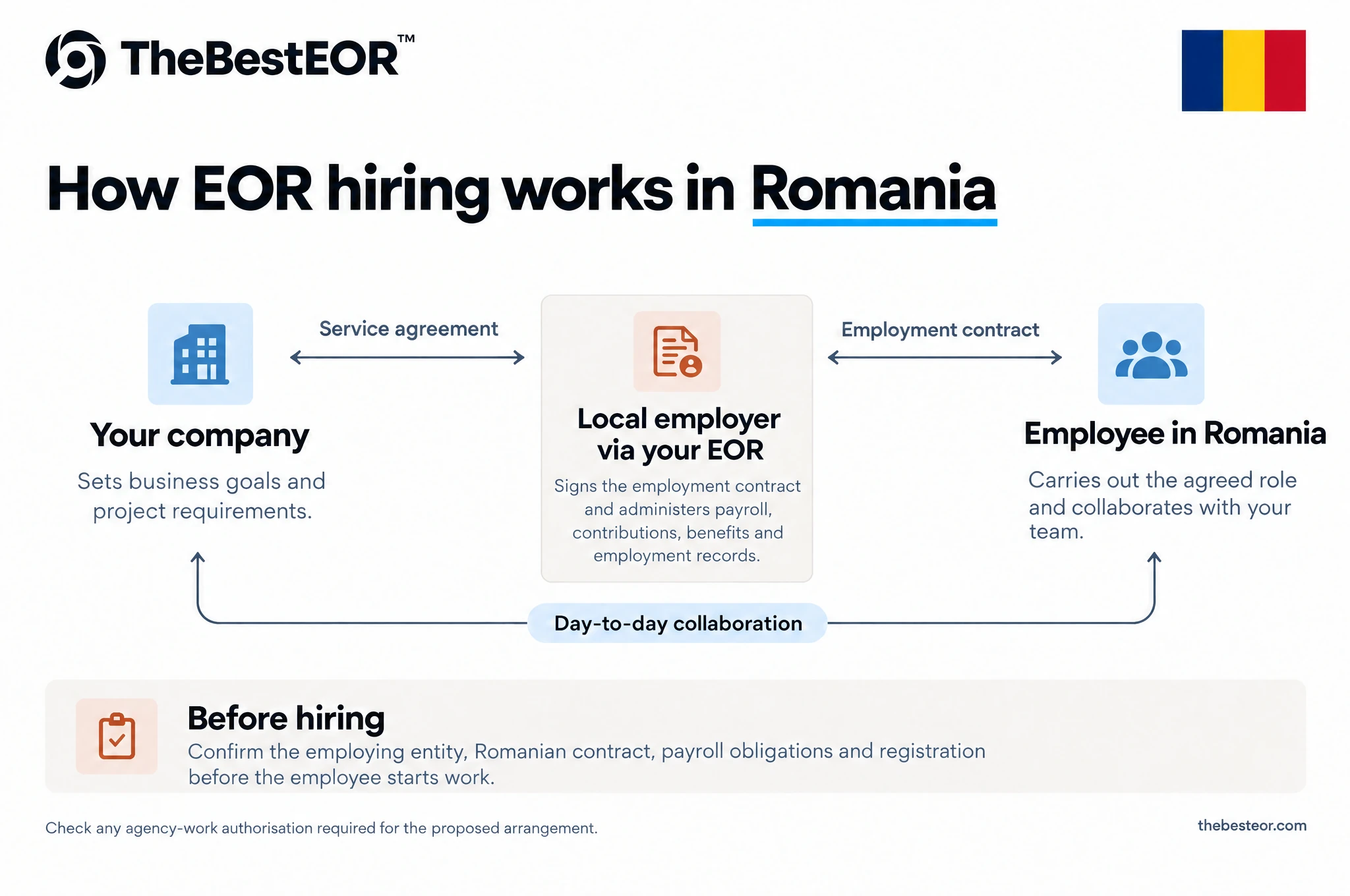
For a Romanian remote hire, I’d ask what the contact returns to you when onboarding is complete, including the signed telework terms and registration confirmation. Choose the proposal with a clear handover and named owner for missing records.
Deposit
1 month
Entity model
Own entities in core markets
First year, one hire
$5,988 in service fees
Reviewed by Martynas PupkeviciusFact-checked by Michael Ennis
Pricing & terms
EOR fee from
$499
EOR Global. EOR Select starts at $199 where the country and employee salary qualify.
Deposit
1 month
Contractor Management
From $29 per contractor / monthContractor pay is on top.
Contractor of Record
From $199 per contractor / monthRemotePeople signs the contractor agreement. Contractor pay is on top.
Recruitment
20% of annual salaryRemotePeople's own in-market recruiters send vetted shortlists in 5 days, in 150+ countries. You pay on your hire's first day; with EOR, it's 2% of salary a month for 12 months.
First year, one hire
$5,988 in service feesAt $499 a month on EOR Global; $2,388 on EOR Select ($199) where the country and salary qualify. Salary, employer costs and the refundable deposit come on top.
Entity model
Own entities in core marketsPartners elsewhere. The employing entity is named before each hire.
Onboarding
2–5 days
Our #1 pick in
Canada, Germany, United Kingdom, France, Netherlands, Mexico and 16 more
RemotePeople pros in Romania3
- Your manager files REGES-ONLINE and the CIM so the contract is registered before day one
- Recruit Romanian talent and employ it with one provider handling both steps
- Romanian leave booked in the portal with the 20-day legal minimum still applying
RemotePeople cons in Romania3
- Get the registration confirmation back plus signed telework terms once Romanian onboarding ends
- Fee drives Romanian cost, not tax with a 2.25% employer charge, the Global plan weighs heavily
- Benefits package is standardised so meal vouchers or private medical may not flex per person
RemotePeople dashboard
Enlarge screenshot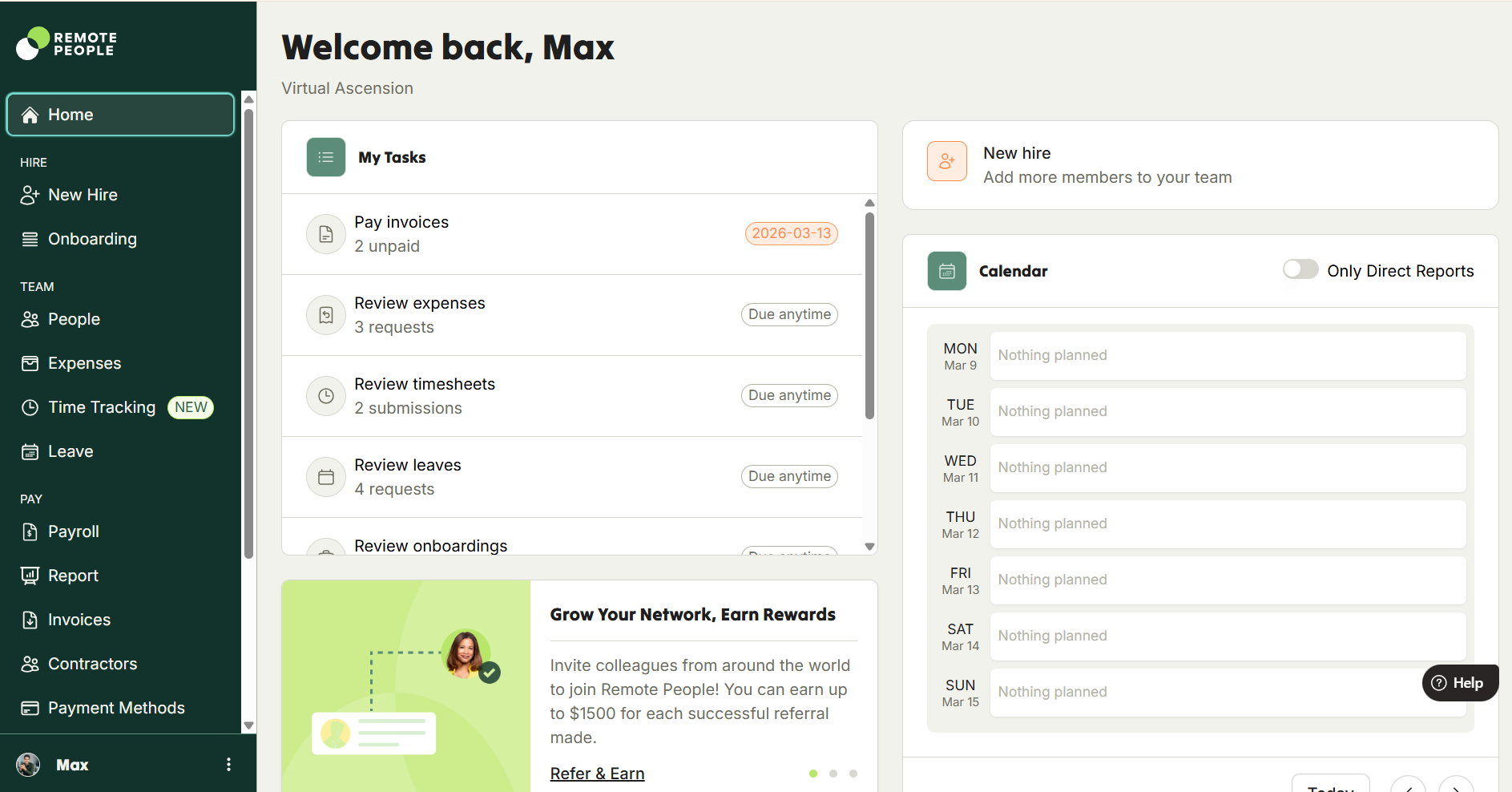
Starting fee
$499
EOR Global. EOR Select starts at $199 where the country and employee salary qualify.
Against the 10 starting fees
2
 Deel
4.7/5
Rating
Paying employees and contractors on one platform
Starting fee: $599 USD / monthDeposit: 1–1.5 monthsOnboarding: 2–5 days
My take
Deel would be on my shortlist if you need EOR payroll and benefits administration alongside separate contractor and HR products.
EOR starts at USD 599 per employee per month, with month-to-month billing available. Mandatory Employer Liability Cost is an additional charge based on gross salary, with rates varying by country. Salary, statutory employer costs and benefit premiums are also separate.
Contractor management starts at USD 49 per active contract per month. It is a separate service from EOR employment; currency conversion, payment-method charges and any required deposit also affect the amount funded.
Fit for your hire in Romania
For a multinational programme, my comparison would start with the Romanian employer’s collective terms and the support included for this contract.
Deposit
1–1.5 months
Entity model
Own entities and partners
First year, one hire
$7,188 in service fees
Reviewed by Martynas PupkeviciusFact-checked by Michael Ennis
Pricing & terms
EOR fee from
$599
Month-to-month billing. Mandatory Employer Liability Cost is charged separately.
Deposit
1–1.5 months
Contractor Management
From $49 per contractor / monthFor administering contractor engagements.
Contractor of Record
From $325 per contractor / monthDeel checks eligibility and signs the contractor agreement.
Recruitment
From $14 per worker / monthDeel's Find talent plan is hiring software: job posts, AI screening and a candidate pipeline, with access to its talent marketplace or partners.
First year, one hire
$7,188 in service feesAt $599 a month, plus the Employer Liability Cost based on salary. Salary, employer costs and the refundable deposit come on top.
Entity model
Own entities and partnersThe employment contract names the legal employer for each hire.
Onboarding
2–5 days
Deel pros in Romania3
- Owned entities across 130+ countries for a programme that spans Romania and beyond
- Downloadable quote splits costs so the 2.25% Romanian charge shows on its own line
- Connectors for Workday, BambooHR and HiBob when Romania runs from a central HR system
Deel cons in Romania4
- Platform depth that Romania seldom needs with a 2.25% employer load, the fee is the real cost
- Romanian collective terms to compare ask what support the contract includes
- Harder to exit than lower-priced options should a Romanian role end early
- Deel won’t recruit your Romanian hire: Find talent, its hiring software, runs job posts and a pipeline
Deel dashboard
Enlarge screenshot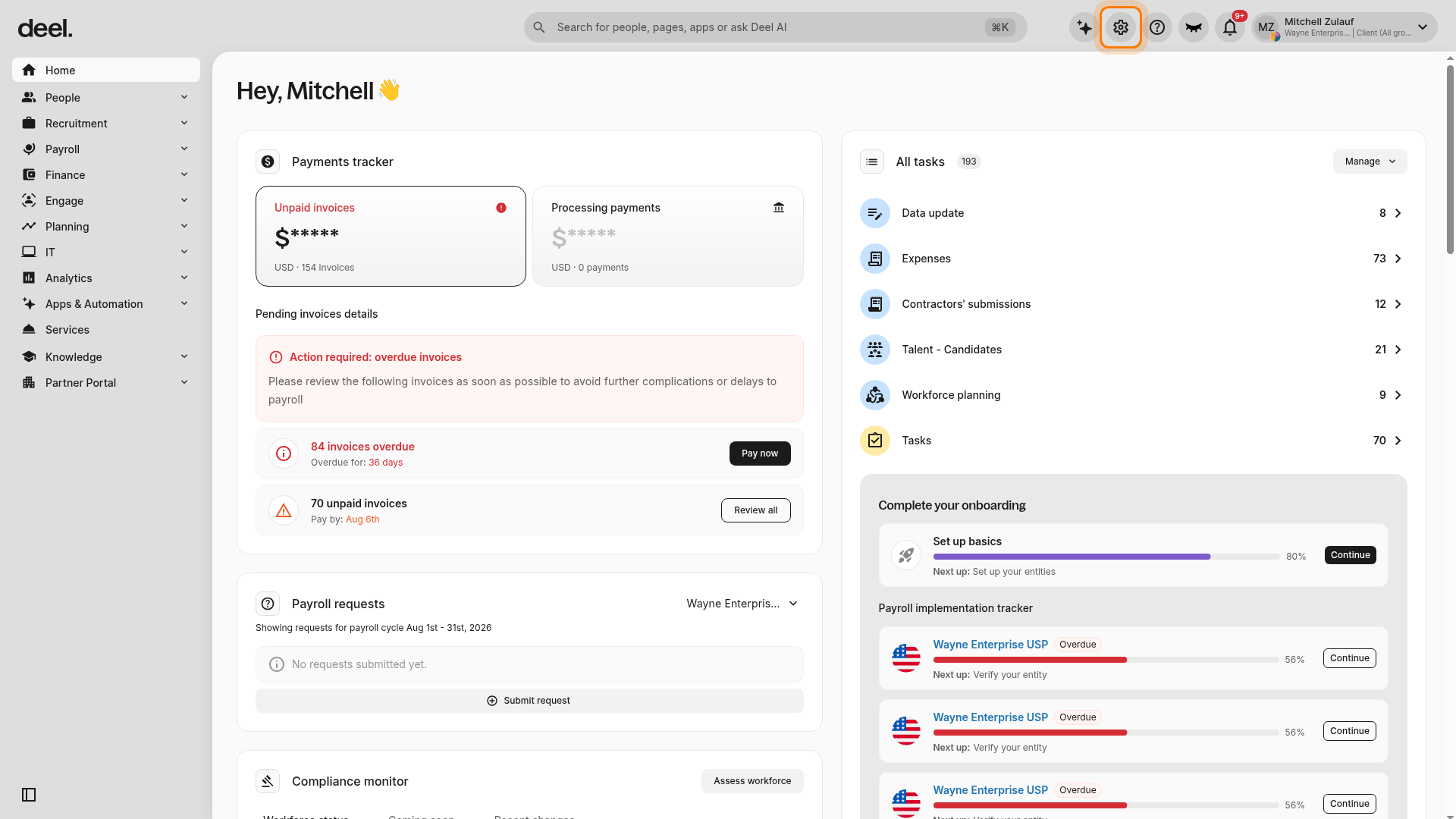
Starting fee
$599
Month-to-month billing. Mandatory Employer Liability Cost is charged separately.
Against the 10 starting fees
3
 Rippling
4.5/5
Rating
Setting up payroll, laptops and app access for new hires
Starting fee: $499 USD / monthDeposit: Per quoteOnboarding: 3–5 days
My take
Rippling makes more sense to me when you also need its HR, IT or finance products: shared employee data connects the workflows and reporting.
Device management and app access are separate products within that wider system.
Rippling EOR starts at USD 499 per employee per month, and the required Rippling Platform adds from USD 8 per employee per month plus a monthly base fee. The quote needs to show any selected HR, IT or finance products and the billing commitment. Salary, employer costs, benefits, deposits and payroll funding are additional to the software and service fees.
Fit for your hire in Romania
An integrated workflow is useful to me only if it also records Romanian working hours, overtime approval and the telework terms.
Deposit
Per quote
Entity model
Own entities and local partners
First year, one hire
$5,988 in EOR fees
Reviewed by Martynas PupkeviciusFact-checked by Michael Ennis
Pricing & terms
EOR service fee
From $499
Plus the required Rippling Platform, from $8 per employee per month and a monthly base fee. Confirm the billing terms and selected products.
Deposit
Per quote
Contractor Management
From $30 per contractor / monthConfirm payment and currency charges.
Contractor of Record
From $325 per contractor / monthContractor pay and payment terms are separate.
Recruitment
Applicant tracking softwareRippling Recruiting is an ATS sold as part of the Rippling platform, priced in your quote.
First year, one hire
$5,988 in EOR feesAt $499 a month, plus the Rippling Platform from $96 a year and a monthly base fee. Salary, employer costs and the refundable deposit come on top.
Entity model
Own entities and local partnersWhich one employs your hire depends on the country.
Onboarding
3–5 days
In our top 3 for
Canada, Germany, United Kingdom, France, Netherlands, Mexico and 19 more
Rippling pros in Romania3
- Romanian onboarding takes under a week on our estimate for Rippling
- Romanian employees sit alongside your domestic staff and contractors in one system
- Local legal specialists back up Romanian employment questions
Rippling cons in Romania4
- Overtime approval and telework terms must be recorded for Romania, so test both in the demo
- Get the Romanian legal employer named and ask whether it is a partner
- Low Romanian employer costs put the spotlight on the EOR and platform charges
- Rippling won’t source Romanian candidates: no recruitment service, just an ATS sold with the platform
Rippling dashboard
Enlarge screenshot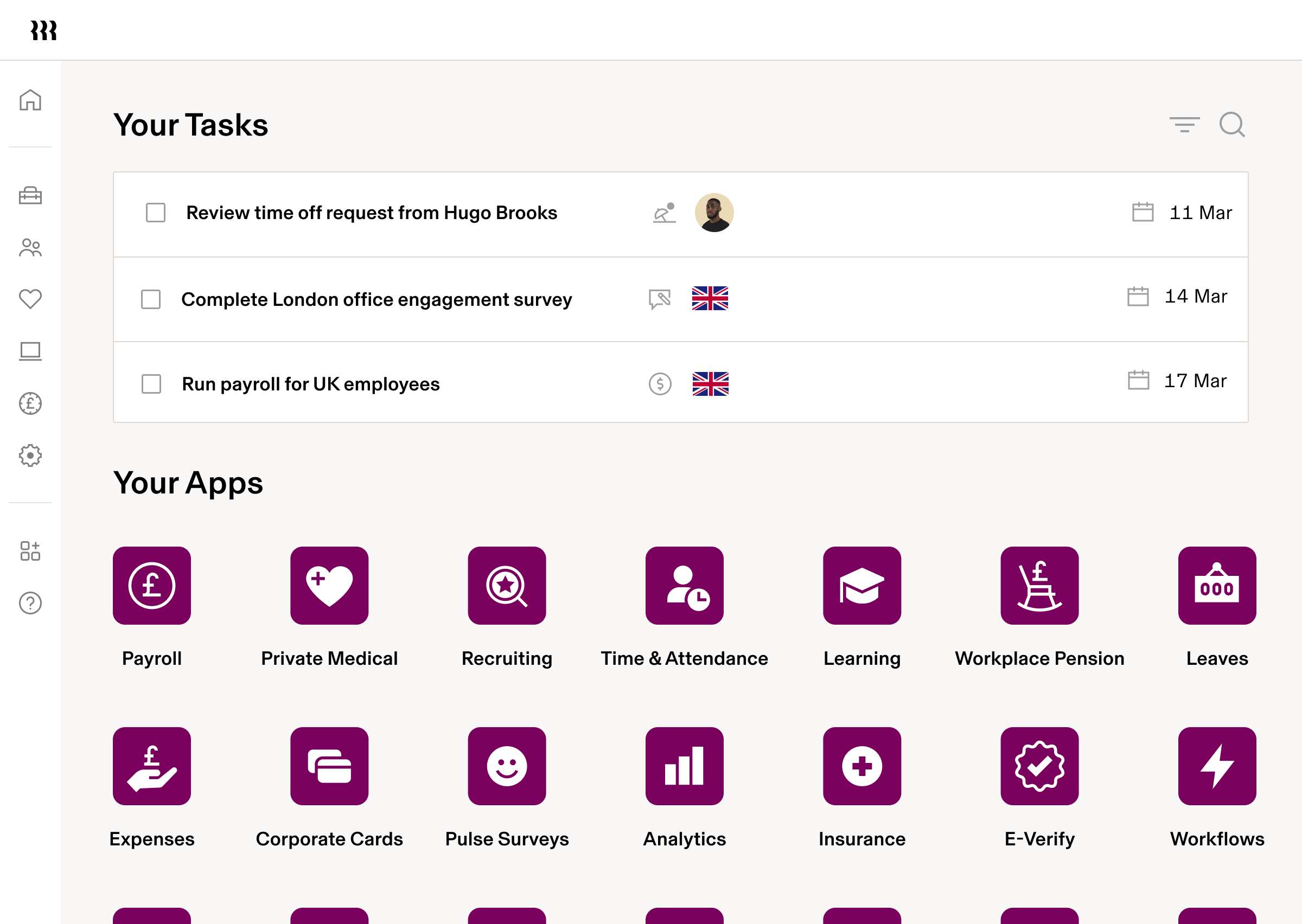
Starting fee
$499
Plus the required Rippling Platform, from $8 per employee per month and a monthly base fee. Confirm the billing terms and selected products.
Against the 10 starting fees
4
 Oyster
4.5/5
Rating
Using one onboarding process for hires across countries
Starting fee: $699 USD / monthDeposit: ~1 monthOnboarding: 5–7 days
My take
Oyster covers payroll, expenses, time off and reporting, with onboarding and offboarding support.
Optional benefits packages cost extra. At USD 699 per employee per month on monthly billing, I’d weigh that service against the annual commitment described below.
Annual seats are priced by headcount and location and are non-refundable, but can be reused for replacement hires. Annual prepayment gives the lowest fee; higher-priced quarterly or semiannual payment options are available. Salary, employer costs and benefit premiums are additional, and a refundable deposit is required. Optional People Partner project work costs USD 300 per hour.
Fit for your hire in Romania
I’d ask which benefits are included, which are optional and how they appear in payroll.
Deposit
~1 month
Entity model
Own entities and vetted partners
First year, one hire
$8,388 in service fees
Reviewed by Martynas PupkeviciusFact-checked by Michael Ennis
Pricing & terms
EOR service fee
$699
Monthly billing. Annual seats are quoted separately, prepaid and non-refundable.
Deposit
~1 month
Contractor Management
$29 per contractor / monthFree for the first 30 days.
Contractor of Record
Not offeredOyster acts as agent of record for contractor payments only. You sign the contract with each contractor.
Recruitment
Through partnersThe Oyster Talent Network matches you with a vetted agency, job board or marketplace. No fee is published.
First year, one hire
$8,388 in service feesAt $699 a month on monthly billing; annual seats are quoted separately. Salary, employer costs and the refundable deposit come on top.
Entity model
Own entities and vetted partnersIts Direct+ network mixes both, so the employer depends on the country.
Onboarding
5–7 days
Ranked #4 in
France, Netherlands, Mexico, United States, Brazil, Spain and 9 more
Oyster pros in Romania3
- Benefits depth suits Romanian offers, where vouchers and private medical are the norm
- Romanian starts are quick to arrange, around one working week by our count
- Bonuses and expenses for a Romanian hire flow through in-app payroll changes
Oyster cons in Romania4
- With employer costs near 2.25 percent, the fee lifts our Romanian example to RON 18,414
- Ask which Romanian benefits are included and which are paid options
- Unused leave and termination costs can appear in a later settlement invoice
- Oyster won’t recruit your Romanian hire: its Talent Network refers you to a job board or agency
Oyster dashboard
Enlarge screenshot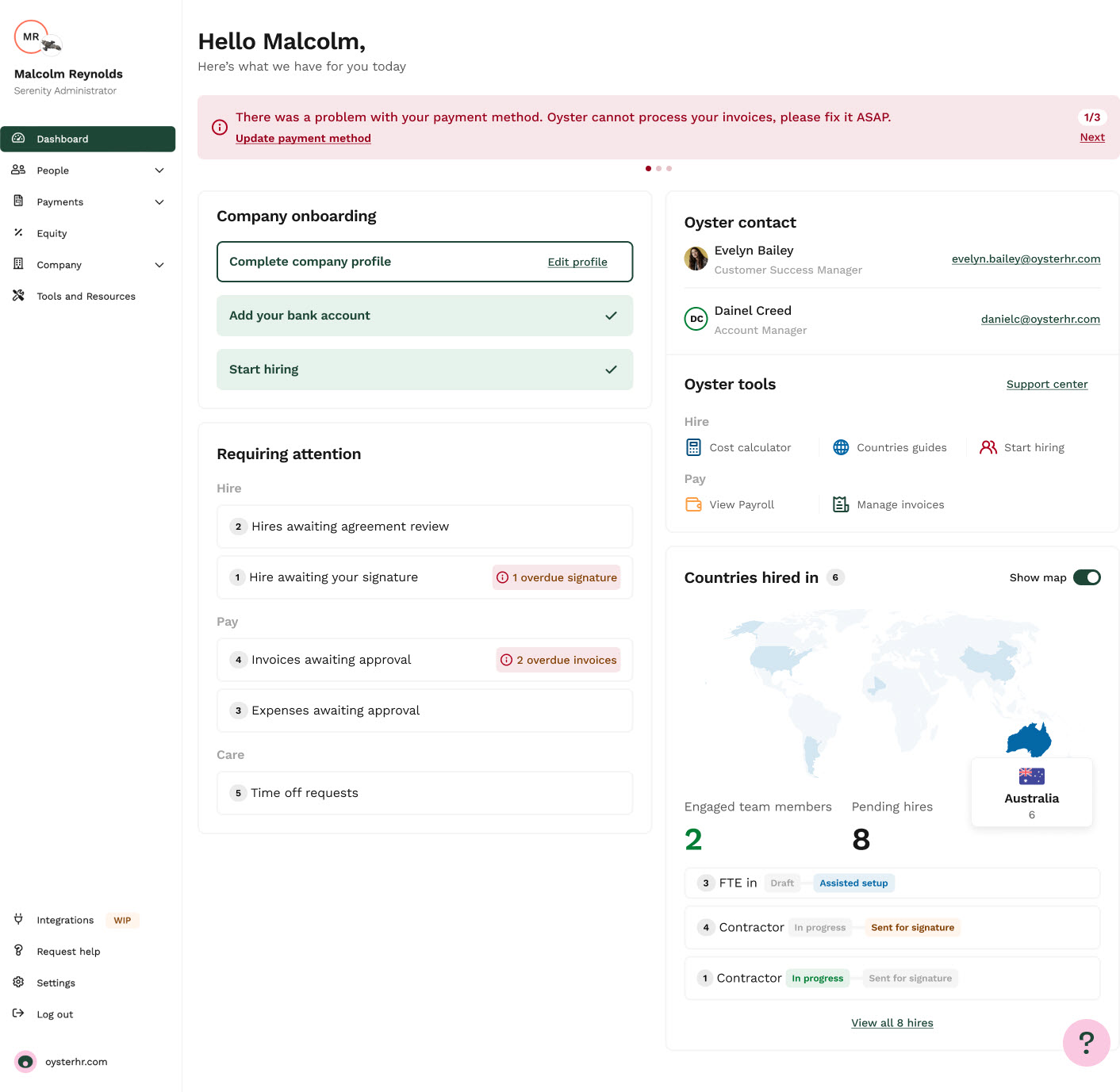
Starting fee
$699
Monthly billing. Annual seats are quoted separately, prepaid and non-refundable.
Against the 10 starting fees
5
 Pebl
4.2/5
Rating
Hiring people who need visa or relocation support
Starting fee: $399 USD / monthDeposit: Per quoteOnboarding: 2–5 days
My take
At onboarding, for an employee working in Romania, Pebl’s terms require that neither the client nor its affiliates is incorporated there, owns or controls a local entity, or plans to become, acquire or establish one.
Later changes to these circumstances must be reported promptly to Pebl in writing. This restriction matters when EOR is intended as a temporary step before opening a company.
Pebl, formerly Velocity Global, combines hiring, payroll, employee changes, reporting and offboarding in one platform. EOR starts at $399 per employee per month; the country quote must identify the dollar currency and billing commitment. Salary, employer costs, benefits and additional services are separate.
I’d check Pebl’s deposit and exit terms before committing. A deposit is required before onboarding; its amount can change with salary, seniority or payment history. It is returned after the final invoice and outstanding balances are paid. Early exit can make the remaining committed-term service fees payable, subject to the agreement’s termination exceptions. Any discounted offer needs an end date and renewal price.
Fit for your hire in Romania
For a foreign hire, I’d request the current application route and any transitional treatment for the candidate’s file.
Deposit
Per quote
Entity model
Affiliates and local partners
First year, one hire
$4,788 in service fees
Reviewed by Martynas PupkeviciusFact-checked by Michael Ennis
Pricing & terms
EOR service fee
From $399
Confirm the country price and billing commitment.
Deposit
Per quote
Contractor Management
$60 per contractor / monthPlus 3% processing on each invoice, charged in any month the contractor is active.
Contractor of Record
Not offeredPebl's contractor plan gives you templates to sign each contract yourself.
Recruitment
Through partnersPebl matches you with a recruiting partner. No charge until you hire; no fee is published.
First year, one hire
$4,788 in service feesAt $399 a month on a 12-month commitment; $7,188 at the $599 month-to-month rate in our UK estimate. Salary, employer costs and the refundable deposit come on top.
Entity model
Affiliates and local partnersA Pebl affiliate or an in-country partner employs your hire, depending on the country.
Onboarding
2–5 days
Ranked #4 in
See also
Pebl pros in Romania4
- D/AM2 permits for non-EU hires assessed and filed through Pebl’s immigration service
- A lower entry fee counts for more here where the employer adds only 2.25% CAM
- REGES-ONLINE and D112 filed for you by the employer, with no SRL of your own
- HiBob job data and leave stay in sync including custom fields you map
Pebl cons in Romania4
- Bars clients planning a Romanian SRL and any later entity plan needs written notice
- A partner contracting step can slow starts if a local partner rather than an affiliate employs
- 20 working days of Romanian notice but Pebl fees keep running across its 90-day period
- No in-house recruiters for a hire in Romania: a matched recruiting partner runs it, with no fee published
Pebl onboarding
Enlarge screenshot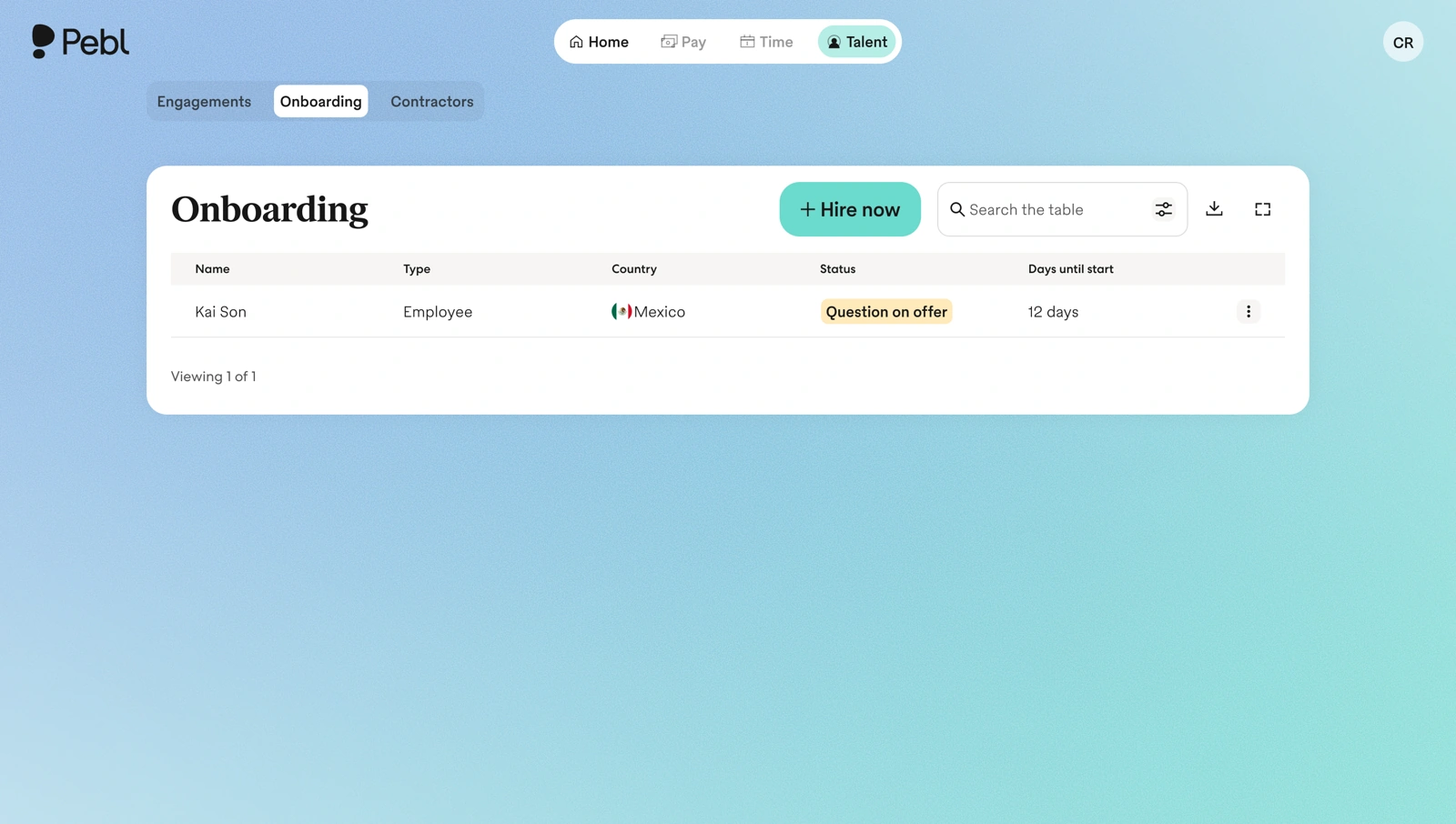
Starting fee
$399
Confirm the country price and billing commitment.
Against the 10 starting fees
6
 G-P
4.2/5
Rating
Hiring abroad while keeping your existing HR system
Starting fee: $599 USD / monthDeposit: 1–2.5 monthsOnboarding: 5–10 days
My take
G-P is worth a closer look if your requirements extend to custom API integrations.
I’d assess those alongside its EOR employment administration, benefits and reporting. EOR starts at USD 599 per employee per month, with volume discounts by quote. Salary, employer costs, benefit premiums and additional services are separate.
There is no minimum contract length for EOR hires. The proposal still sets the commercial billing and cancellation terms, along with the cost of any integration or implementation work.
Fit for your hire in Romania
For an enterprise programme, I’d want to see the Romanian employer’s identity, applicable collective terms and local escalation responsibilities.
Deposit
1–2.5 months
Entity model
100+ own entities, plus partners
First year, one hire
$7,188 in service fees
Reviewed by Martynas PupkeviciusFact-checked by Michael Ennis
Pricing & terms
EOR fee from
$599
Confirm the included services and billing terms in your country quote.
Deposit
1–2.5 months
Contractor Management
From $39 per contractor / monthCharged in months when an invoice is paid.
Contractor of Record
Not offeredG-P Contractor is self-service: you hire, classify and pay contractors on its platform.
Recruitment
Through partnersG-P refers you to vetted recruiting partners; talent insights come with its EOR Prime package. No fee is published.
First year, one hire
$7,188 in service feesAt $599 a month; volume pricing is quoted. Salary, employer costs and the refundable deposit come on top.
Entity model
100+ own entities, plus partnersA partner entity employs hires in some countries.
Onboarding
5–10 days
In our top 3 for
G-P pros in Romania3
- D/AM2 permit work as an add-on for non-EU staff, with government charges billed apart
- Supplemental benefits on top of the statutory useful where meal vouchers are near-universal
- API and HCM links included so Romanian records sync with your HR system
G-P cons in Romania4
- Romanian employer still to be named along with its collective agreement and who handles escalations locally
- The fee dwarfs local employer charges where CAM is just 2.25% of gross
- Dedicated manager not assured on current plans, so confirm a named contact
- G-P has no in-house recruiters, so Romanian searches go to vetted partners, with no fee published
G-P dashboard
Enlarge screenshot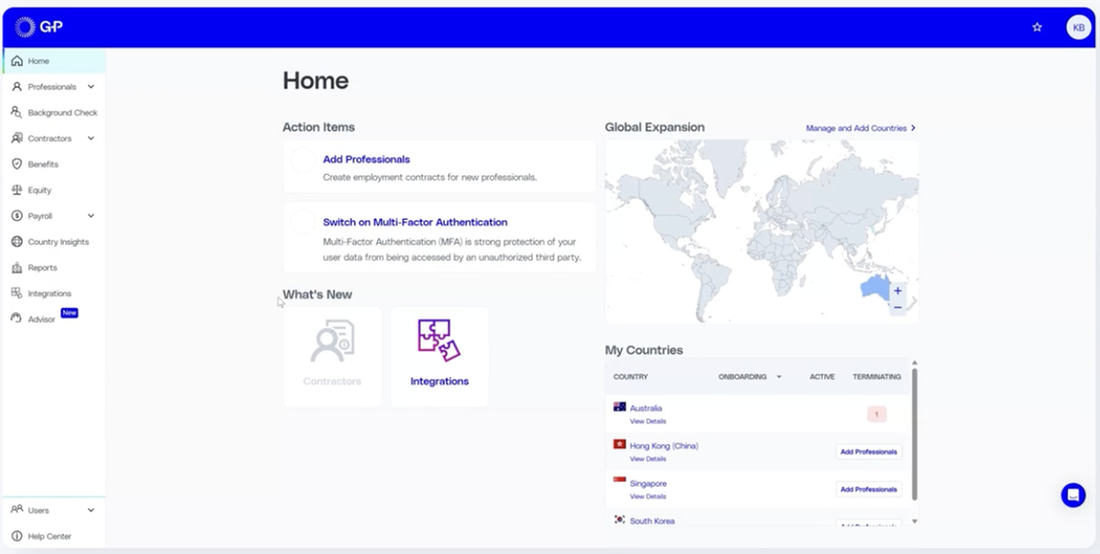
Starting fee
$599
Confirm the included services and billing terms in your country quote.
Against the 10 starting fees
7
 Papaya Global
4.1/5
Rating
Comparing payroll costs across countries in one report
Starting fee: $499 USD / monthDeposit: 1–2 monthsOnboarding: 4–6 days
My take
Papaya brings EOR employees, payroll for a company’s own entities and workforce payments into one platform, with consolidated reporting and payroll approval tools.
That payroll and payments connection is the part I’d focus on when comparing it with a standalone EOR service.
Papaya’s EOR service starts at USD 499 per employee per month. The country quote must identify the billing commitment and any additional services. Salary and employer costs are separate.
Fit for your hire in Romania
For payroll consolidation, I’d ask each shortlisted provider to demonstrate the same Romanian gross-to-net report, employer contribution and ledger export.
Deposit
1–2 months
Entity model
Partner + payroll engine
First year, one hire
$5,988 in service fees
Reviewed by Martynas PupkeviciusFact-checked by Michael Ennis
Pricing & terms
EOR service fee
From $499
The country quote sets the billing terms. Payroll-only processing is priced separately.
Deposit
1–2 months
Contractor Management
From $5 per contractor / monthContractor administration and payments.
Contractor of Record
From $199 per contractor / monthNo deposit.
Recruitment
Through partnersPapaya Talent, launched in November 2026, sends your role to a network of 23,000+ partner recruiters. No fee is published.
First year, one hire
$5,988 in service feesAt $499 a month. Salary, employer costs and the refundable deposit come on top.
Entity model
Partner + payroll engine
Onboarding
4–6 days
Papaya Global pros in Romania3
- Romanian payroll consolidated with your other countries, one ledger for finance
- Leu conversions for EOR are hedged at the moment Romanian salary is calculated
- Connectors cover SAP SuccessFactors and Oracle HCM, feeding HR inputs to payroll
Papaya Global cons in Romania4
- Have the partner show a gross-to-net and ledger export for Romania before you choose
- Contracts must be registered before day one, so align the partner’s Romanian timeline
- Legal-defence caps cover only some countries, so check Romania is on the list
- Papaya Global has no in-house recruiters, and Papaya Talent passes Romanian roles to 23,000+ partners
Papaya Global dashboard
Enlarge screenshot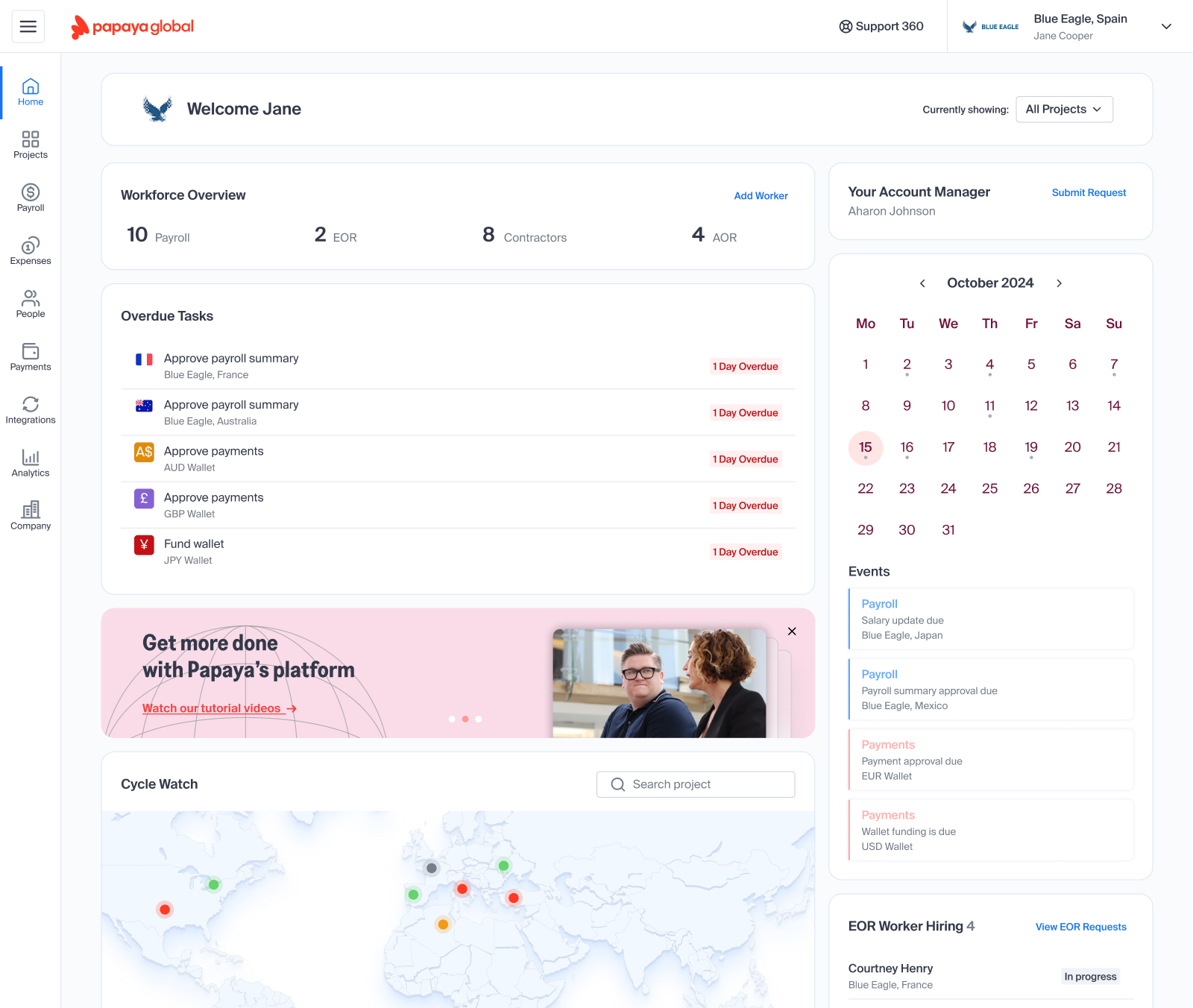
Starting fee
$499
The country quote sets the billing terms. Payroll-only processing is priced separately.
Against the 10 starting fees
8
 Multiplier
4.1/5
Rating
Managing payroll, leave and expenses in one place
Starting fee: $459 USD / monthDeposit: 1+ monthsOnboarding: 7–10 days
My take
My starting point with Multiplier would be Core, which covers employment administration, payroll, leave and standard workforce reporting.
Core starts at $499 per employee per month on monthly billing or $459 per month billed annually. I’d consider Growth if you need the integrations, custom reports and open APIs it adds. The quote needs to identify the dollar currency and chosen plan.
Country variations and mandatory add-ons affect the total. Implementation fees may apply, although the FAQ says setup is free; the quote must resolve that charge. Salary, employer costs and benefit premiums are additional.
Deposit
1+ months
Entity model
Own entities and partners
First year, one hire
$5,508 in service fees
Reviewed by Martynas PupkeviciusFact-checked by Michael Ennis
Pricing & terms
EOR service fee
From $459
Core plan billed annually, or $499 per month on monthly billing. Confirm the dollar currency.
Deposit
1+ months
Contractor Management
$40 per contractor / monthBilled annually.
Contractor of Record
From $400 per contractor / monthBilled annually. Adds classification support to contractor management.
Recruitment
Through partnersIts Talent Marketplace lists partner agencies, some with discounts for Multiplier customers. Each agency sets its fee.
First year, one hire
$5,508 in service feesAt $459 a month billed annually; $5,988 billed monthly. Salary, employer costs and the refundable deposit come on top.
Entity model
Own entities and partnersA partner employs hires in some countries.
Onboarding
7–10 days
Multiplier pros in Romania3
- REGES-ONLINE filing and the CIM contract are part of the Romanian service
- Romania slots into the APAC dashboard you may already run on Multiplier
- Contractors get paid in 120+ currencies from the same account
Multiplier cons in Romania4
- Name the Romanian entity in the contract to confirm Multiplier employs directly
- 20 working days’ notice plus 30 days’ processing before a Romanian exit closes
- The HiBob sync runs one way, into HiBob, so check each connection’s direction
- Recruiting in Romania means an agency: no in-house recruiters; some marketplace agencies give discounts
Multiplier dashboard
Enlarge screenshot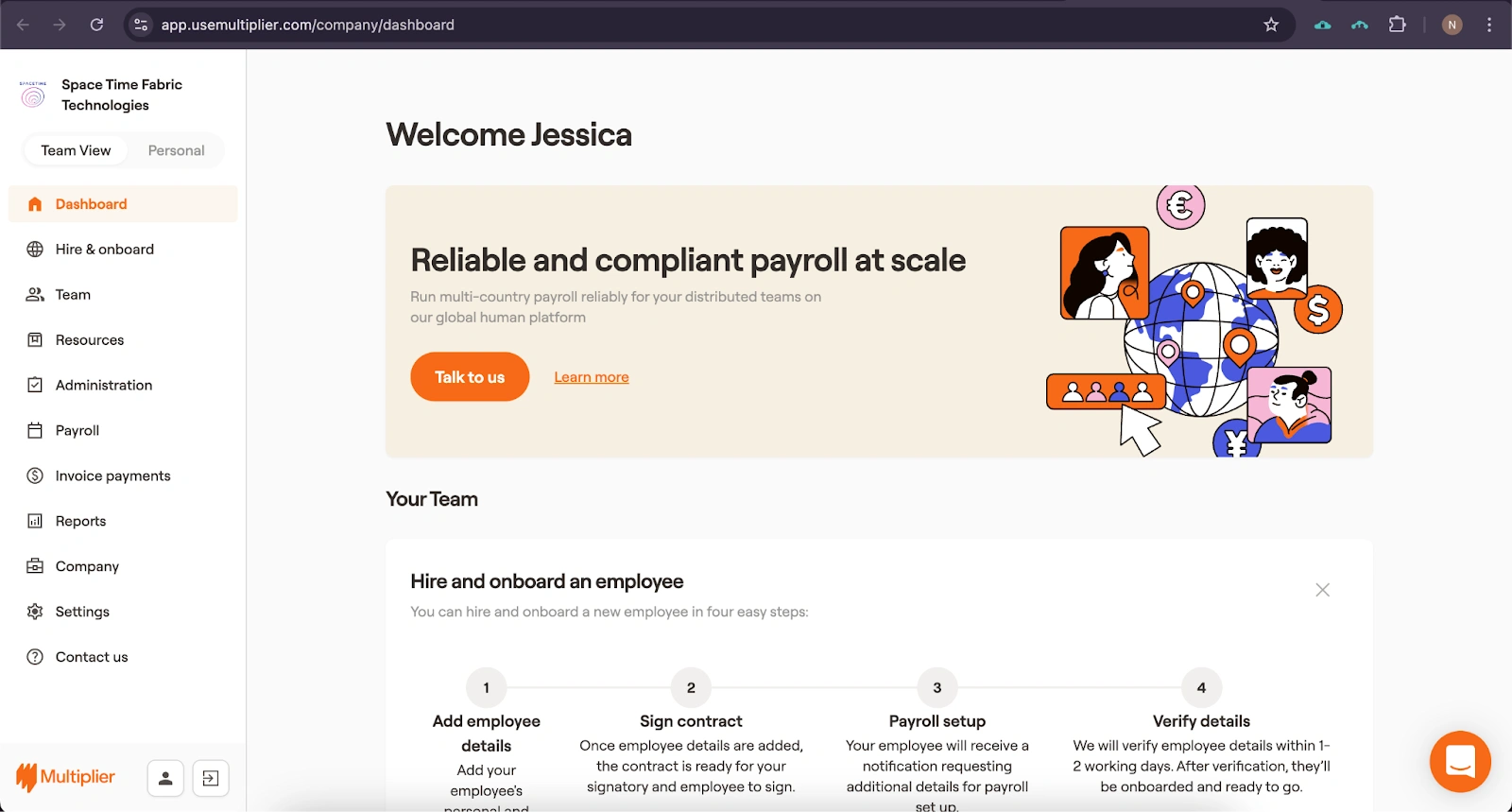
Starting fee
$459
Core plan billed annually, or $499 per month on monthly billing. Confirm the dollar currency.
Against the 10 starting fees
9
 Borderless AI
4.0/5
Rating
Getting 24/7 help with overseas payroll and HR
Starting fee: $579 USD / monthDeposit: 1.5–3 monthsOnboarding: 7-10 days
My take
I’d use Borderless AI’s standard EOR fee of USD 579 per employee per month when planning beyond the promotion.
Eligible companies headquartered outside Canada may qualify for USD 399 on fees billed through 31 December 2026. USD 579 applies from 1 January 2027, including promotional customers; country and employment-type exceptions apply. Salary, employer costs and benefits are additional.
A refundable deposit is required before the employee starts. The schedule is 1.5 months of gross salary plus employer costs, benefits and platform fees with ACH or three months by wire and other methods, with country variations. The base includes salary, employer contributions, benefits and platform fees. Late-payment issues can raise it to six months. Deposits are released after the relevant obligations are settled.
Fit for your hire in Romania
I’d ask for a Romanian contract and telework demonstration, including the named person who approves the local terms.
Deposit
1.5–3 months
Entity model
Own entities
First year, one hire
$6,948 in service fees
Reviewed by Martynas PupkeviciusFact-checked by Michael Ennis
Pricing & terms
EOR service fee
$579
Eligible companies headquartered outside Canada can pay $399 on fees billed through 31 December 2026.
Deposit
1.5–3 months
Contractor Management
$49 per contractor / monthIts homepage says contractor pricing starts at $29, so confirm the rate in your quote.
Contractor of Record
Not offeredBorderless AI sells contractor management only.
Recruitment
Not offeredBorderless AI lists no recruitment service. It announced a partnership with VanHack, a tech-talent marketplace, in May 2025.
First year, one hire
$6,948 in service feesAt the standard $579 a month; the $399 offer only covers fees billed through 31 Dec 2026. Salary, employer costs and the refundable deposit come on top.
Entity model
Own entitiesCheck the registered employer named in your country agreement.
Onboarding
7-10 days
Ranked #4 in
Borderless AI pros in Romania3
- AI guides the Romanian contract and onboarding from first draft to completed tasks
- Onboarding tasks tracked on one page helping meet Romania’s day-before registration rule
- Telework addendum clauses can be tailored in the draft before the CIM is signed
Borderless AI cons in Romania4
- Ask for the Romanian employer’s registration and who files a non-EU work permit
- Twenty working days’ notice and a written reason follow the seven-day exit request in Romania
- Live FX applies while invoices are unpaid so a leu salary can cost a different amount by payment day
- Finding Romanian candidates falls to you: no recruitment service, only a VanHack tie-up announced May 2025
Borderless AI dashboard
Enlarge screenshot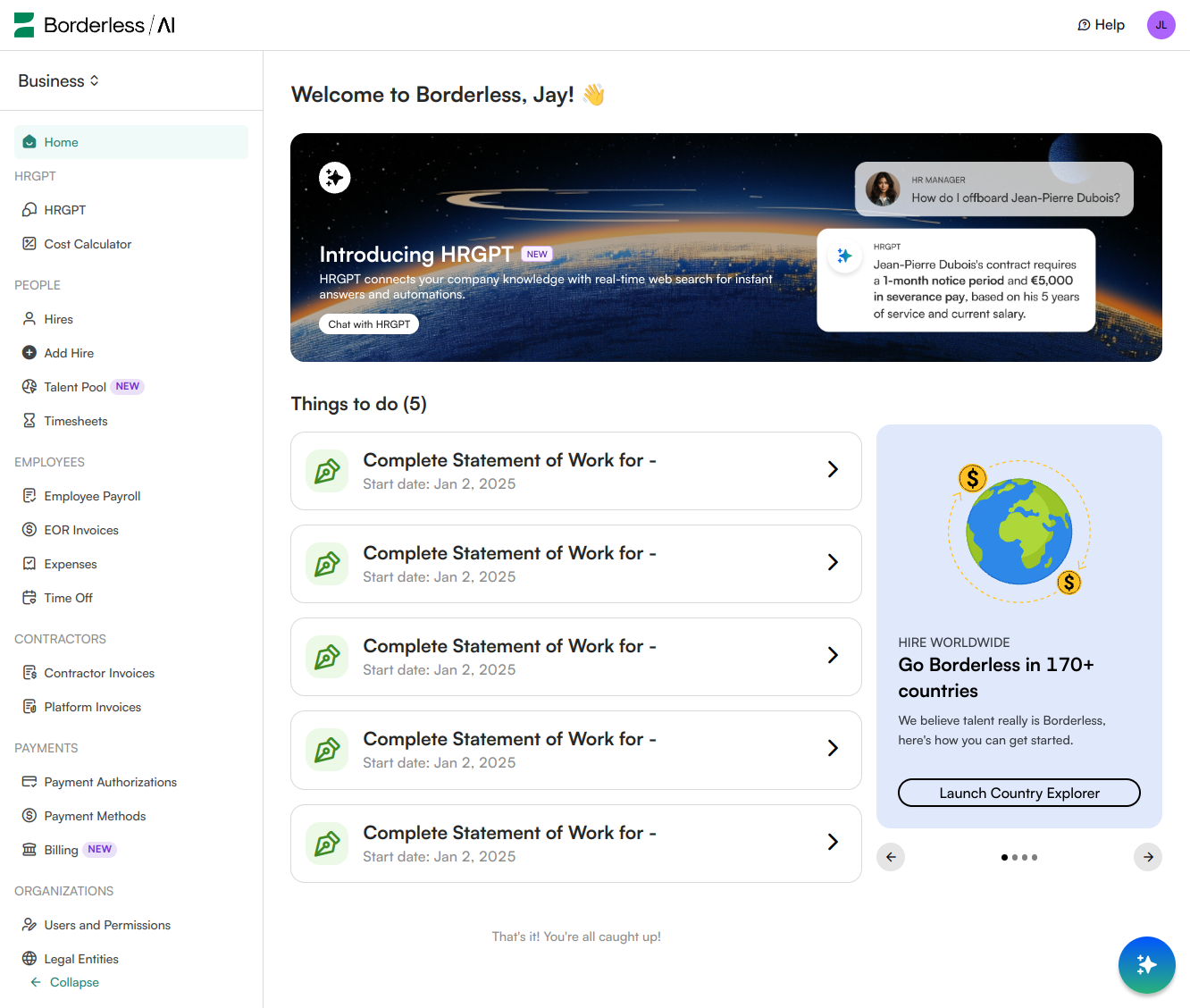
Starting fee
$579
Eligible companies headquartered outside Canada can pay $399 on fees billed through 31 December 2026.
Against the 10 starting fees
10
 RemoFirst
⚠ Trustpilot warning
0.5/5
Rating
Making a first overseas hire on a tight budget
Starting fee: $199 USD / monthDeposit: About 1 monthOnboarding: 5–9 days
My take
We moved RemoFirst to last place on 8 November 2026: Trustpilot has suspended its rating for a breach of its guidelines and removed fake reviews.
RemoFirst says it works exclusively with vetted in-country partners. Here, that means a local partner company, not RemoFirst, would normally employ your hire, and payroll changes, questions and exits pass through both companies, which can slow answers. US$199 is RemoFirst’s starting fee and varies by country, so get this country’s quote before you compare. The lack of a minimum contract term or headcount is what I like about RemoFirst’s offer. EOR employment starts at USD 199 per employee per month and includes a dedicated customer success manager. The fee can vary with country requirements. Salary, employer costs, benefits, deposits and optional services are separate.
Contractor management is free for onboarding, identity checks, contract storage and expenses. Contractor payments cost USD 25 per contractor in months when a payment is processed; payment-provider and transfer fees may also apply. These contractor services are separate from EOR employment.
Fit for your hire in Romania
If your workforce contains PFAs and employees, I’d compare the two service scopes and current charges separately.
Deposit
About 1 month
Entity model
Partners, not own entities
First year, one hire
$2,388 in service fees
Reviewed by Martynas PupkeviciusFact-checked by Michael Ennis
Pricing & terms
EOR fee from
$199
RemoFirst advertises no minimum contract term or employee count. Confirm any country-specific charges.
Deposit
About 1 month
Contractor Management
Free to manage$25 per contractor in months when a payment is processed. Payment-provider and transfer fees can apply.
Contractor of Record
Free to manageRemoFirst markets its contractor plan as Contractor of Record, at the same price: $25 per contractor in months when a payment is processed.
Recruitment
Through partnersIts Talent Marketplace lists partner agencies, many with first-hire discounts. Each agency sets its fee.
First year, one hire
$2,388 in service feesAt $199 a month; the fee varies by country. Salary, employer costs and the refundable deposit come on top.
Entity model
Partners, not own entitiesRemoFirst works only through vetted in-country partners, so in most countries a partner company, not RemoFirst, legally employs your hire.
Onboarding
5–9 days
RemoFirst pros in Romania3
- Free admin for PFA contractors kept apart from your Romanian employees
- Leu payroll uses mid-market exchange with the rate fixed on each invoice
- Coverage reaches beyond Romania to more than 185 hiring countries
RemoFirst cons in Romania4
- Name the Romanian partner that signs the CIM and who files a non-EU work permit
- Registration must land the day before start so check the partner’s timing on a Romanian hire
- Live hours differ between support pages 24/7 on one and 24/5 on another, so get them in writing
- Finding Romanian candidates means an agency: RemoFirst has no in-house recruiters, only partner agencies
RemoFirst dashboard
Enlarge screenshot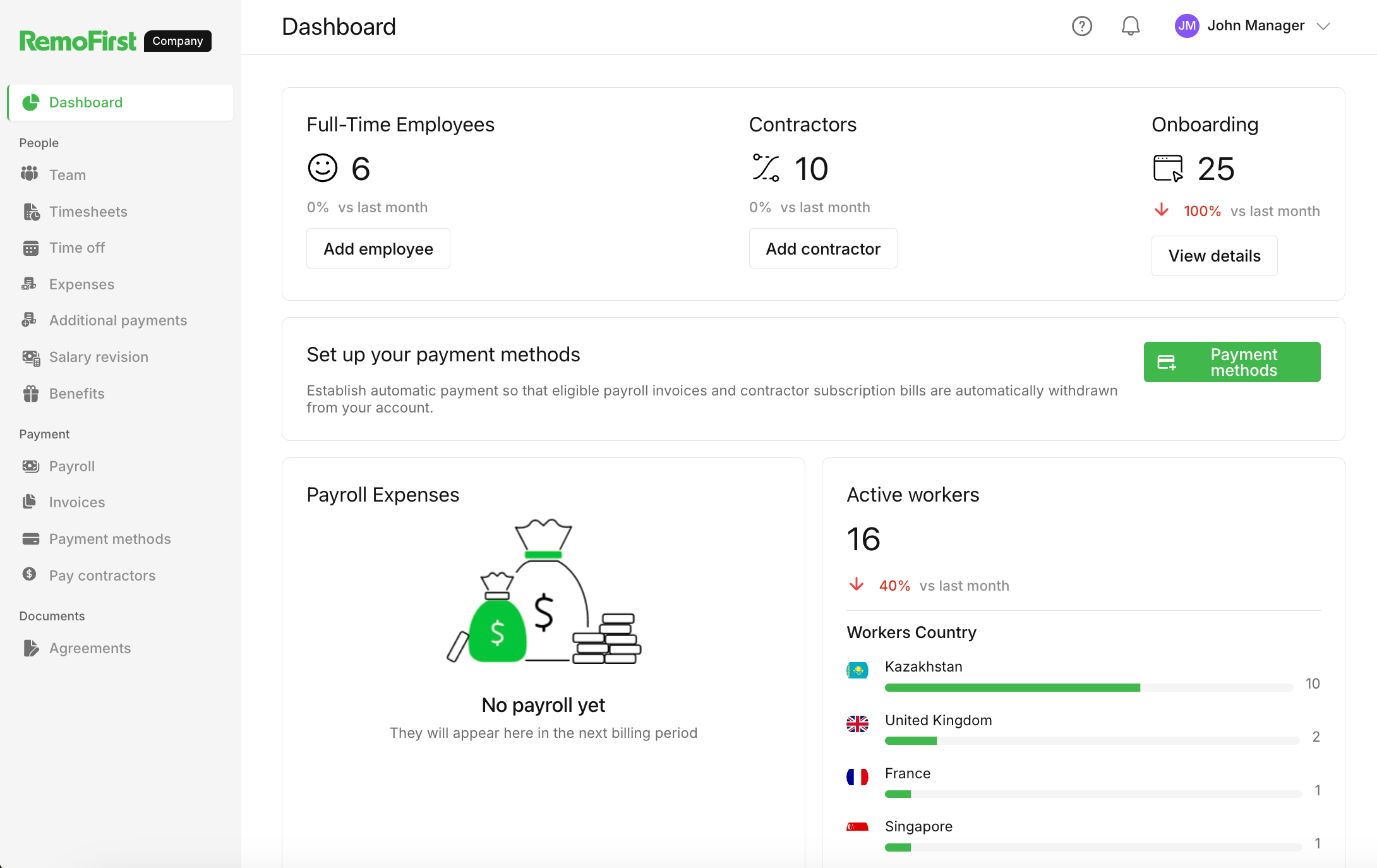
Starting fee
$199
RemoFirst advertises no minimum contract term or employee count. Confirm any country-specific charges.
Against the 10 starting fees