TheBestEOR

Best Employer of Record in the United States

Written by Martynas PupkeviciusFact-checked by Michael Ennis
Picture of Martynas Pupkevicius
Martynas Pupkevicius

EOR Advisor and Remote Work Editor

Our top employer of record in the United States for 2026 is RemotePeople, from USD 499 per employee a month, ahead of Deel and Rippling.

We tested all 10 providers with paid client accounts, real quotes and a live hire run through payroll. US payday rules depend on the employee’s state, and employers pay Social Security, Medicare and federal and state unemployment taxes.

Flag of the United States

Hiring in the United States at a glance

Currency
USD
US dollar
Pay cycle
By state
Depends on the state and job, check local payday rules
Working hours
40 hours
Overtime after 40 for eligible staff, states may add more
Annual leave
None required
Set by employer policy or employment agreement
Extra pay
Per comp plan
State rules can affect when earned pay is due
Employer costs
Payroll taxes
Social Security, Medicare, federal and state unemployment
Before you hire:
Use the work state to confirm payday rules, overtime eligibility and the benefits in the offer.

Country hiring overview · United States

Hiring in the United States, at a glance.

Use the work state and benefits to compare proposals.

Before comparing US providers, I’d establish the employee’s work state and locality. Then I’d ask how the employer will handle payroll taxes, workers’ compensation and benefits for that location, with employee eligibility and the service fee clearly scoped.

Choose a hiring solution

Need a local employer?

Compare an EOR arrangement for your role before opening your own entity.

Already have a local employer?

Compare payroll and HR support against adding an EOR.

EOR service fee

Fees vary by provider.

Your quote should state the currency, fee per employee, minimum charge and billing commitment.

Onboarding

Paperwork affects the start date.

The contract, right-to-work checks, registrations and payroll deadlines all affect when employment can begin.

Employment costs

Taxes depend on work location.

Ask for the federal, state and local employer taxes that apply where the employee works. Add workers’ compensation and agreed benefits when comparing the employment budget.

Annual leave

The FLSA sets no vacation minimum.

The employee’s contract, applicable state rules and government-contract exceptions need separate checks when you set the vacation allowance.

Check before choosing

Confirm state/local employment rules, payroll registrations, benefit eligibility, insurance and leave terms for the actual work location.

What your quote should include

Employment costs and service fees

1
Gross salary and agreed pay schedule
2
Federal/state/local taxes, workers’ compensation and benefits
3
EOR fee: currency, per-employee billing, minimums and commitment
4
Setup, foreign exchange, extras and exit costs

Deposits and payroll funding

1
Amount and payment deadline
2
Whether funds are refundable or credited to payroll
3
Release conditions and refund timing
Show these separately from recurring expenses.

Key takeaways for hiring in the United States

Overtime exemptions need duties and salary tests

For the common federal white-collar exemptions, the role generally needs to satisfy duties and salary-basis tests as well as the pay threshold. Give the EOR the real job duties and working pattern before classifying the employee as exempt.

Compare the actual health plan

Ask for the Summary of Benefits and Coverage for each proposed plan, then compare premiums, deductibles, out-of-pocket exposure and coverage examples. Separately check the provider network where the employee will use care.

One hire does not answer the ACA question

The employer shared-responsibility rules depend on applicable-large-employer status and can aggregate related employers. Have the proposal explain the employer, coverage offer and reporting responsibilities.

Coordinate a California exit before the meeting

For an ordinary California discharge, all earned wages and accrued vacation are generally due immediately. Tell the employer early enough to calculate and deliver the final payment. An EOR payroll cutoff does not extend the legal deadline.

Quick verdict

What is the best EOR in the United States?

My top three: RemotePeople, Deel and Rippling.

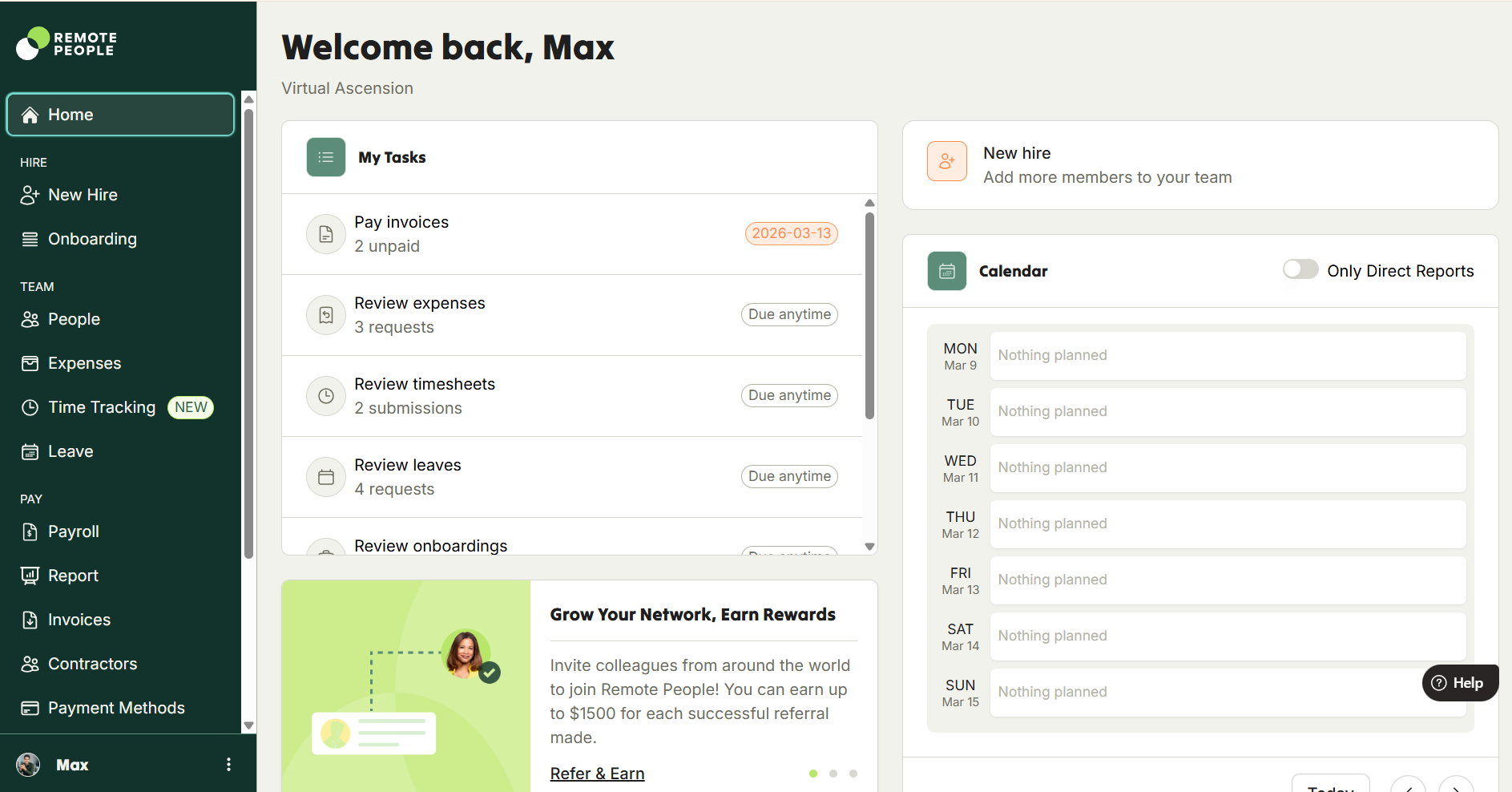
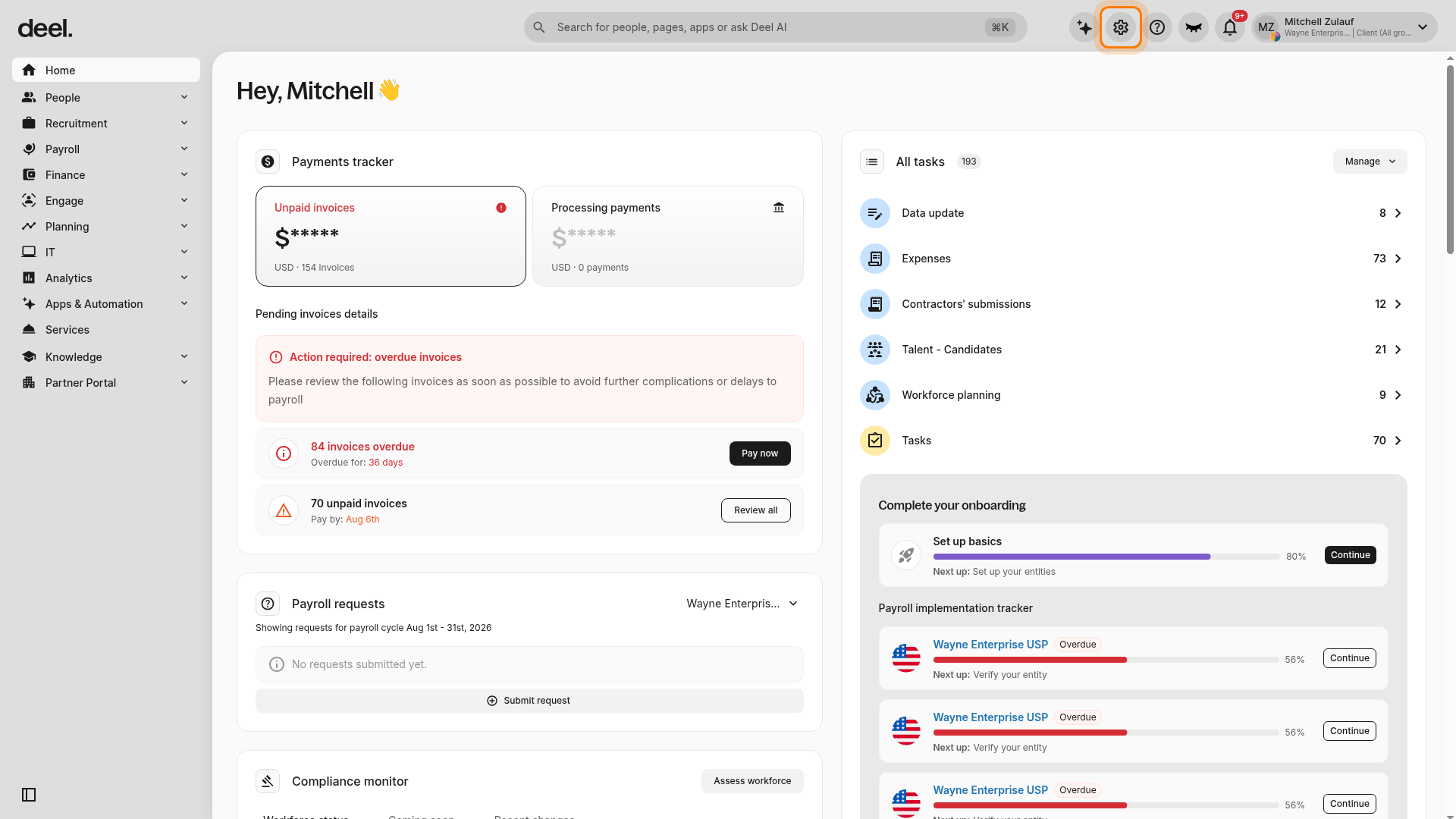
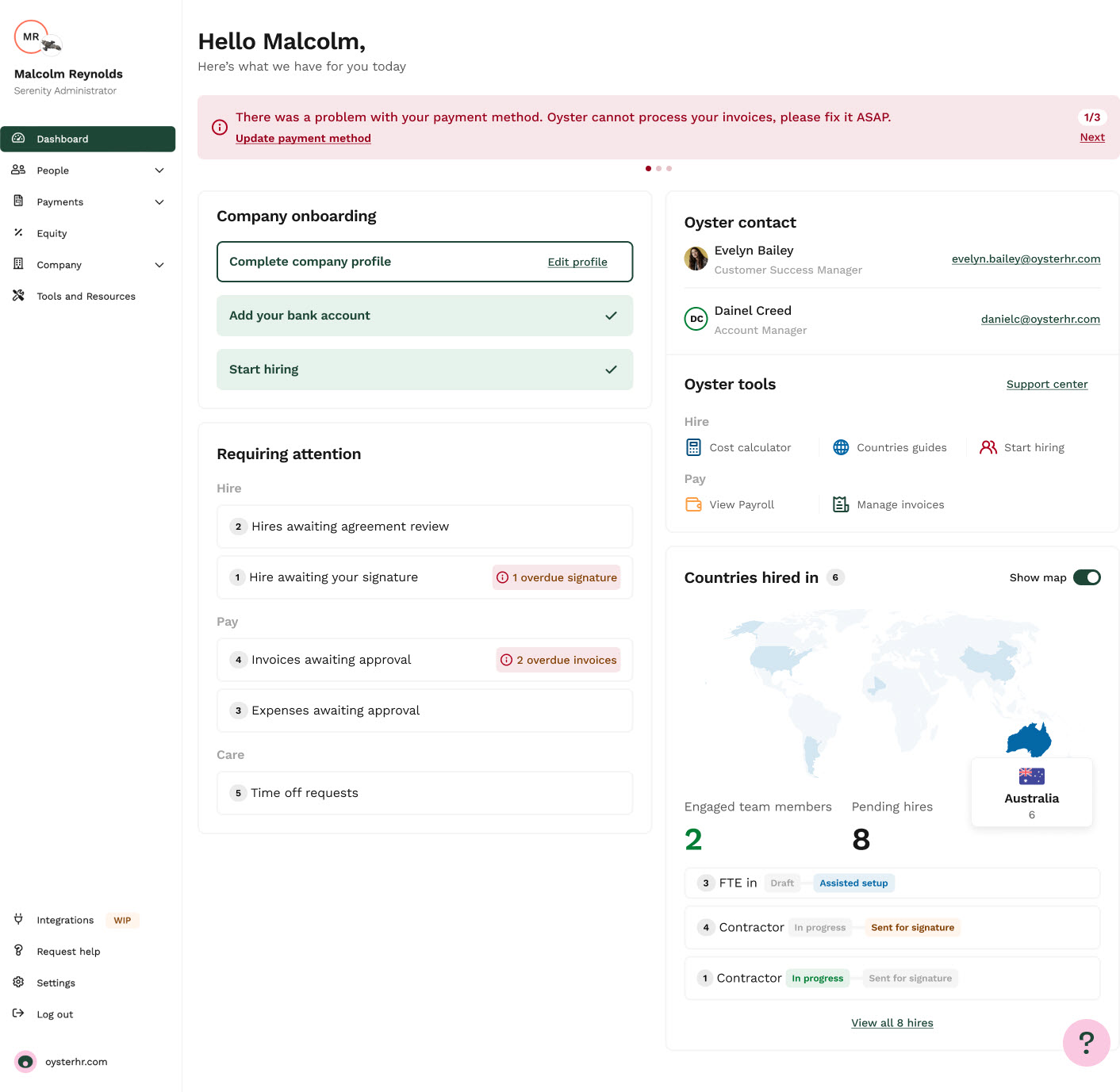
For a hire in the United States, I’d shortlist RemotePeople first. It offers recruitment and EOR through one provider, with a dedicated account manager on both EOR plans. Its EOR Global plan starts at USD 499 per employee per month, or USD 199 on EOR Select where the hire qualifies. Deel, from USD 599 plus a mandatory Employer Liability Cost, fits when the United States is one part of a wider employee and contractor programme. Rippling, from USD 499 plus its required platform, fits a team that already runs HR or IT on Rippling.

For a US hire, check how each provider handles payroll, tax filings and benefits for the employee’s state and locality. The starting fees below are global prices, so compare itemised quotes for that location.

1
Editorial pick
RemotePeople logo

4.9/5

RemotePeople

Hiring in new markets with local HR support

Starting fee
$499

per employee / month

Countries
150+
where you can hire

EOR Select from $199 for eligible hires.

Deposit
1 month

of gross salary

Deposit refund
Within 5 days

of the final payment

Why consider it

Recruitment and EOR services through one provider.

Dedicated account manager in both EOR plans.

Check the fit

Recruitment is separately priced. Confirm its fee and payment schedule.

Before signing: Confirm quote currency, billing commitment, deposits, funding deadlines and refund terms. EOR Select eligibility depends on the hiring country and employee salary.

Both EOR plans list local contracts, payroll and tax administration, and statutory benefits administration. Salary, employer contributions and benefit costs are separate.

Visit RemotePeople ↗

2
Deel logo

4.7/5

Deel

Paying employees and contractors on one platform

Starting fee
$599

per employee / month

Countries
130+
where you can hire

Plus a mandatory Employer Liability Cost.

Deposit
1–1.5 months

of gross salary

Deposit refund
Within 60 days

of offboarding

Why consider it

EOR, contractor management and payroll for your own entities.

Month-to-month EOR service pricing available.

Check the fit

Ask for the country-specific Employer Liability Cost in your quote; it is mandatory.

Before signing: Confirm the Employer Liability Cost amount, benefit costs and any additional products.

The EOR pricing page lists 130+ countries.

Visit Deel ↗

3
Rippling logo

4.5/5

Rippling

Setting up payroll, laptops and app access for new hires

Starting fee
$499

per employee / month

Countries
115
where you can hire

Plus the Rippling Platform, from $8 per employee / month.

Deposit
Per quote

based on gross salary

Deposit refund
Per contract

set in your agreement

Why consider it

EOR, payroll, HR records and benefits administration in one platform.

Shared workflows and reporting for domestic and international teams.

Check the fit

Ask for an itemised quote showing the required platform and each HR or IT module.

A paid Rippling Platform subscription is required on top of the EOR fee, from $8 per employee per month plus a monthly base fee. Rippling EOR starts at $499 per employee per month. Other HR and IT products are priced separately.

Rippling’s EOR page lists 115 countries. Confirm your hiring country and legal employer.

Visit Rippling ↗

No provider pays for a position on this page; some outbound links pay a referral fee. See the funding model and methodology.

EOR fee and PEO option, side by side

All 10 EOR providers for the United States, side by side

Health networks and final-pay rules vary by state.

A provider’s fee reads the same in Austin as in Albany; nearly everything else about a US hire (the SUTA rate, the final-pay deadline, the health network) changes at the state line. Fees are 2026 list prices per employee per month. Estimated onboarding times are the providers’ published service levels.

Eight of the ten say they sign the W-2 on an entity they own. RemoFirst routes through a vetted US partner, and Papaya says it works through in-country partners rather than its own entities. With ownership claimed almost across the board, the choice falls to the fee, the health network behind the offer, and the platform. Hiring in several countries? Start with the 10 best EOR services overall. For a wider shortlist, browse EOR providers for the United States.

Provider

Best For

Starting feeDepositOnboarding
1 RemotePeople logo RemotePeople 4.9/5 Rating Hiring in new markets with local HR support Starting fee: $499 USD / monthDeposit: 1 monthOnboarding: 2–3 days

My take

I’d keep RemotePeople’s US PEO and EOR proposals separate. It has a US PEO service from $99 per employee per month for businesses with their own US entity.

Recruit + EOR recruitment costs 2% of annual salary each month for 12 months, a total of 24%, in addition to EOR fees and employment costs.

EOR Global starts at USD 499 per employee per month. EOR Select starts at USD 199 for eligible countries and employee salary ranges. Salary, employer contributions and benefits are separate; the proposal sets the applicable plan, billing commitment, deposit and payroll funding terms.

When this provider fits

I’d consider RemotePeople when a named coordinator and a defined employment package fit your US hiring plan.

Ask before signing

Which health plan and overtime-classification review are included for this employee and work state?

Deposit

1 month

Entity model

Own entities in core markets

First year, one hire

$5,988 in service fees

Reviewed by Martynas PupkeviciusFact-checked by Michael Ennis

Starting fee

$499

EOR Global. EOR Select starts at $199 where the country and employee salary qualify.

Against the 10 starting fees

$199 lowest$699 highest
2 Deel logo Deel 4.7/5 Rating Paying employees and contractors on one platform Starting fee: $599 USD / monthDeposit: 1–1.5 monthsOnboarding: 1–3 days

My take

I’d consider Deel if you want EOR employment and contractor management in one system.

Contractor management starts at USD 49 per contractor per month and is separate from the EOR service.

Deel’s global EOR service starts at USD 599 per employee per month, with month-to-month pricing available. Mandatory Employer Liability Cost is charged separately and varies by country. Salary, employer contributions, benefits and any additional services sit outside the starting service fee.

Deposit

1–1.5 months

Entity model

Owned entity

First year, one hire

$7,188 in service fees

Reviewed by Martynas PupkeviciusFact-checked by Michael Ennis

Starting fee

$599

Month-to-month billing. Mandatory Employer Liability Cost is charged separately.

Against the 10 starting fees

$199 lowest$699 highest
3 Rippling logo Rippling 4.5/5 Rating Setting up payroll, laptops and app access for new hires Starting fee: $499 USD / monthDeposit: Per quoteOnboarding: 1–3 days

My take

Rippling interests me when you want EOR employees to share HR records and workforce reporting with the rest of the organisation.

App access and device management are separate products.

Rippling EOR starts at USD 499 per employee per month, plus the required Rippling Platform from USD 8 per employee per month plus a monthly base fee. Billing commitment and optional HR or IT modules are quote-specific.

When this provider fits

Rippling would make my shortlist when the employee will join an existing HR and IT setup.

Ask before signing

Who approves a work-state change, and what happens to payroll, leave and health-plan eligibility?

Deposit

Per quote

Entity model

Own entities and local partners

First year, one hire

$5,988 in EOR fees

Reviewed by Martynas PupkeviciusFact-checked by Michael Ennis

Starting fee

$499

Plus the required Rippling Platform, from $8 per employee per month and a monthly base fee. Confirm the billing terms and selected products.

Against the 10 starting fees

$199 lowest$699 highest
4 Oyster logo Oyster 4.5/5 Rating Using one onboarding process for hires across countries Starting fee: $699 USD / monthDeposit: ~1 monthOnboarding: 2–4 days

My take

I’d look at Oyster’s Global Hiring workflow if you want automated Team Member onboarding, automated agreements and electronic signature in the US.

People Partner advice is a separate service at USD 300 per hour.

Oyster’s month-to-month EOR rate is USD 699 per employee per month. Annual seats are quoted separately. Standard annual billing is prepaid and non-refundable; quarterly or semiannual payment is available at a higher seat price. A seat can be reused for a replacement hire. Salary, employer costs, deposits and optional services are additional.

When this provider fits

I’d shortlist Oyster when its proposed US benefits package meets needs that a cheaper offer does not.

Ask before signing

Can I compare the actual plan summaries and dependent premiums before committing?

Deposit

~1 month

Entity model

Owned entity

First year, one hire

$8,388 in service fees

Reviewed by Martynas PupkeviciusFact-checked by Michael Ennis

Starting fee

$699

Monthly billing. Annual seats are quoted separately, prepaid and non-refundable.

Against the 10 starting fees

$199 lowest$699 highest
5 Pebl logo Pebl 4.2/5 Rating Hiring people who need visa or relocation support Starting fee: $399 USD / monthDeposit: Per quoteOnboarding: 2–4 days

My take

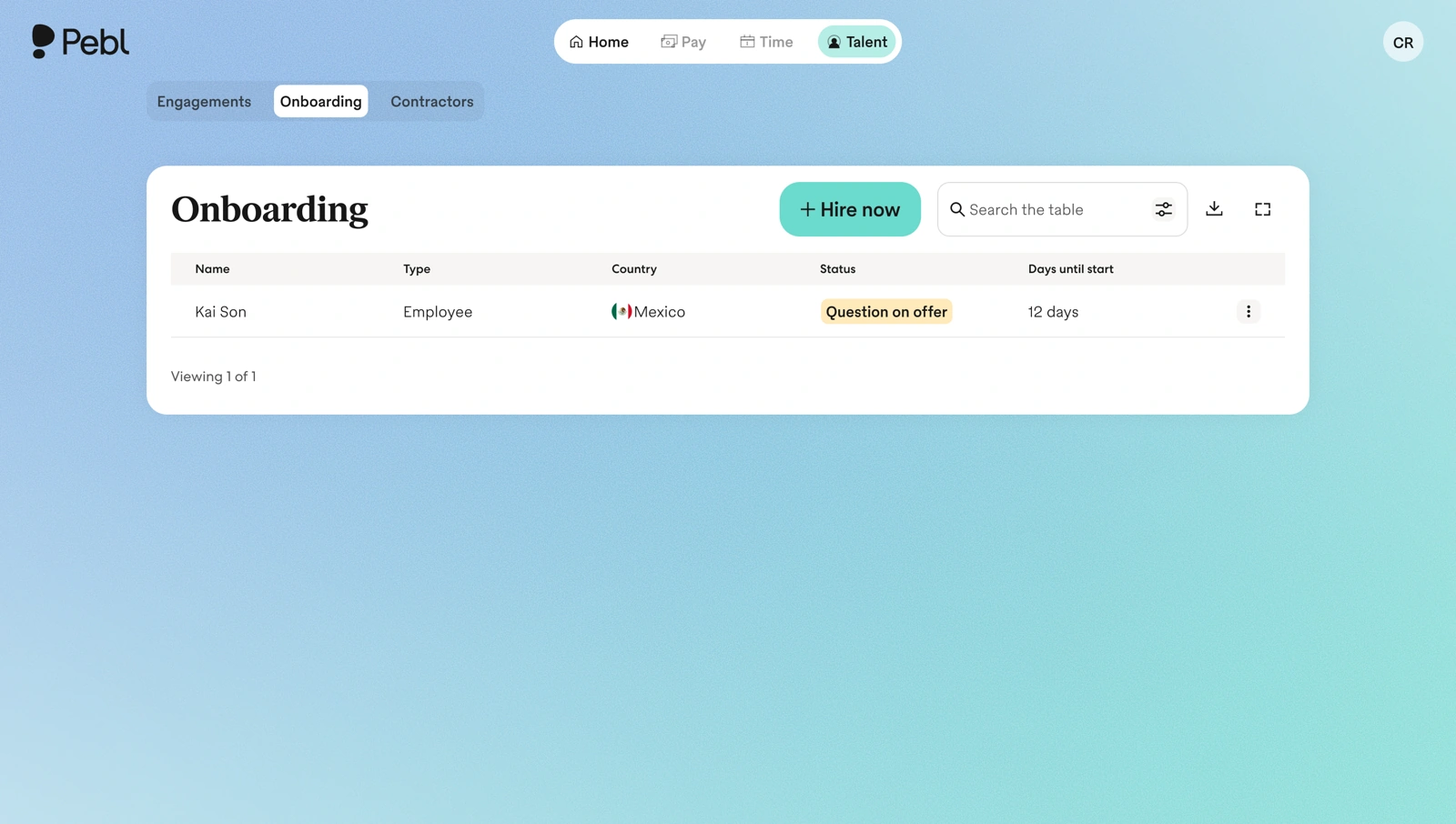
I’d look at Pebl, formerly Velocity Global, if you want payroll and benefits administration together with employment support.

Immigration support and supplementary benefits are available as additional services.

Pebl lists an EOR fee of $399 per employee per month, but the general price does not specify the dollar currency or billing commitment. The country proposal determines availability, any offer period and renewal terms; salary, employer costs and additional services are separate.

When this provider fits

Pebl’s advertised fee makes it useful for a complete US cost comparison. Whether it is good value depends on the plan available to the actual employee.

Ask before signing

Which network and plan apply in the employee’s ZIP code, and what is the employer’s total monthly contribution?

Deposit

Per quote

Entity model

Affiliates and local partners

First year, one hire

$4,788 in service fees

Reviewed by Martynas PupkeviciusFact-checked by Michael Ennis

Starting fee

$399

Confirm the country price and billing commitment.

Against the 10 starting fees

$199 lowest$699 highest
6 G-P logo G-P 4.2/5 Rating Hiring abroad while keeping your existing HR system Starting fee: $599 USD / monthDeposit: 1–2.5 monthsOnboarding: 2–4 days

My take

I’d consider G-P when you need to assess optional visa support, background checks or equity payroll management alongside employment.

Additional services have their own eligibility and charges.

G-P’s global EOR fee starts at USD 599 per employee per month, with a tailored country proposal. There is no minimum duration for an EOR hire; the client’s billing, cancellation and employee exit terms remain separate contract terms.

Deposit

1–2.5 months

Entity model

100+ own entities, plus partners

First year, one hire

$7,188 in service fees

Reviewed by Martynas PupkeviciusFact-checked by Michael Ennis

Starting fee

$599

Confirm the included services and billing terms in your country quote.

Against the 10 starting fees

$199 lowest$699 highest
7 Papaya Global logo Papaya Global 4.1/5 Rating Comparing payroll costs across countries in one report Starting fee: $499 USD / monthDeposit: 1–2 monthsOnboarding: 2–5 days

My take

Papaya’s account manager is the part I’d examine closely: this contact coordinates payroll, legal, finance and benefits specialists.

Employees can also raise tickets through its worker app or WhatsApp.

Papaya’s EOR service starts at USD 499 per employee per month. The country quote must identify the billing commitment and any additional services. Salary and employer costs are separate.

Deposit

1–2 months

Entity model

Partner; engine-led

First year, one hire

$5,988 in service fees

Reviewed by Martynas PupkeviciusFact-checked by Michael Ennis

Starting fee

$499

The country quote sets the billing terms. Payroll-only processing is priced separately.

Against the 10 starting fees

$199 lowest$699 highest
8 Multiplier logo Multiplier 4.1/5 Rating Managing payroll, leave and expenses in one place Starting fee: $459 USD / monthDeposit: 1+ monthsOnboarding: 2–4 days

My take

With Multiplier, I’d compare the commitment as well as the fee: Core starts at $499 per employee per month on monthly contracts, or $459 per employee per month billed annually.

The dollar currency is not specified. Country variations and compliance add-ons affect the quote. Growth adds integrations, custom reports and open API access. Implementation fees may apply, although the FAQ says setup is free; the quote must resolve that charge.

Deposit

1+ months

Entity model

Own entities and partners

First year, one hire

$5,508 in service fees

Reviewed by Martynas PupkeviciusFact-checked by Michael Ennis

Starting fee

$459

Core plan billed annually, or $499 per month on monthly billing. Confirm the dollar currency.

Against the 10 starting fees

$199 lowest$699 highest
9 Borderless AI logo Borderless AI 4.0/5 Rating Getting 24/7 help with overseas payroll and HR Starting fee: $579 USD / monthDeposit: 1.5–3 monthsOnboarding: 2–5 days

My take

Borderless AI’s US benefits programme offers Aetna medical, dental and vision coverage, Sun Life life and disability insurance, and a Guideline 401(k).

I’d price the employer contributions, premiums and eligibility with the full employment package. A deposit is required before onboarding.

Borderless AI’s standard fee is USD 579 per employee per month. Eligible companies headquartered outside Canada can pay USD 399 on fees billed through 31 December 2026; USD 579 applies from 1 January 2027, including promotional customers. Some countries and employment types are priced separately. Salary and employer costs are additional.

Deposit

1.5–3 months

Entity model

Own entities

First year, one hire

$6,948 in service fees

Reviewed by Martynas PupkeviciusFact-checked by Michael Ennis

Starting fee

$579

Eligible companies headquartered outside Canada can pay $399 on fees billed through 31 December 2026. Deposits are typically 1.5 months of gross salary plus employer costs and fees with ACH payments, or 3 months with other payment methods.

Against the 10 starting fees

$199 lowest$699 highest
10 RemoFirst logo RemoFirst ⚠ Trustpilot warning 0.5/5 Rating Making a first overseas hire on a tight budget Starting fee: $199 USD / monthDeposit: About 1 monthOnboarding: 3–5 days

My take

We moved RemoFirst to last place on 8 November 2026: Trustpilot has suspended its rating for a breach of its guidelines and removed fake reviews.

RemoFirst says it works exclusively with vetted in-country partners. Here, that means a local partner company, not RemoFirst, would normally employ your hire, and payroll changes, questions and exits pass through both companies, which can slow answers. US$199 is RemoFirst’s starting fee and varies by country, so get this country’s quote before you compare. I separate RemoFirst’s contractor pricing from its EOR offer. Its free contractor tier covers administration, including contract management and identity checks. Contractor payments cost USD 25 per contractor in months when a payment is processed; payment-provider and transfer fees may also apply.

RemoFirst’s global EOR fee starts at USD 199 per employee per month, with no minimum contract term or employee count. The country fee, deposit, payroll funding and add-ons depend on the proposal. Salary and employer costs are additional.

Deposit

About 1 month

Entity model

Partners, not own entities

First year, one hire

$2,388 in service fees

Reviewed by Martynas PupkeviciusFact-checked by Michael Ennis

Starting fee

$199

RemoFirst advertises no minimum contract term or employee count. Confirm any country-specific charges.

Against the 10 starting fees
$199 lowest$699 highest

Fig. 1 · All ten providers: fee, entity model and onboarding · June 2026 · “Owned entity” means the provider’s own US company signs the W-2 and registers for state withholding and unemployment in the states you hire in; entity descriptions are each provider’s own statements. A US PEO is a separate co-employment product for clients who already hold a US entity.

Which top pick · United States

The US choice usually comes down to cost, depth, or whether you need an EOR at all. If you have no US entity, compare complete EOR proposals from RemoFirst, RemotePeople and the other providers here. RemotePeople Global starts at $499 and Select at $199 per employee/month where country and employee salary qualify. If you already hold a US entity, you may not need an EOR at all: a US PEO pools benefits and offloads payroll under co-employment, and RemotePeople, Deel and Rippling all run one. Request an itemised quote for the hire. The EOR cost calculator lets you compare the recurring amounts in USD.

Domestic US PEO alternatives: if you already hold a US entity, established domestic PEOs such as Justworks, Gusto, TriNet and Rippling PEO pool benefits and run payroll under co-employment. A US-only employer with an entity may find a domestic PEO the better fit.

Get your EOR discount

Get up to 30% off eligible EOR service fees. Your quote confirms the discount and terms.

Employment framework

Employment and payroll in the United States

Confirm whether the proposal is for an EOR or a PEO.

US employment terms depend on federal law and the state and locality where the employee works. The provider’s proposal should distinguish EOR employment from a PEO co-employment service.

Confirm whether the proposal is EOR or PEO

A PEO uses a co-employment arrangement, while an EOR service is commonly considered by companies hiring without their own US employing entity. Confirm the actual legal structure, required registrations and division of responsibilities in the provider’s proposal.

Providers may sell both services. Check which product you are buying and which entity will employ the worker.

Employment terms and location

The identified US employer prepares the offer or contract under applicable federal, state and local law. Confirm the terms for the employee’s state and locality, including any limits on at-will employment.

Request the employer’s name and registration details. You direct the work; the EOR handles the employment relationship, payroll taxes and federal and state filings.

Federal and state payroll obligations

Federal taxes and returns

The EOR deposits federal taxes to the IRS on a semi-weekly or monthly schedule, files Form 941 quarterly and files Form 940 for FUTA annually.

State taxes and injury cover

It remits state withholding and unemployment tax and carries workers’ compensation cover.

Employee tax record

The employee receives a Form W-2 in January.

From offer to first payroll

1

Confirm the location and package

Agree salary, the intended start date and the employee’s state and locality.

2

Review the offer and benefits

The EOR prepares employment documentation and a benefits summary. Agree required documents, approvals and dates.

3

Complete payroll and work-authorisation checks

Collect tax forms and direct-deposit details and complete the applicable Form I-9 process to verify authorisation to work.

4

Confirm state registrations and first payroll

Check that withholding and unemployment registrations are ready, then agree the first-payroll cutoff. You manage the work and approve timesheets and expenses where relevant.

Employer cost

Statutory employer taxes in the United States

State unemployment rates depend on the work location.

Social Security, Medicare and FUTA carry one national rate each, while SUTA, workers’ compensation and any disability levy depend on the state where your hire sits. The statutory employer load is only about 8 to 12 percent of gross; health-plan costs vary by employer and coverage. ACA employer shared-responsibility rules can require a qualifying coverage offer or expose an applicable large employer to a payment.

Contribution Employer rate Cap / basis Agency
Contribution
Social Security (OASDI)
Employee also pays 6.2%
Employer rate
6.2%
Cap / basis
On first $184,500 of wages (2026); max $11,439
Agency
IRS / SSA
Contribution
Medicare (HI)
Employee 1.45% + 0.9% over $200k (no employer match)
Employer rate
1.45%
Cap / basis
On all wages, no ceiling
Agency
IRS / SSA
Contribution
FUTA (federal unemployment)
6.0% gross less 5.4% state credit
Employer rate
0.6% effective
Cap / basis
On first $7,000; max $42/employee/yr
Agency
IRS
Contribution
SUTA (state unemployment)
Varies by state and experience rating
Employer rate
~0.5–6%+
Cap / basis
State wage base ($7,000 to $60,000+)
Agency
State agencies
Contribution
Workers' compensation
State coverage rules and exceptions apply
Employer rate
Varies by class & state
Cap / basis
By role risk class and payroll
Agency
State / private carriers
Contribution
State disability / PFL
Employer share only in some states
Employer rate
0–~1%
Cap / basis
Separate disability and paid-leave programs; verify each work state
Agency
State agencies

Fig. 2 · Mandatory employer contributions in the United States, 2026 rates and wage caps

For a $145,000 salary, employer Social Security runs 6.2 percent up to a cap of $11,439; $145,000 sits below the $184,500 wage base, so the full 6.2 percent applies and costs $8,990. Medicare at 1.45 percent adds $2,103, FUTA adds $42, and SUTA plus workers’ compensation typically add 1 to 3 percent, so the all-in statutory employer cost lands near 9 to 11 percent of gross. The single biggest variable cost sits outside this table: an employer-sponsored health plan averaged $9,325 a year for single cover and $26,993 for family cover in 2025 per KFF, of which the employer typically pays about $7,885 and $20,143. The EOR fee sits on top of all of this.

How to compare two US benefits packages

Request the exact plan documents for the employee’s location and enrollment category. HealthCare.gov explains that job-based plans provide a standardized Summary of Benefits and Coverage, including common coverage examples. Use that summary to compare cost-sharing.

Put employer and employee premium contributions alongside the deductible and out-of-pocket limits. Then separately check local doctors, hospitals, prescription coverage, dependent eligibility and the start date of cover.

IRS employer shared-responsibility rules turn on the actual employer and applicable aggregation rules. The EOR should explain its coverage and reporting responsibilities, while the quote identifies what the client funds.

Working time & leave

Working hours, overtime and leave

Check state and city paid-leave requirements.

The US has no federal paid annual leave, sick leave or paid family leave; the FLSA governs overtime, and paid time off is set by employer policy and a growing patchwork of state and city mandates.

Hours and overtime

Standard week 40 hours
Overtime (non-exempt) 1.5× over 40/wk
Exempt salary floor $684/wk (federal)
Federal paid leave None
FMLA (unpaid) 12 weeks
Federal holidays 11 (not mandated paid)

Fig. 3 · Hours and overtime in the US · FLSA overtime is 1.5× the regular rate beyond 40 hours a week for non-exempt employees; some states such as California add daily overtime and a higher salary floor.

Overtime under the Fair Labor Standards Act applies to non-exempt employees at 1.5 times the regular rate beyond 40 hours a week; employees must meet the applicable duties, pay and other requirements for an exemption, and some states such as California add daily overtime and a higher salary floor. The 11 federal holidays bind federal employers; private employers choose which to pay.

Classify overtime status by job duties

Send the EOR a job description that states the employee’s real duties, decision-making authority and expected hours. Ask which federal exemption, if any, applies and how the work-state rules affect that answer. The Department of Labor’s guidance makes clear that titles do not determine exempt status and that the relevant tests must all be satisfied.

For example, calling a routine support role “operations manager” does not qualify it for the executive exemption. The provider should explain the classification in terms a manager can use when assigning work, and identify any time-recording and overtime process needed.

Compare providers on the quality of that employee-specific explanation, not on an unsupported promise that their platform “automatically ensures compliance”. If the work changes, have a defined route to revisit the decision before the next pay period. The approved salary and the system’s exempt-status field should reflect the assessed role.

Leave (policy or state)

Annual leave (PTO)
market norm, not statutory
10–20 days
Paid sick leave
~18 states + many cities
State-set
Paid family leave
State-specific coverage and start dates
State-set
FMLA (50+ staff) 12 weeks unpaid
Federal maternity None (FMLA unpaid)

Fig. 4 · Leave in the US, by policy or state · There is no federal paid annual, sick or family leave; around 18 states and many cities mandate paid sick leave, and a number of states and DC operate paid-family-leave insurance.

There is no federal paid annual, sick or family leave. Two weeks of paid vacation is the market norm for professional roles, set by employer policy. Around 18 states and many cities mandate paid sick leave, and a number of states and DC operate paid-family-leave insurance, with Minnesota and Delaware programs live from 2026. The EOR applies the rules for the employee’s state.

Ending employment

At-will employment, notice and severance

Check the final-pay deadline in the employee’s state.

The US is the rare market with at-will employment and no statutory severance, but unlawful-reason claims, final-pay timing and the WARN Act still create exposure the EOR manages.

Situation Notice required Severance / pay rule
Situation
Routine termination (at-will)
Notice required
None
Severance / pay rule
No statutory severance
Situation
Final paycheck
Notice required
By state rule
Severance / pay rule
Immediate (CA) to next payday (many states)
Situation
Mass layoff, 100+ staff (WARN)
Notice required
60 calendar days
Severance / pay rule
Pay in lieu if notice is short
Situation
Accrued unused PTO
Notice required
n/a
Severance / pay rule
Payable in roughly half the states; policy elsewhere

Fig. 5 · Notice and severance rules in the US · Employment is at-will in every state except Montana, with no statutory severance; final-pay timing and accrued-PTO payout are set by state.

Employment is at-will in every state except Montana, so either side can end the relationship at any time without notice or statutory severance, provided the reason is not unlawful discrimination, retaliation or a breach of contract. For a foreign employer, severance is rarely owed; the risks are final-pay timing and accrued-PTO payout, both set by state, and the documentation needed to defend a termination against a discrimination claim. The EOR applies the correct state final-pay deadline, pays out accrued PTO where the state requires it, and keeps the file that supports the decision.

Terminating a 3-year employee on $145,000/year in California No statutory severance; final pay due immediately
Statutory severance
None owed under at-will employment
$0
Final wages through last day
Due at the moment of an involuntary termination in California
Pro-rated
Accrued unused PTO
10 days outstanding × ($145,000 / 260 days) = 10 × $558
$5,577
Discretionary severance (market)
Common goodwill offer: ~2 weeks per year of service = 6 weeks
$16,731
Indicative exit cost
Earned wages and other amounts due remain payable; accrued vacation/PTO is separate from optional severance
$22,308

Fig. 6 · Termination of a 3-year employee on $145,000 in California · The example includes about $5,577 of accrued vacation/PTO, plus all earned wages and other amounts due at termination; the severance line is a discretionary goodwill offer, not a legal obligation.

Most countries mandate a severance formula; the US does not, but earned wages and other amounts due remain payable. California also requires the accrued vacation/PTO payout, about $5,577 in this illustration. The $16,731 severance line is a discretionary goodwill offer, often given in exchange for a signed release, not a legal obligation. California also requires final wages to be handed over immediately on an involuntary termination, where many states allow until the next regular payday. The guide on termination across jurisdictions prices this same exit where statute does set the formula.

Payroll & tax

Payroll cycle and income tax in the United States

Federal, state and local withholding can all apply.

Bi-weekly or semi-monthly payroll, federal plus state and sometimes local withholding, dollars throughout. The EOR runs all of it: quarterly Form 941, annual Form 940, state withholding and unemployment in every state you hire in, and the W-2 each January.

Income tax is withheld on a pay-as-you-go basis from each paycheck, against the employee’s Form W-4 elections. There are three layers: federal income tax at progressive rates rising to 37 percent, state income tax in 41 states (nine states, including Texas, Florida and Washington, levy no state income tax on wages), and local income tax in some cities such as New York City and parts of Ohio and Pennsylvania. The EOR computes all three each pay cycle, withholds the employee FICA share, and remits the employer match. Federal deposits go to the IRS on a semi-weekly or monthly schedule depending on payroll size, with Form 941 filed each quarter.

Payroll usually runs bi-weekly (26 pay periods) or semi-monthly (24) rather than monthly, and the minimum frequency is set by state pay-frequency law, so a national EOR applies the right schedule for the employee’s state. There is no 13th-month salary and no statutory bonus; annual bonuses and equity are contractual and common in professional roles.

The employment contract

Offer letters, at-will language and benefits norms

Set out pay and benefits in the offer letter.

What the US offer must contain, why it is at-will rather than fixed-term, and the benefits a competitive US package needs even though almost none are statutory.

The US employment document is an offer letter rather than a long European-style contract, written in English, and it almost always states that employment is at-will, meaning either party can end it at any time. It sets out the title, salary or hourly rate, exempt or non-exempt classification under the FLSA, the benefits summary, the start date and the conditions of the offer, such as a background check and Form I-9 verification. The EOR issues its own at-will offer on its US entity and folds in the state-specific notices some states require, such as California’s wage-theft-prevention notice.

Fixed-term contracts are uncommon in the US and usually counter-productive: a fixed term can undercut at-will status and create an expectation of employment for the full period, so most US employment is open-ended and at-will instead. Where you genuinely need a time-bound engagement, a contractor agreement or a fixed project scope is the usual route, but watch the misclassification line. Non-compete clauses, once standard, are now heavily restricted: several states including California, Minnesota, North Dakota and Oklahoma ban them outright for employees, so the EOR drops or narrows them by state and leans on confidentiality and IP-assignment clauses instead.

There is no federal statutory 13th-month salary. A competitive offer is defined by benefits as much as by salary. Employer-sponsored health insurance is the headline expectation, alongside a 401(k) retirement plan (often with an employer match), dental and vision cover, paid time off of around two weeks or more, and often life and disability insurance and equity.

Division of responsibility

What the EOR handles, and what stays with you

Who tracks state deadlines for final pay?

Final-pay deadlines, sick-leave accrual, non-compete limits: the employer duties in this split change at every state line, and the EOR tracks them for whichever state your hire sits in.

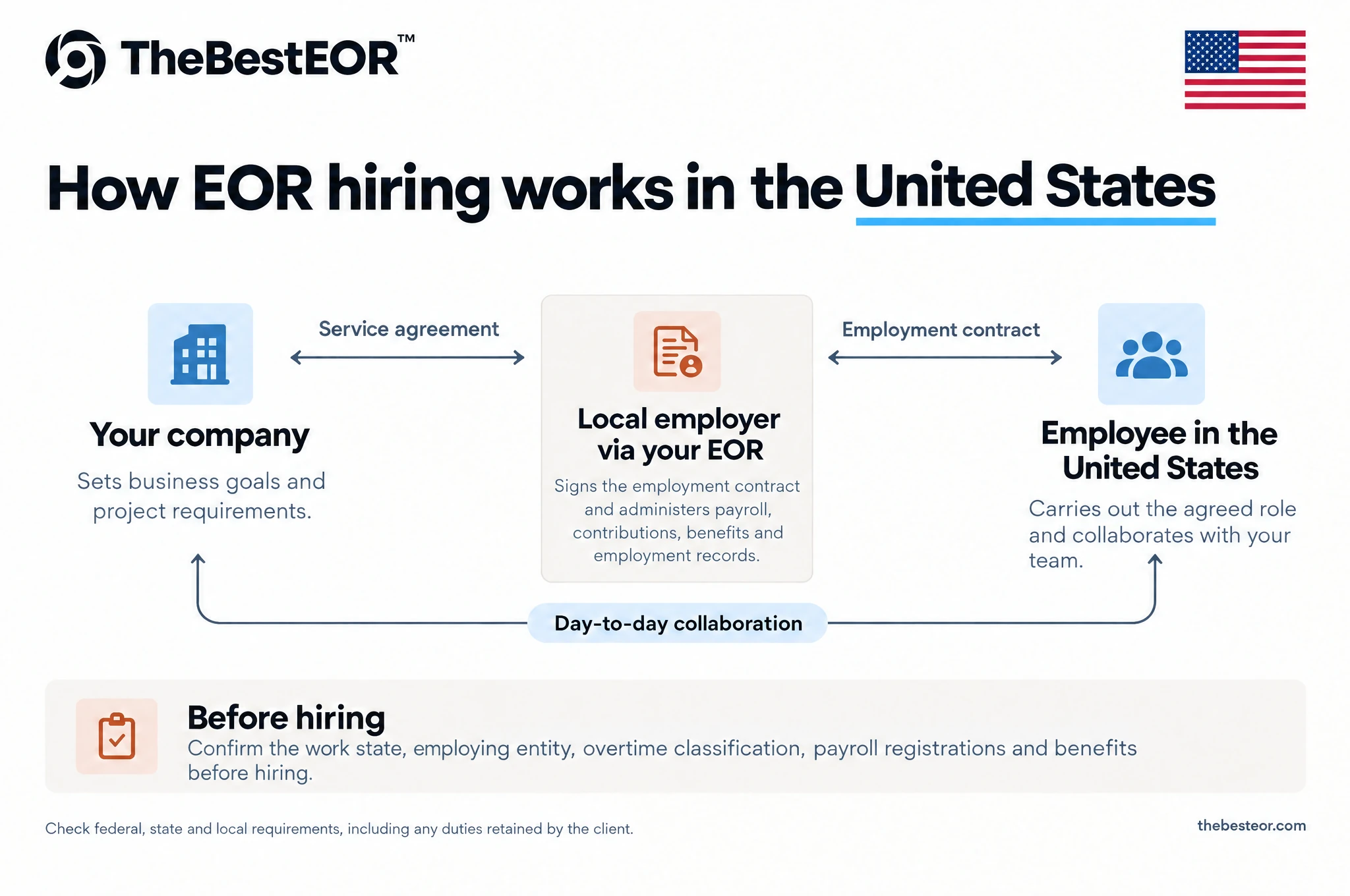
Employer of record in the United States diagram showing the service agreement, employment contract, and day-to-day collaboration between your company and the employee.
Employer of record in the United States: how your company, the local employer and the employee work together. Select the image to enlarge.

The EOR handles

1
Standing as sole legal employer: the W-2 relationship and the payroll-tax liability sit on its US entity
2
Federal income tax, FICA and FUTA: withholding, deposits, Forms 941 and 940
3
Withholding and unemployment accounts in each state you hire in, plus local levies
4
Workers’ compensation cover in the employee’s state
5
The at-will offer letter, carrying each state’s required notices
6
Group health, 401(k) and ancillary benefits enrolment
7
Form I-9 verification at hire; Form W-2 every January
8
Offboarding to the state rule: final-pay deadline, PTO payout where owed

You keep

1
The work: what gets built, to what standard, on what schedule
2
The package: salary, bonus, equity, allowances
3
Deciding who joins and who leaves, and when
4
Performance management, and documenting it as you go
5
Equipment: laptops and tooling stay your purchase (Rippling sells device management as an add-on)
6
The commercial contract with the provider, and the IP-assignment language the offer letter should carry

Which misclassification test you face depends on the state: the IRS applies its common-law control test, while California and other ABC-test states presume employment outright. Under either, a 1099 contractor working set hours under your direction is one audit from reclassification, and reclassification means back payroll tax, unpaid overtime, benefits and penalties. Routed through an EOR instead, the same person is a W-2 employee from day one, with FICA, withholding, workers’ compensation and benefits already running. The misclassification guide covers the IRS common-law test and the state ABC tests. To list the facts and missing evidence for one contractor engagement, use our employee misclassification calculator.

Work visas

US work visas and why an EOR rarely sponsors them

Can the provider sponsor this visa for the role?

The common work-visa categories, the salary and process realities, and whether an EOR can sponsor one for your hire. All figures as of 2026.

Visa Who it is for Key threshold / cap Can an EOR sponsor?
Visa
H-1B
Who it is for
Specialty occupation, degree required
Key threshold / cap
Prevailing wage; 85,000 annual cap, lottery
Can an EOR sponsor?
Rarely; treat as no
Visa
L-1
Who it is for
Intra-company transfer
Key threshold / cap
1 year with the related entity abroad
Can an EOR sponsor?
No (needs your entity)
Visa
O-1
Who it is for
Extraordinary ability
Key threshold / cap
Evidence of national/international acclaim
Can an EOR sponsor?
Rarely
Visa
TN
Who it is for
Canadian/Mexican professionals (USMCA)
Key threshold / cap
Listed profession; no cap
Can an EOR sponsor?
Case by case
Visa
Green card / citizen
Who it is for
Permanent resident or US citizen
Key threshold / cap
Existing work authorisation
Can an EOR sponsor?
Yes, no sponsorship needed

Fig. 7 · Common US work-visa categories, 2026 · Most EORs decline new H-1B or L-1 sponsorship; in practice an EOR hires US citizens, green-card holders and people who already hold valid work authorisation.

An EOR is not a visa-sponsorship route. An H-1B requires the petitioning company to be the genuine employer with the right to control the work, and USCIS scrutinises third-party and staffing arrangements closely, so most EORs decline to file an H-1B for a client’s hire because the EOR-client structure invites a right-to-control challenge. The L-1 needs your own related entity abroad and in the US, which an EOR cannot supply.

Visa sponsorship is one of the few problems where an EOR does not spare you a US entity. For the far more common case, a US-based citizen or permanent resident, none of this applies and every provider on the list hires them in one to three business days.

Salary benchmarks

Indicative salary ranges

Compare the national figure with the local tech market.

Annual base salary in US dollars, national ranges. Software pay is tech-hub-weighted; markets like the Bay Area and New York run well above the national midpoint. Ranges are 2026 market data from the Robert Half Salary Guide and Levels.fyi; use the midpoint as a starting offer, not a ceiling.

These ranges are indicative. Check current pay data for the role and location before you make an offer.

Role Base USD/year USD/month (approx)
Role
Software engineer
Base USD/year
$110,000–165,000
USD/month (approx)
$11,250
Role
Senior software engineer
Base USD/year
$150,000–220,000
USD/month (approx)
$15,000
Role
Product manager
Base USD/year
$120,000–180,000
USD/month (approx)
$12,083
Role
Accountant
Base USD/year
$65,000–95,000
USD/month (approx)
$6,500
Role
Customer support
Base USD/year
$45,000–65,000
USD/month (approx)
$4,500
Role
Sales manager
Base USD/year
$100,000–160,000
USD/month (approx)
$10,417
Role
HR manager
Base USD/year
$90,000–130,000
USD/month (approx)
$9,000
Role
UX designer
Base USD/year
$96,500–142,250
USD/month (approx)
$9,917

Fig. 8 · US salary benchmarks by role, 2026 · National base ranges from the Robert Half Salary Guide and Levels.fyi; the Bay Area, Seattle and New York run 20 to 40 percent above these midpoints for the same role.

US salaries vary more by metro than almost any country: the Bay Area, Seattle and New York run 20 to 40 percent above these national midpoints for the same role, while many inland metros run below. Software-engineer total compensation including equity and bonus runs higher still: the Levels.fyi national median across all levels is $195,000 as of August 2026. These are base figures; budget separately for the employer tax load of roughly 9 to 11 percent and the health plan, which together can add 15 to 25 percent on top of base.

Fully-loaded cost

Monthly cost of a US software engineer

Start with a $145,000 base salary and a health plan.

Software engineer, United States Base: $145,000/year · $12,083/month
Gross salary $12,083
Social Security (6.2%)
$145,000 is under the $184,500 base, so full rate applies
$749
Medicare (1.45%)
On all wages, no ceiling
$175
FUTA + SUTA
FUTA $42/yr maxed early; SUTA ~1% blended
~$130
Workers' comp
Low-risk office class, ~0.3% of payroll
~$36
Health plan (employer share)
Single cover, KFF 2025 ~$7,885/yr
~$657
EOR fee, cheapest
RemoFirst from $199
⚠ Trustpilot warning: rating suspended for a breach of its guidelines; fake reviews removed
$199
Monthly total, cheapest fee
Annual ≈ $168,348
$14,029

Fig. 9 · Monthly cost of a $145,000 US software engineer · Totalled at the illustrative USD 199 service fee. At Oyster’s $699 fee, the total is $14,529/month.

Statutory employer cost is about $1,090 a month, roughly 9 percent on top of base, and the single health plan adds another $657, so employment overhead before the EOR fee is about 14 percent. Premium fees move the total. Oyster at $699 lands at $14,529/month (≈ $174,348/year). In most countries statutory contributions dominate the total; in the US the EOR fee and the health plan are the biggest discretionary levers, which is why price and benefits drive so much of the ranking above.

EOR vs your own entity

EOR or your own US entity: compare costs

Budget for registration and filings in each state.

Incorporating a US entity is cheaper per head at scale but adds multi-state registration and ongoing filings.

Factor EOR Your own US entity
Factor
Setup cost
EOR
None
Your own US entity
~$500–3,000 incorporation + registered agent
Factor
Time to first hire
EOR
1–5 days
Your own US entity
4–10 weeks (EIN, state payroll accounts, WC, benefits)
Factor
Per-employee cost
EOR
$199–699/employee/mo fee + statutory
Your own US entity
Statutory only, plus shared overhead
Factor
Ongoing admin
EOR
Provider runs payroll, filings & benefits
Your own US entity
Multi-state payroll, 941/940, WC, 401(k), benefits broker
Factor
Compliance liability
EOR
On the EOR
Your own US entity
On you, in every state you hire in

Fig. 10 · Illustrative EOR-versus-entity comparison; the crossover depends on the fee plan, local operating costs and hiring duration.

A year at the $199 floor runs $2,388 per employee over handling statutory contributions yourself. A US entity’s incorporation is cheap, but the ongoing load is heavier than it looks: federal and state payroll filings, a separate withholding and unemployment account in every state you hire in, a workers’-compensation policy, a 401(k) plan, and a benefits broker to negotiate a group health plan that a small company struggles to price well. An EOR absorbs that fixed and per-state overhead, which is why it wins below a handful of hires even though its per-head fee looks high. Most US rollouts hit the flip point at about five to ten employees, a touch higher than in countries with one national payroll regime, because US multi-state complexity raises the cost of running your own payroll. The number rises further if your hires are spread across many states, because each new state adds registrations and a benefits-network question, and a PEO becomes the middle path once you do have an entity: it keeps your entity but pools benefits and offloads payroll.

Annualise the selected service fee for the hires you expect to keep, then compare it with the US entity’s work-state registrations, payroll, benefits, insurance and employment support. Count setup costs over the same hiring horizon and include payroll, benefits, transition and exit charges on both sides. A higher service-fee plan moves the financial crossover earlier; lower recurring entity overhead or a longer hiring horizon can do the same. Short hiring duration, setup costs and the need for local administration can move it later.

FAQ

EOR in the United States: common questions

What is the best EOR in the United States?

RemotePeople is our top pick for the United States in 2026 (4.9/5), followed by Deel (4.7/5) and Rippling (4.5/5). We opened paid accounts with all 10 providers on this page, priced real hires and ran payroll.

RemotePeople offers recruitment and EOR through one provider, with a dedicated account manager on both EOR plans. RemotePeople’s EOR Global plan starts at USD 499 per employee per month, and EOR Select at USD 199 where the hire qualifies. Deel starts at USD 599 plus a mandatory Employer Liability Cost; Rippling starts at USD 499 plus its required platform subscription.

How does an employer of record work in the United States?

An employer of record in the United States becomes the worker’s legal employer through a local employing entity, while your company directs the day-to-day work. The EOR is the W-2 employer: it withholds federal income tax and FICA, pays FUTA and files Forms 941 and 940, opens withholding and unemployment accounts in each state you hire in, and arranges workers’ compensation, benefits enrolment and Form I-9 verification.

How fast can an EOR onboard an employee in the United States?

Estimated onboarding times for the United States range from 1 to 5 days across the providers we tested. By provider: Deel 1–3 days, Rippling 1–3 days, RemotePeople 2–3 days, Oyster 2–4 days and Papaya Global 2–5 days.

One to three business days. The only real delay is state registration: where the provider does not yet hold unemployment and withholding accounts in your hire’s state, expect a few extra days.

How much does an EOR cost in the United States per month?

Published service fees for the United States run from USD 199 to USD 699 per employee per month across the 10 providers we tested: RemoFirst from USD 199; RemotePeople Global from USD 499, or Select from USD 199 only where country and salary qualify; Deel from USD 599 plus mandatory Employer Liability Cost; G-P from USD 599; Oyster USD 699 on monthly billing, with annual seats quoted separately. Multiplier Core advertises $499 monthly or $459 per month billed annually; Pebl advertises $399, with currency and commitment to confirm. Rippling starts at USD 499 plus its required platform from USD 8 per employee, and Papaya Global at USD 499. Borderless AI is USD 579 standard, with an eligible USD 399 promotion on fees billed through 31 December 2026. All amounts are per employee/month; salary and employment costs are separate. 

On top of the fee you pay the employee’s gross salary plus roughly 8 to 12 percent in employer FICA, FUTA, SUTA and workers’ compensation, plus the actual health-plan cost.

What employer taxes are mandatory in the United States?

Employer FICA at 7.65 percent, split as 6.2 percent Social Security on the first $184,500 of wages for 2026 and 1.45 percent Medicare on all wages, plus FUTA at an effective 0.6 percent on the first $7,000 (a maximum of $42 per employee per year) and state unemployment tax that varies by state and experience rating. Workers’ compensation requirements depend on the state, industry and employer. Texas generally allows private employers to opt out, with important exceptions; other states also have coverage thresholds or exclusions. A few states add employer-side disability or paid-family-leave levies.

What is the difference between an EOR and a PEO in the United States?

A PEO is a co-employer that shares employment liability with your company and requires you to already hold a US entity and a federal EIN, because the worker is employed jointly. The simple rule: no US entity, use an EOR; you already have a US entity and want to pool benefits and offload payroll, use a PEO.

Is health insurance legally required for US employees?

Assess ACA employer shared-responsibility rules alongside any relevant state requirements. The Affordable Care Act employer mandate applies only to employers with 50 or more full-time-equivalent staff. KFF put the 2025 average employer-sponsored premium at $9,325 a year for single cover and $26,993 for family cover.

Can an EOR sponsor a US work visa such as an H-1B?

Rarely, and you should treat it as a no for planning. An H-1B requires the petitioning company to be the genuine employer with the right to control the work, and USCIS scrutinises third-party and staffing arrangements closely, so most EORs decline to file an H-1B for a client’s hire.

What is the minimum wage in the United States in 2026?

The federal minimum wage is $7.25 per hour and has not changed since 2009. Few employees are actually paid it, because 30 states and the District of Columbia set higher rates, from about $17.95 in DC down toward the federal level, and many cities set higher local minimums still. An EOR applies the highest applicable rate for the city and state where the employee actually works, which for professional roles is well above any minimum.

How does termination work in the United States?

Employment is at-will in every state except Montana, so either side can end the relationship at any time, with no notice and no statutory severance, provided the reason is not unlawful discrimination or retaliation. The federal WARN Act requires 60 days’ notice only for mass layoffs at employers with 100 or more staff. Final-paycheck timing is set by state, immediate in California on an involuntary termination and next regular payday in many states, and the EOR applies the correct state rule.

What currency and payroll cycle does the United States use?

The US dollar (USD). Payroll usually runs bi-weekly or semi-monthly rather than monthly, and the cycle is partly set by state pay-frequency law. The EOR deposits and reports federal income tax, Social Security and Medicare to the IRS on a semi-weekly or monthly schedule, files Form 941 each quarter and Form 940 for FUTA annually, remits state withholding and unemployment tax to each state, and issues a Form W-2 to every employee in January.

Can I convert a US contractor to an EOR employee?

An EOR can employ the worker going forward. Earlier liabilities still need review. A US contractor who works set hours under your direction can be reclassified as an employee by the IRS or a state agency under tests such as California’s ABC test, exposing you to back payroll tax, overtime and penalties. An EOR issues a compliant W-2 employment offer, runs FICA and federal and state withholding, enrols the worker in benefits and workers’ compensation, and typically completes the switch within a week.

Do I need a US entity to hire one person in the United States?

No.

Setting up your own US entity adds incorporation, a registered agent, federal and state tax registration, workers’ compensation and either in-house or outsourced payroll across every state you hire in. Because each new state adds its own registrations and filings, an EOR stays cheaper until about five to ten US employees.

Annualise the selected service fee for the hires you expect to keep, then compare it with the US entity’s work-state registrations, payroll, benefits, insurance and employment support.

Sources and as-of dates

Article references

Most numbers on this page turn over on 1 January: the Social Security wage base, state unemployment schedules and dozens of state minimum wages all carry a 2026 vintage. Every rate on this page is a June 2026 reading.

Hiring facts Checked 2 Oct 2026

Hiring facts

Checked 2 October 2026
Eligibility, local and collective rules apply. EOR fees extra.

FICA (Social Security and Medicare) 1 source

Employer FICA contributions in 2026 are 6.2% Social Security on covered wages up to $184,500 and 1.45% Medicare on all covered wages. Employers also withhold an additional 0.9% Medicare tax from employee wages over $200,000 in a calendar year, with no employer match; the employee’s final Additional Medicare Tax liability depends on filing status. Internal Revenue Service, 2026.

FUTA 1 source

FUTA is 6.0% on the first $7,000 of covered wages. The maximum 5.4% state unemployment tax credit reduces this to 0.6%, or $42 per employee per year. The full credit is conditional, and credit-reduction states have a higher effective rate. The final 2026 credit-reduction states are announced after the 10 November repayment deadline, so a definitive 2026 state list was not available on 2 October 2026.

SUTA (state unemployment) 2 sources

State unemployment insurance rates and wage bases vary by state and employer experience. For 2026, California taxes the first $7,000 of wages per employee, while Washington’s taxable wage base is $78,200. Use the applicable state agency’s employer rate notice when calculating payroll costs.

Workers' compensation 2 sources

Workers’ compensation requirements depend on state law and employer coverage rules. Texas generally allows private employers to opt out, but government contractors must cover employees working on the government project. Premiums depend on payroll, business or job classification, insurer rates and claims experience; obtain a quote for the actual workforce and state.

State disability and paid family leave 3 sources

State disability insurance and paid family or medical leave are distinct programs, with employee and employer contributions varying by jurisdiction. Social Security’s disability-program summary identifies California, Hawaii, New Jersey, New York and Rhode Island. Minnesota and Delaware began providing paid-leave benefits from 1 January 2026; Delaware payroll contributions began a year earlier. Check the relevant state program’s coverage and contribution rules before budgeting.

Minimum wage 2 sources

The federal minimum wage for covered, non-exempt employees is $7.25 per hour, effective since 24 July 2009. Higher state and local requirements may apply. NELP’s December 2025 annual report counted minimum-wage increases scheduled for 19 states and 49 cities and counties on 1 January 2026. Check the employee’s current location-specific rate and any applicable exceptions.

FMLA 3 sources

FMLA generally provides eligible employees up to 12 workweeks of unpaid, job-protected leave in a 12-month period for qualifying reasons, or up to 26 workweeks for military caregiver leave. Private employers are covered when they employ at least 50 employees for at least 20 workweeks in the current or previous calendar year. Employee eligibility generally requires 12 months’ employment, 1,250 hours in the preceding 12 months and 50 employees within 75 miles; special rules apply.

WARN Act 2 sources

Federal WARN generally requires covered employers with 100 or more employees to provide 60 calendar days’ written notice of qualifying plant closings or mass layoffs. Coverage and employment-loss thresholds matter, and specified exceptions can shorten or remove the notice requirement. State WARN laws may impose additional duties.

Health insurance premiums 1 source

KFF’s 2025 Employer Health Benefits Survey reports average annual premiums of $9,325 for single coverage and $26,993 for family coverage. Subtracting average worker contributions of $1,440 and $6,850 gives approximate employer shares of $7,885 and $20,143. These are survey averages, not a quote for a particular employer or EOR plan.

Salary benchmarks 2 sources

Salary benchmarks come from Robert Half’s 2026 Salary Guide and Levels.fyi US data. Levels.fyi publishes role-specific total compensation, including base salary, stock and bonus; match role, location, seniority, pay measure and observation date before comparing figures.

Provider pricing, entity model and onboarding 10 sources

Provider fees are commercial prices, and entity descriptions and onboarding estimates are provider-published claims. Prices and service terms can change. The linked provider reviews and the methodology explain the comparison.

Sources on exemptions, ACA, benefits summaries and final pay Checked 19 Oct 2026

US Department of Labor — Fact Sheet 17A — Salary basis and duties tests for exemptions; job titles do not determine status. Checked 19 October 2026.

IRS — employer shared responsibility — ACA applicable-large-employer threshold, group aggregation and offer-or-payment framework. Checked 19 October 2026.

HealthCare.gov — Summary of Benefits and Coverage — Standardized benefits summaries and comparison examples for job-based plans. Checked 19 October 2026.

California DLSE — final wages — Discharge generally requires immediate payment of all earned wages and accrued vacation; special cases apply. Checked 19 October 2026.


Use the directory to compare EOR providers for the United States, or see the country guides for another market. The EOR cost calculator totals the recurring USD amounts from each proposal.


This guide is for general information only and does not provide legal, tax, accounting, or financial advice. For advice about your business, consult a qualified professional familiar with the rules where you hire. The research methodology explains how TheBestEOR assesses sources.