TheBestEOR

Best Employer of Record in the Philippines

Written by Martynas PupkeviciusFact-checked by Michael Ennis
Picture of Martynas Pupkevicius
Martynas Pupkevicius

EOR Advisor and Remote Work Editor

Our top employer of record in the Philippines for 2026 is RemotePeople, from USD 499 per employee a month, ahead of Multiplier and Deel.

We tested all 10 providers with paid client accounts, real quotes and a live hire run through payroll. Non-managerial employees in the Philippines who work at least 1 month receive a 13th-month payment of at least 1/12 of their basic pay earned that year.

Flag of the Philippines

Hiring in the Philippines at a glance

Currency
PHP
Philippine peso
Pay cycle
Twice monthly
Or every 2 weeks, no more than 16 days apart
Working hours
8 h a day
Overtime pay beyond that, managers exempt
Annual leave
5 days
After 1 year, for illness or holiday, managers excluded
Extra pay
13th month
At least 1/12 of basic pay, non-managerial staff
Employer costs
Social security
Plus health, housing savings and work-injury cover
Before you hire:
Confirm whether the role is legally managerial and whether the employer has fewer than 10 staff.

Country hiring overview · Philippines

Hiring in the Philippines, at a glance.

Separate the service fee from statutory employment benefits.

For the Philippines, I compare the employing entity, payroll schedule and benefit administration together. I’d ask how contribution registrations, 13th-month pay and employee support will work, and resolve any foreign-worker requirements before accepting a start date.

Choose a hiring solution

Need a local employer?

Compare an EOR arrangement for your role before opening your own entity.

Already have a local employer?

Compare payroll and HR support against adding an EOR.

EOR service fee

Fees vary by provider.

Your quote should state the currency, fee per employee, minimum charge and billing commitment.

Onboarding

Paperwork affects the start date.

The contract, right-to-work checks, registrations and payroll deadlines all affect when employment can begin.

Employment costs

Include 13th-month pay.

SSS, PhilHealth and Pag-IBIG contributions are separate from the employee’s salary. The budget should show the employer’s share of each and account for any applicable 13th-month pay.

Annual leave

Covered employees get five days.

Covered employees qualify for five days of service incentive leave after one year of employment. Statutory exceptions apply, so check whether the employee is covered.

Check before choosing

Confirm benefit eligibility, contribution calculations, payroll dates, 13th-month accrual and any work-authorisation scope.

What your quote should include

Employment costs and service fees

1
Gross salary and agreed pay schedule
2
SSS, PhilHealth, Pag-IBIG and 13th-month pay
3
EOR fee: currency, per-employee billing, minimums and commitment
4
Setup, foreign exchange, extras and exit costs

Deposits and payroll funding

1
Amount and payment deadline
2
Whether funds are refundable or credited to payroll
3
Release conditions and refund timing
Show these separately from recurring expenses.

Key takeaways for hiring in the Philippines

The PHP 90,000 exclusion is shared across qualifying benefits

Combine 13th-month pay with other benefits that use the same exclusion before calculating the taxable excess. The employee’s statutory entitlement and the income-tax treatment are separate calculations.

SSS reimbursement may not cover full maternity pay

The SSS benefit uses salary credits. For an eligible employed member, full pay generally also includes an employer-funded salary differential, subject to exemptions. Budget the advance and eventual reimbursement separately so a contribution line is not mistaken for the complete leave cost.

Short service still needs a 13th-month calculation

A covered rank-and-file employee who has worked at least one month during the calendar year earns a proportionate entitlement based on basic salary actually earned. Keep the accrual and final-pay treatment linked to payroll history.

Maternity eligibility depends on contribution history

The SSS test looks for at least three monthly contributions in the twelve-month period before the relevant semester. Onboarding should preserve the employee’s contribution history and notification record before calculating the benefit.

Quick verdict

What is the best EOR in the Philippines?

I’d identify the local employer and any visa petitioner.

Start with the employee’s right to work, the proposed Philippine employer and a complete country quote. For a foreign-national hire, confirm the applicable work permission, visa route and petitioner.

1
Multiplier logo

4.1/5

Multiplier

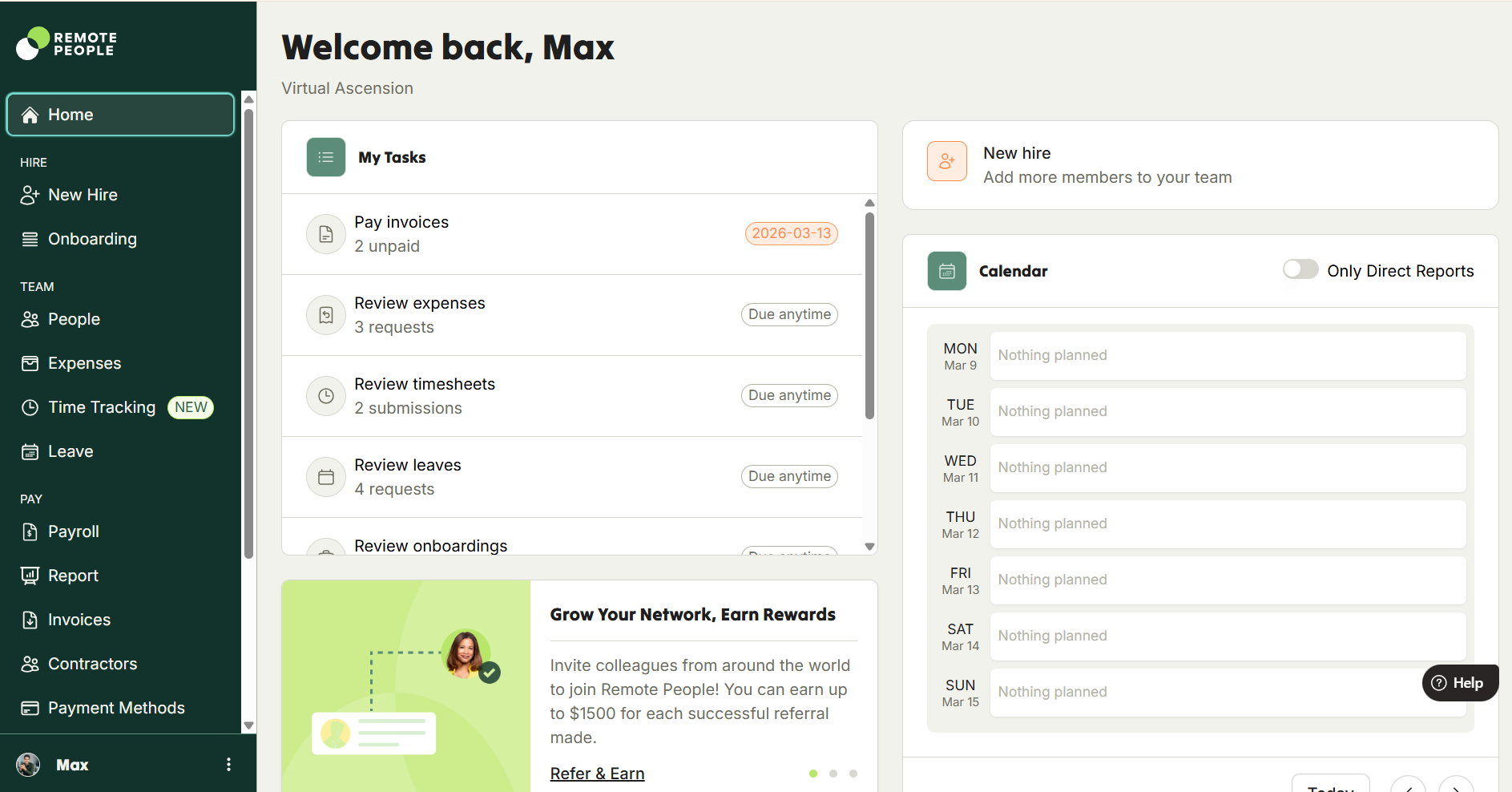
Managing payroll, leave and expenses in one place

Starting fee
$459

per employee / month

Countries
150+
where you can hire

Billed annually. $499 billed monthly.

Deposit
1+ months

of gross salary plus contributions

Deposit refund
Within 60 days

of the last working day

Why consider it

A set monthly payroll calendar, with salaries paid at month-end.

SOC 2 Type II audited every year and ISO 27001:2022 certified.

Check the fit

Integrations and API access need the Growth plan.

Before signing: An implementation fee can apply on some plans, so get setup confirmed as free in your quote. Confirm the employing entity for each country in your contract.

At $459 a month billed annually, the first year for one hire is $5,508 in service fees. Salary, employer costs and the refundable deposit come on top.

Visit Multiplier ↗

2
Editorial pick
RemotePeople logo

4.9/5

RemotePeople

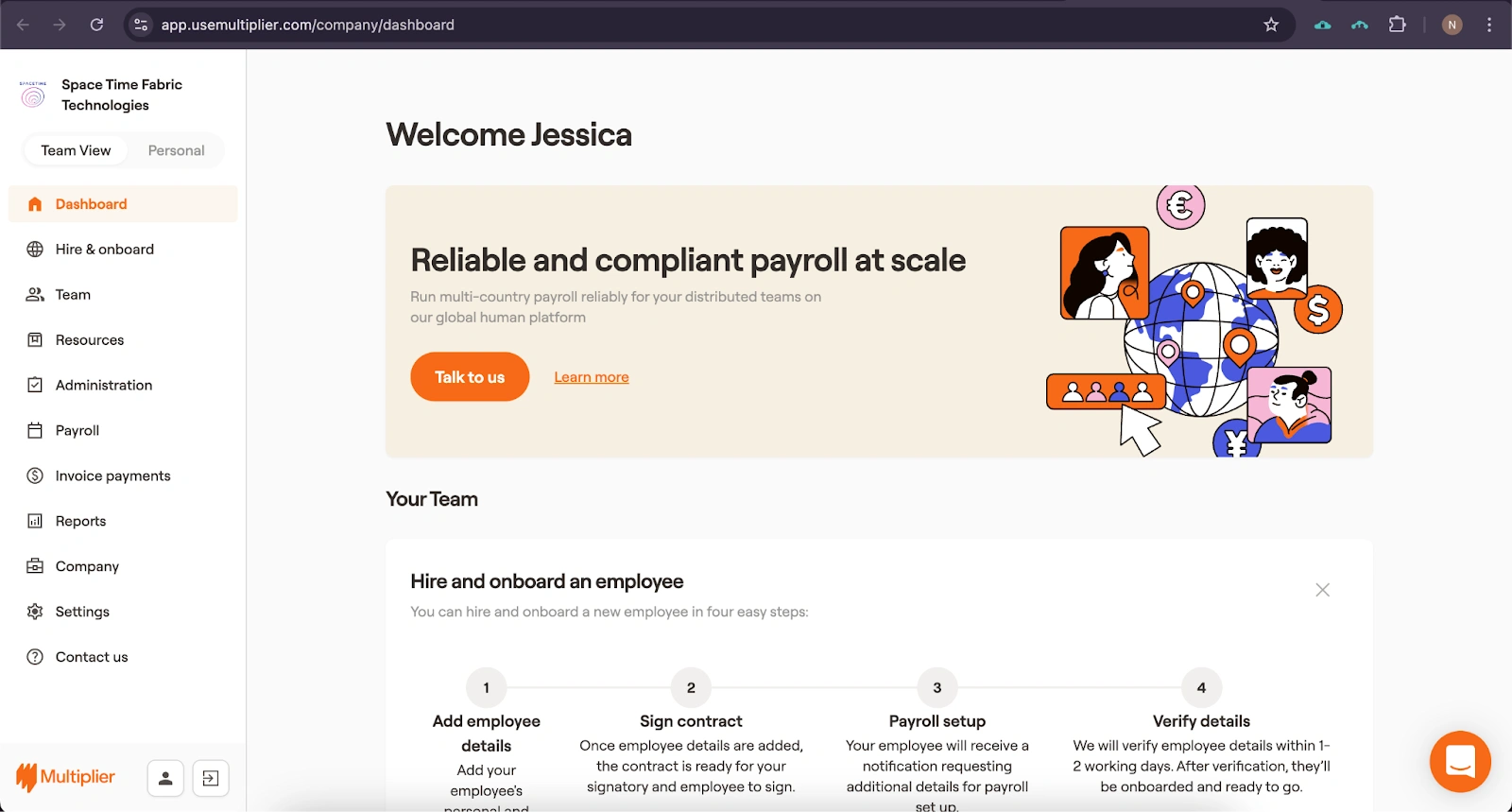
Hiring in new markets with local HR support

Starting fee
$499

per employee / month

Countries
150+
where you can hire

EOR Select from $199 for eligible hires.

Deposit
1 month

of gross salary

Deposit refund
Within 5 days

of the final payment

Why consider it

Recruitment and EOR services through one provider.

Dedicated account manager in both EOR plans.

Check the fit

Recruitment is separately priced.

Before signing: Confirm quote currency, billing commitment, deposits, funding deadlines and refund terms. EOR Select eligibility depends on the hiring country and employee salary.

Both EOR plans list local contracts, payroll and tax administration, and statutory benefits administration. Salary, employer contributions and benefit costs are separate.

Legal employer in the Philippines
✓ Verified on register

Employing entity
Own Philippine corporation
SEC Registration No. 2021120034431-11 · registered PEO / HR process outsourcing company

Visit RemotePeople ↗

3
Deel logo

4.7/5

Deel

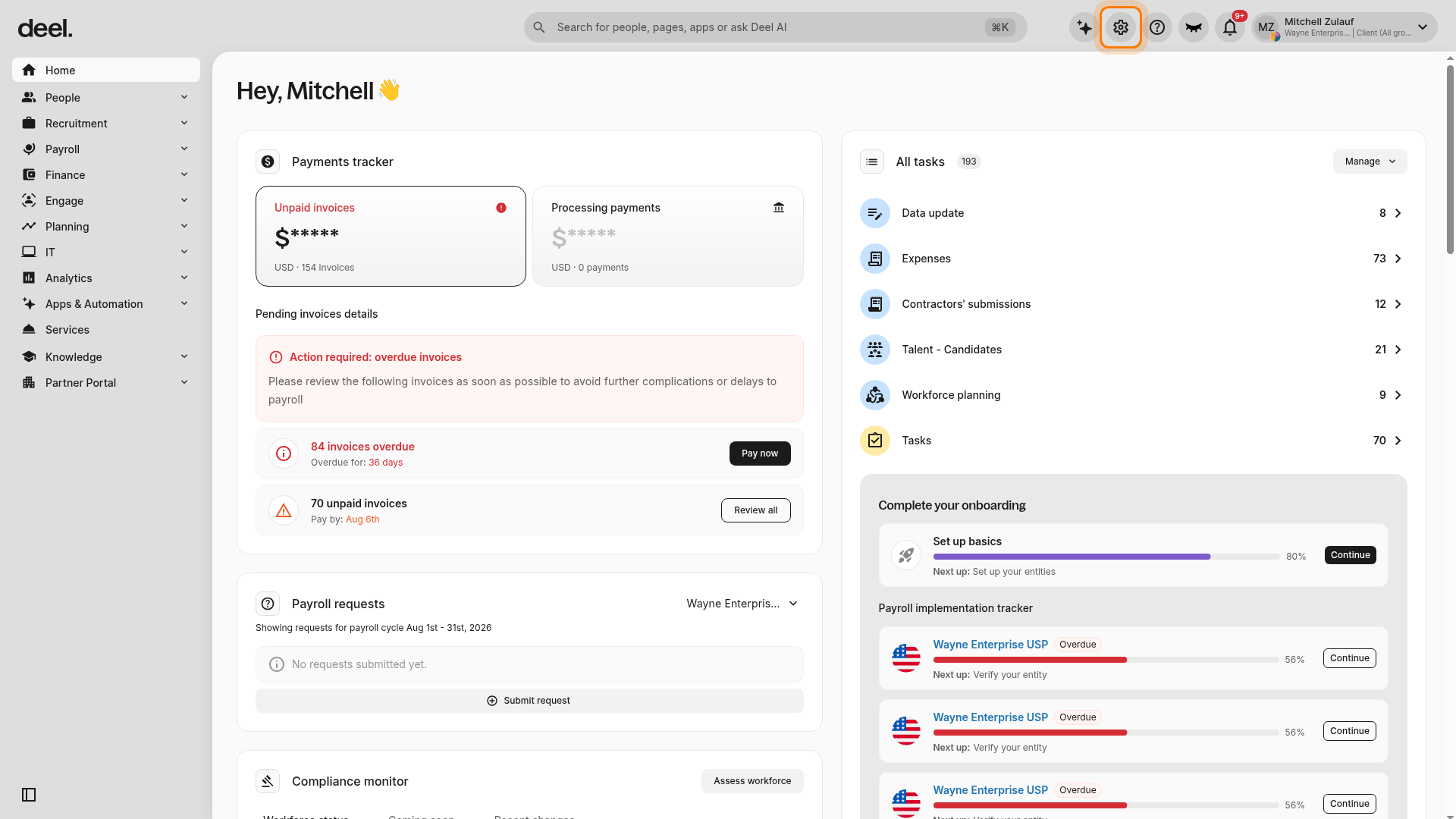
Paying employees and contractors on one platform

Starting fee
$599

per employee / month

Countries
130+
where you can hire

Plus a mandatory Employer Liability Cost.

Deposit
1–1.5 months

of gross salary

Deposit refund
Within 60 days

of offboarding

Why consider it

EOR, contractor management and payroll for your own entities.

Month-to-month EOR service pricing available.

Check the fit

The mandatory Employer Liability Cost is set per country.

Before signing: Confirm the Employer Liability Cost amount, benefit costs and any additional products. Monthly service terms do not remove employment notice, severance or other exit obligations.

The EOR pricing page lists 130+ countries. Broader platform coverage figures may include other services.

Employing entity
Deel Philippines EOR Services, Inc., Makati City
Listed on DOLE PhilJobNet as a Deel subsidiary

Local office
2F 8862 Sampaloc St., San Antonio Village, Makati City 1203
Register listing address

Visit Deel ↗

No provider pays for a position on this page; some outbound links pay a referral fee. See the funding model and methodology.

Legal employer, immigration scope and full cost

All 10 EOR providers for the Philippines, side by side

Ask what the Philippines quote includes in its fee.

Compare complete Philippine proposals for the same employee, salary, benefits and service scope. Benefits, deposits, extras and billing terms can change the amount due. The listed fees are indicative advertised amounts per employee per month, with currency and billing conditions stated where confirmed. Pebl and Multiplier require dollar-currency confirmation; Rippling starts at USD 499 plus its required platform from USD 8 per employee, and Papaya Global at USD 499.

Compare the legal employer, complete country quote, support, payroll milestones and any immigration needs for the actual employee. See the global EOR ranking for broader comparisons. For a wider shortlist, browse EOR providers for the Philippines.

Provider

Best For

Starting feeDepositOnboarding
1 Multiplier logo Multiplier 4.1/5 Rating Managing payroll, leave and expenses in one place Starting fee: $459 USD / monthDeposit: 1+ monthsOnboarding: Start date agreed per hire

My take

I’d start with Multiplier Core’s scope: employment administration, payroll, leave and standard workforce reporting.

Core starts at $499 per employee per month on monthly billing or $459 per month billed annually. Growth adds integrations, custom reports and open APIs. The quote needs to identify the dollar currency and chosen plan.

Country variations and mandatory add-ons affect the total. Implementation fees may apply, although the FAQ says setup is free; the quote must resolve that charge. Salary, employer costs and benefit premiums are additional.

When this provider fits

I’d compare Multiplier’s Core commitment with the applicable RemotePeople plan for the same Philippine employee. Include semi-monthly payroll, 13th-month accrual, statutory registrations and the contact responsible for corrections. A lower service fee matters only after those responsibilities and any extra charges are clear.

Deposit

1+ months

Entity model

Own entities and partners

First year, one hire

$5,508 in service fees

Reviewed by Martynas PupkeviciusFact-checked by Michael Ennis

Starting fee

$459

Core plan billed annually, or $499 per month on monthly billing. Confirm the dollar currency.

Against the 10 starting fees

$199 lowest$699 highest
2 RemotePeople logo RemotePeople 4.9/5 Rating Hiring in new markets with local HR support Starting fee: $499 USD / monthDeposit: 1 monthOnboarding: Start date agreed per hire

My take

I’d look at RemotePeople if you want a dedicated account manager alongside local employment contracts, payroll and tax administration, and statutory-benefits administration.

Recruitment is a separate service.

EOR Global starts at USD 499 per employee per month. EOR Select starts at USD 199 for eligible countries and employee salary ranges. Salary, employer contributions, benefit costs and agreed extras are additional. The country quote determines eligibility, the final fee, billing commitment and payroll funding.

Deposit

1 month

Entity model

Own entities in core markets

First year, one hire

$5,988 in service fees

Reviewed by Martynas PupkeviciusFact-checked by Michael Ennis

Starting fee

$499

EOR Global. EOR Select starts at $199 where the country and employee salary qualify.

Against the 10 starting fees

$199 lowest$699 highest
3 Deel logo Deel 4.7/5 Rating Paying employees and contractors on one platform Starting fee: $599 USD / monthDeposit: 1–1.5 monthsOnboarding: Start date agreed per hire

My take

I’d consider Deel if you need EOR payroll and benefits administration alongside its separate contractor and HR products.

EOR starts at USD 599 per employee per month, with month-to-month billing available. Mandatory Employer Liability Cost is an additional charge based on gross salary, with rates varying by country. Salary, statutory employer costs and benefit premiums are also separate.

Contractor management starts at USD 49 per active contract per month. It is a separate service from EOR employment; currency conversion, payment-method charges and any required deposit also affect the amount funded.

Deposit

1–1.5 months

Entity model

Owned entity

First year, one hire

$7,188 in service fees

Reviewed by Martynas PupkeviciusFact-checked by Michael Ennis

Starting fee

$599

Month-to-month billing. Mandatory Employer Liability Cost is charged separately.

Against the 10 starting fees

$199 lowest$699 highest
4 Rippling logo Rippling 4.5/5 Rating Setting up payroll, laptops and app access for new hires Starting fee: $499 USD / monthDeposit: Per quoteOnboarding: Start date agreed per hire

My take

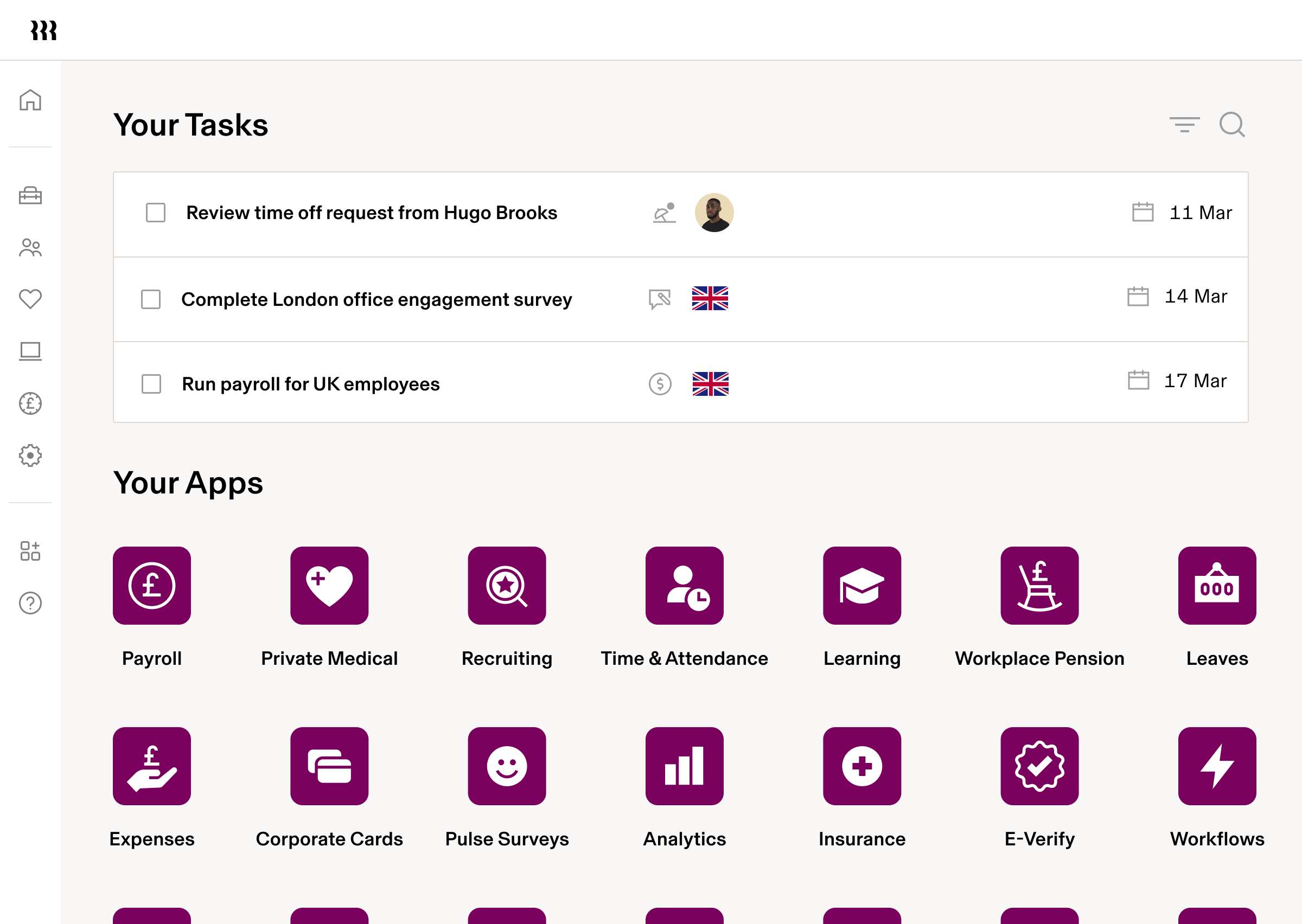
The reason I’d consider Rippling is the connection between EOR employment and its HR, IT and finance products, using shared employee data for workflows and reporting.

Device management and app access are separate products within that wider system.

Rippling EOR starts at USD 499 per employee per month, and the required Rippling Platform adds from USD 8 per employee per month plus a monthly base fee. The quote needs to show any selected HR, IT or finance products and the billing commitment. Salary, employer costs, benefits, deposits and payroll funding are additional to the software and service fees.

Deposit

Per quote

Entity model

Own entities and local partners

First year, one hire

$5,988 in EOR fees

Reviewed by Martynas PupkeviciusFact-checked by Michael Ennis

Starting fee

$499

Plus the required Rippling Platform, from $8 per employee per month and a monthly base fee. Confirm the billing terms and selected products.

Against the 10 starting fees

$199 lowest$699 highest
5 Pebl logo Pebl 4.2/5 Rating Hiring people who need visa or relocation support Starting fee: $399 USD / monthDeposit: Per quoteOnboarding: Start date agreed per hire

My take

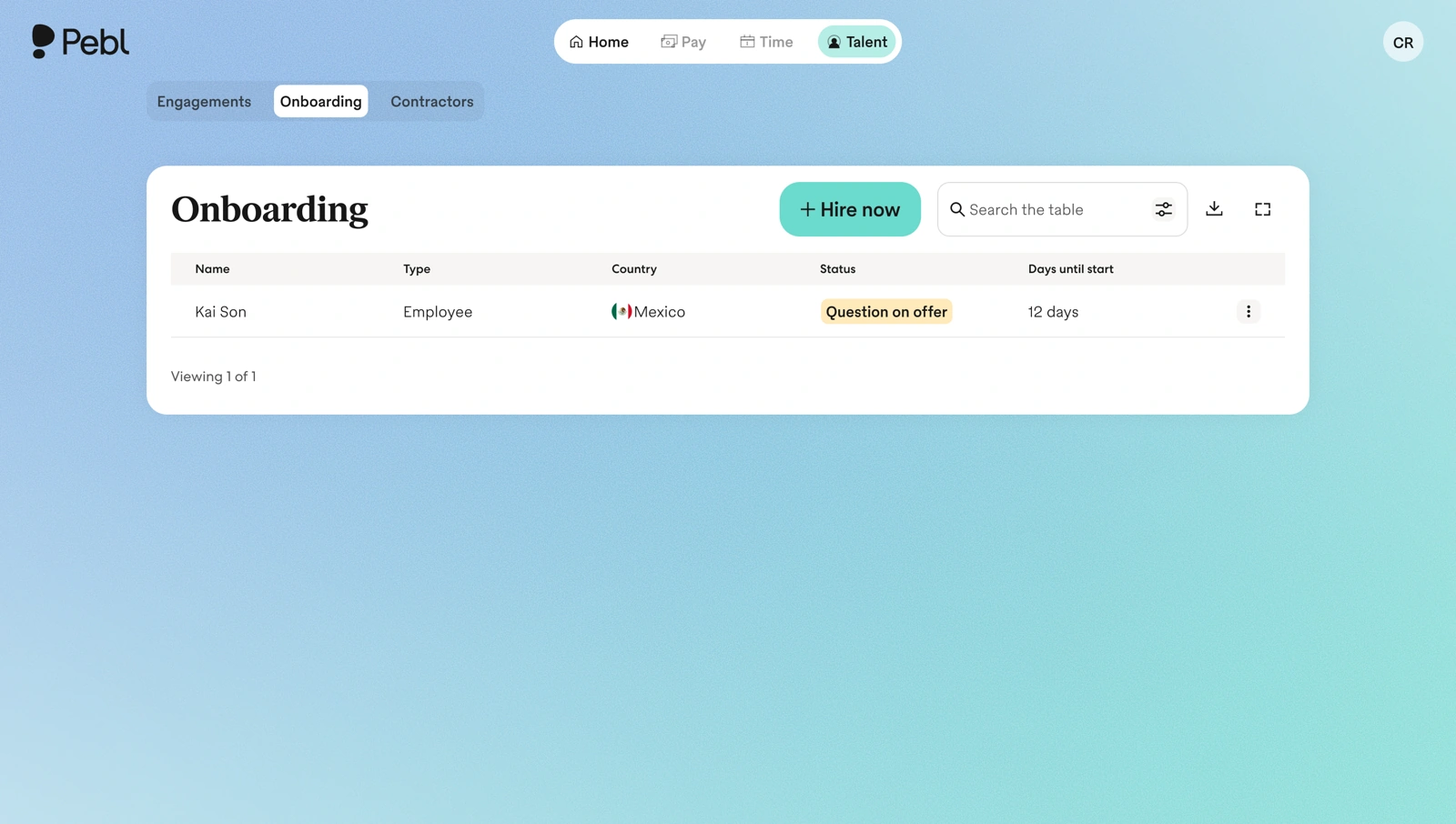
At onboarding, for an employee working in the Philippines, Pebl’s terms require that neither the client nor its affiliates is incorporated there, owns or controls a local entity, or plans to become, acquire or establish one.

Later changes to these circumstances must be reported promptly to Pebl in writing. I’d resolve this restriction before considering Pebl as a temporary step towards opening a company.

Pebl, formerly Velocity Global, combines hiring, payroll, employee changes, reporting and offboarding in one platform. EOR starts at $399 per employee per month; the country quote must identify the dollar currency and billing commitment. Salary, employer costs, benefits and additional services are separate.

A deposit is required before onboarding. Its amount can change with salary, seniority or payment history, and it is returned after the final invoice and outstanding balances are paid. Early exit can make the remaining committed-term service fees payable, subject to the agreement’s termination exceptions. Any discounted offer needs an end date and renewal price.

When this provider fits

Pebl’s managed-service proposition and G-P’s enterprise administration are different buying reasons.

Deposit

Per quote

Entity model

Affiliates and local partners

First year, one hire

$4,788 in service fees

Reviewed by Martynas PupkeviciusFact-checked by Michael Ennis

Starting fee

$399

Confirm the country price and billing commitment.

Against the 10 starting fees

$199 lowest$699 highest
6 Oyster logo Oyster 4.5/5 Rating Using one onboarding process for hires across countries Starting fee: $699 USD / monthDeposit: ~1 monthOnboarding: Start date agreed per hire

My take

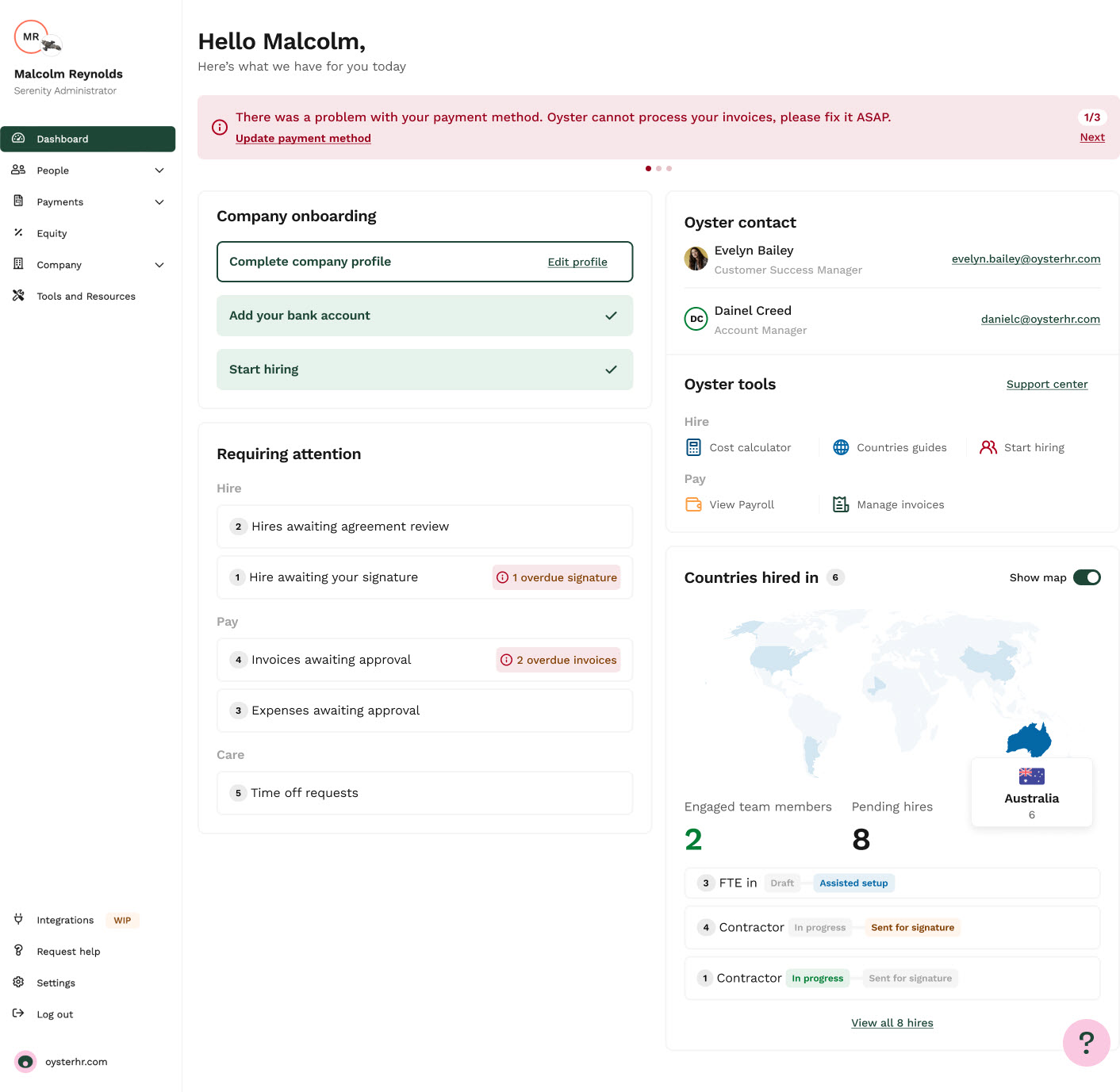
I’d weigh Oyster’s fee against the administration it includes: payroll, expenses, time off, reporting, and onboarding and offboarding support.

Benefits packages are optional add-ons. The EOR service fee is USD 699 per employee per month on monthly billing.

Annual seats are priced by headcount and location and are non-refundable, but can be reused for replacement hires. Annual prepayment gives the lowest fee; higher-priced quarterly or semiannual payment options are available. Salary, employer costs and benefit premiums are additional, and a refundable deposit is required. Optional People Partner project work costs USD 300 per hour.

When this provider fits

I’d look at Oyster when optional benefits shape the offer; Deel is worth comparing when employee, contractor and finance administration need to connect. Request the Philippine benefit schedule and an example of how payroll handles year-end benefits.

Deposit

~1 month

Entity model

Own entities and vetted partners

First year, one hire

$8,388 in service fees

Reviewed by Martynas PupkeviciusFact-checked by Michael Ennis

Starting fee

$699

Monthly billing. Annual seats are quoted separately, prepaid and non-refundable.

Against the 10 starting fees

$199 lowest$699 highest
7 G-P logo G-P 4.2/5 Rating Hiring abroad while keeping your existing HR system Starting fee: $599 USD / monthDeposit: 1–2.5 monthsOnboarding: Start date agreed per hire

My take

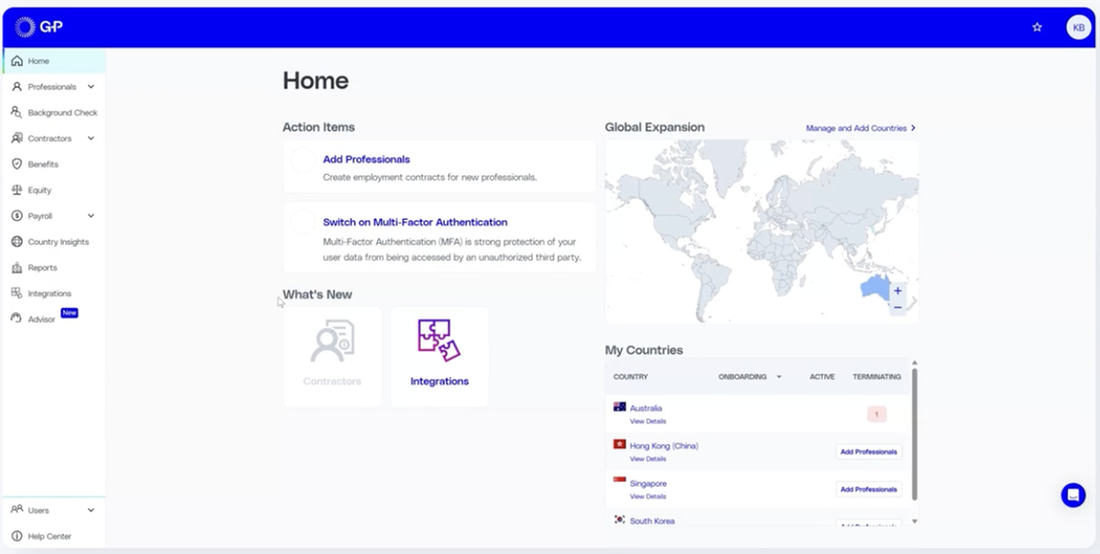
G-P would be on my shortlist if I needed EOR employment administration, benefits and reporting with custom API integrations.

EOR starts at USD 599 per employee per month, with volume discounts by quote. Salary, employer costs, benefit premiums and additional services are separate.

There is no minimum contract length for EOR hires. The proposal still sets the commercial billing and cancellation terms, along with the cost of any integration or implementation work.

Deposit

1–2.5 months

Entity model

100+ own entities, plus partners

First year, one hire

$7,188 in service fees

Reviewed by Martynas PupkeviciusFact-checked by Michael Ennis

Starting fee

$599

Confirm the included services and billing terms in your country quote.

Against the 10 starting fees

$199 lowest$699 highest
8 Papaya Global logo Papaya Global 4.1/5 Rating Comparing payroll costs across countries in one report Starting fee: $499 USD / monthDeposit: 1–2 monthsOnboarding: Start date agreed per hire

My take

Papaya brings EOR employees, payroll for a company’s own entities and workforce payments into one platform, with consolidated reporting and payroll approval tools.

That payroll and payments connection is what I’d follow through in a demonstration.

Papaya’s EOR service starts at USD 499 per employee per month. The country quote must identify the billing commitment and any additional services. Salary and employer costs are separate.

Deposit

1–2 months

Entity model

Partner model; confirm employer

First year, one hire

$5,988 in service fees

Reviewed by Martynas PupkeviciusFact-checked by Michael Ennis

Starting fee

$499

The country quote sets the billing terms. Payroll-only processing is priced separately.

Against the 10 starting fees

$199 lowest$699 highest
9 Borderless AI logo Borderless AI 4.0/5 Rating Getting 24/7 help with overseas payroll and HR Starting fee: $579 USD / monthDeposit: 1.5–3 monthsOnboarding: Start date agreed per hire

My take

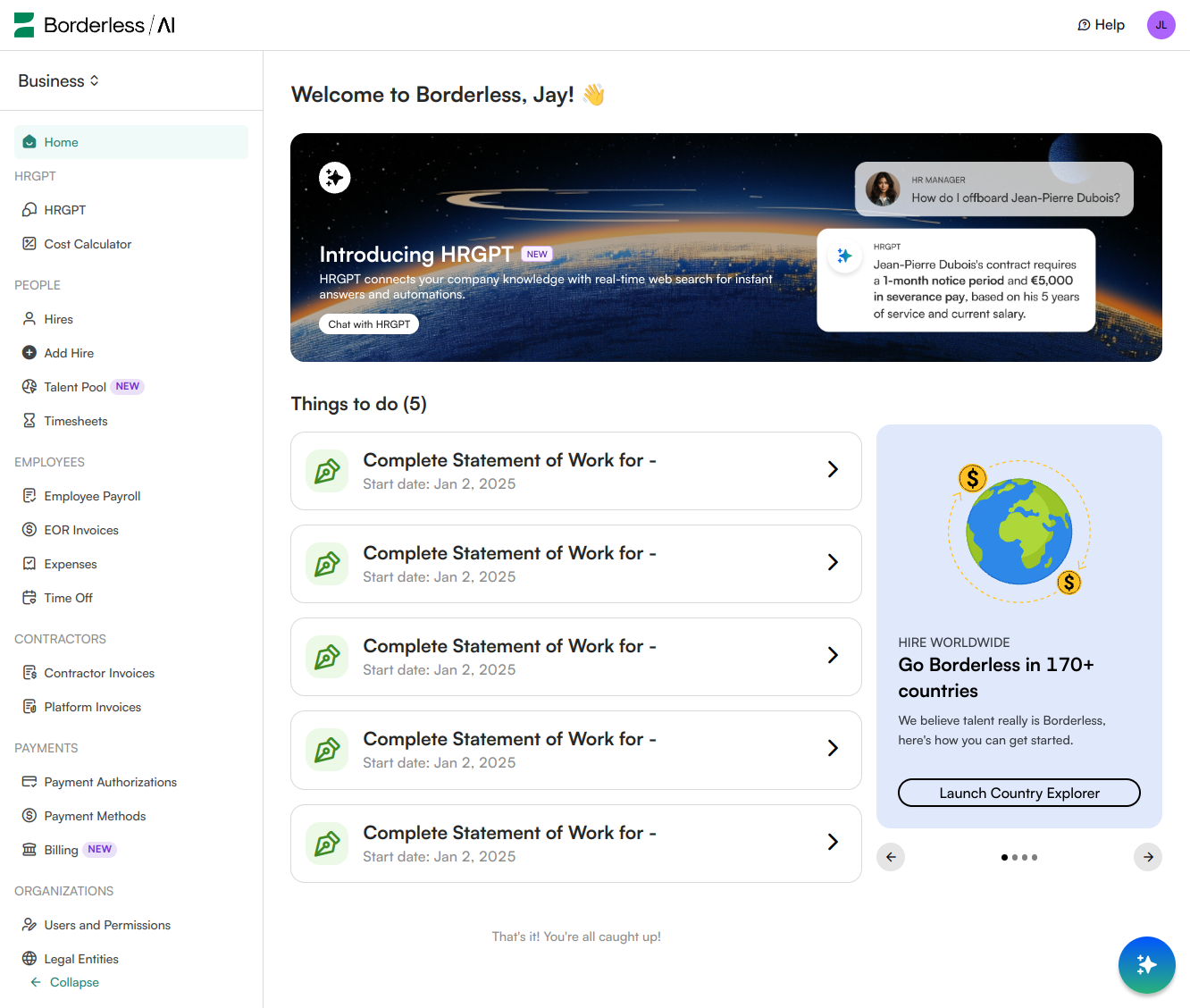
I’d budget for Borderless AI’s standard EOR fee of USD 579 per employee per month before considering the temporary offer.

Eligible companies headquartered outside Canada may qualify for USD 399 on fees billed through 31 December 2026. USD 579 applies from 1 January 2027, including promotional customers; country and employment-type exceptions apply. Salary, employer costs and benefits are additional.

A refundable deposit is required before the employee starts. The schedule is 1.5 months of gross salary plus employer costs, benefits and platform fees with ACH or three months by wire and other methods, with country variations. The base includes salary, employer contributions, benefits and platform fees. Late-payment issues can raise it to six months. Deposits are released after the relevant obligations are settled.

Deposit

1.5–3 months

Entity model

Own entities

First year, one hire

$6,948 in service fees

Reviewed by Martynas PupkeviciusFact-checked by Michael Ennis

Starting fee

$579

Eligible companies headquartered outside Canada can pay $399 on fees billed through 31 December 2026.

Against the 10 starting fees

$199 lowest$699 highest
10 RemoFirst logo RemoFirst ⚠ Trustpilot warning 0.5/5 Rating Making a first overseas hire on a tight budget Starting fee: $199 USD / monthDeposit: About 1 monthOnboarding: Start date agreed per hire

My take

We moved RemoFirst to last place on 8 November 2026: Trustpilot has suspended its rating for a breach of its guidelines and removed fake reviews.

RemoFirst says it works exclusively with vetted in-country partners. Here, that means a local partner company, not RemoFirst, would normally employ your hire, and payroll changes, questions and exits pass through both companies, which can slow answers. US$199 is RemoFirst’s starting fee and varies by country, so get this country’s quote before you compare. I’d include RemoFirst in a price comparison: it provides a dedicated customer success manager and EOR employment from USD 199 per employee per month, with no minimum contract term or headcount. The fee can vary with country requirements. Salary, employer costs, benefits, deposits and optional services are separate.

Contractor management is free for onboarding, identity checks, contract storage and expenses. Contractor payments cost USD 25 per contractor in months when a payment is processed; payment-provider and transfer fees may also apply. These contractor services are separate from EOR employment.

Deposit

About 1 month

Entity model

Partners, not own entities

First year, one hire

$2,388 in service fees

Reviewed by Martynas PupkeviciusFact-checked by Michael Ennis

Starting fee

$199

RemoFirst advertises no minimum contract term or employee count. Confirm any country-specific charges.

Against the 10 starting fees
$199 lowest$699 highest

Deel’s Philippine EOR guidance describes a wholly owned local entity. Checked 6 October 2026.

Which top pick · Philippines

For a foreign-national hire, confirm eligibility and ask the proposed legal employer to explain the AEP and visa route, scope and timing before committing. For an employee with the required right to work, compare equivalent country quotes, support and exit terms. With a fixed start date, agree the documents, approvals and first-payroll cutoff with each shortlisted provider. Ask for a written quote covering the salary, benefits and services you need. Enter its recurring costs in USD in the EOR cost calculator to compare proposals.

Local Philippine alternatives (researched, unranked): several Philippine firms also provide EOR, staff-leasing or local payroll outsourcing, including domestic players such as Penbrothers and Sprout Solutions on the HR-and-payroll side and outsourcing specialists serving the BPO market. Penbrothers and Sprout Solutions run Philippine HR and payroll well, and the BPO specialists staff-lease at scale, but none places hires outside the Philippines. An employer whose whole team will stay inside the Philippines, as many BPO-adjacent operations do, may still find a domestic provider enough.

Get your EOR discount

Get up to 30% off eligible EOR service fees. Your quote confirms the discount and terms.

Employment framework

Employment and payroll in the Philippines

Trace the steps from the right-to-work check to payday.

The proposal should name the local employer and itemise the worker’s contributions and benefits.

Identify the work-permission route and petitioner

For a foreign-national hire, confirm the permitted route for the actual person and role, including any AEP exemption or exclusion.

The Bureau of Immigration FAQ says a Philippine-based hiring company petitions for a commercial 9(g) visa. A provider-owned entity or local partner may be the employer.

Name the proposed employer and petitioner, and obtain their responsibilities in writing.

Employment contract and legal employer

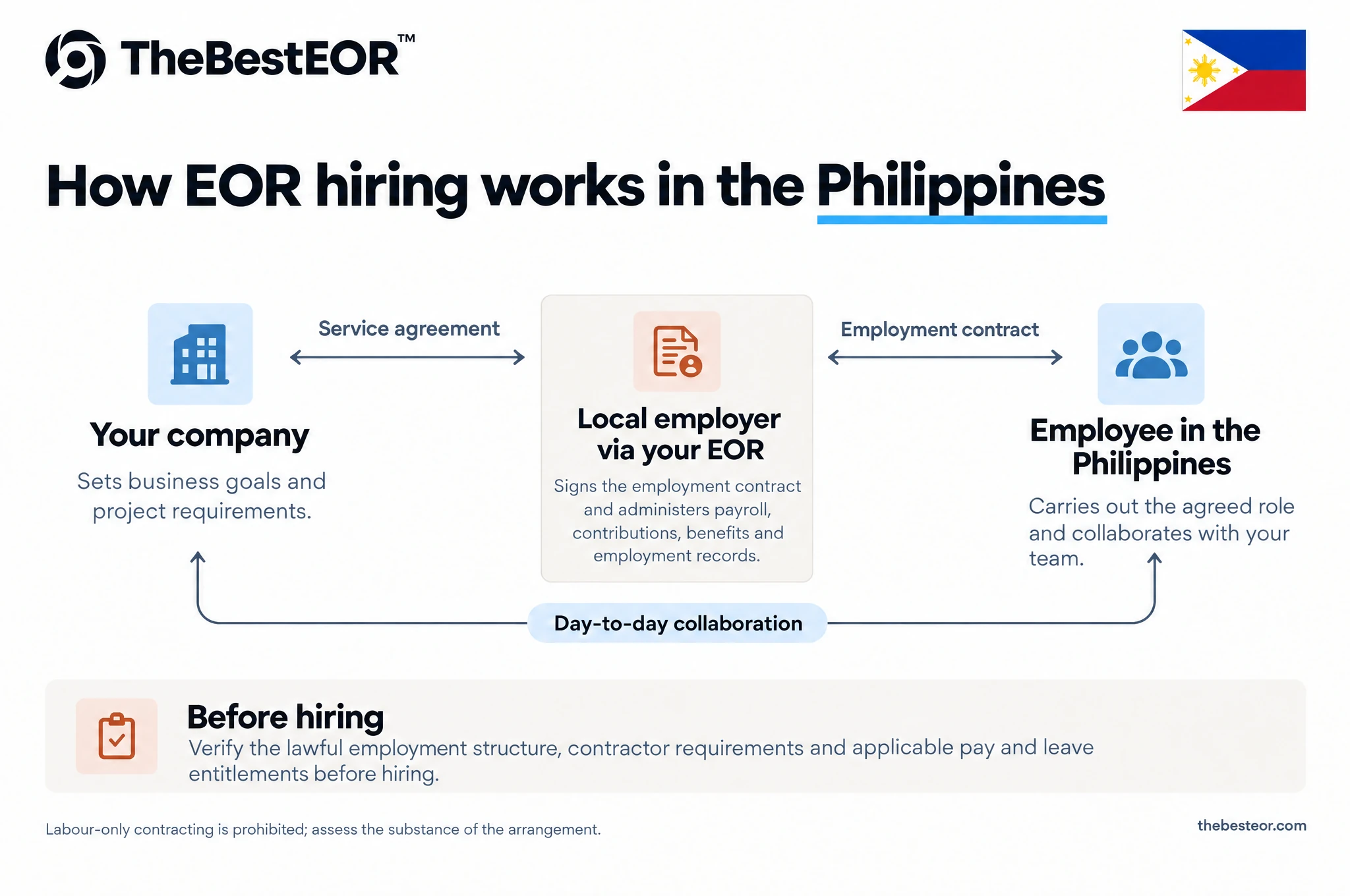
The named Philippine legal employer signs the employment agreement and administers the employer obligations that apply to the worker and arrangement. Depending on the provider’s country model, that company may be provider-owned or a local partner.

Confirm the company’s registrations, responsibilities and the provider’s accountability in the agreement. You retain day-to-day direction of the work.

Contributions, benefits and corrections

Worker-specific benefits and deductions

The country proposal should explain applicable SSS, PhilHealth, Pag-IBIG, BIR withholding, leave and 13th-month pay, including worker-category exceptions and filing responsibilities.

Filing responsibilities

Agree which party registers the employee, runs payroll, remits contributions and handles corrections.

Agree the dates for distinct onboarding milestones

1

Map documents, checks and registrations

Agree a plan for the employee covering documents, right-to-work checks, contract signing, applicable registrations and payroll cutoffs. Immigration approvals are separate steps where required.

2

Confirm work-start and first-salary dates

Contract signing, permission to begin work and first salary payment are separate milestones. Ask the provider to give a date for each milestone; an advertised onboarding estimate may not cover the first salary payment.

Employer cost

Statutory employer contributions in the Philippines

Budget separately for 13th-month pay.

All figures as of 2026. The combined employer load is about 11 to 14 percent of gross and caps out near PHP 6,230 a month, before the 13th-month pay and the EOR fee.

Contribution Employer rate Cap / basis Agency
Contribution

SSS (social security)

Employee also pays 5%; includes MPF above MSC 20,000
Employer rate
10% of MSC
Cap / basis
MSC capped at PHP 35,000 → max employer PHP 3,500 + EC
Agency
SSS
Contribution

Employees' Compensation (EC)

Employer-only, work-injury cover
Employer rate
Flat PHP 10 or PHP 30
Cap / basis
PHP 30 once MSC reaches the upper band
Agency
SSS
Contribution

PhilHealth (national health)

5% premium split 2.5% / 2.5%
Employer rate
2.5%
Cap / basis
Floor PHP 10,000, ceiling PHP 100,000 → max employer PHP 2,500
Agency
PhilHealth
Contribution

Pag-IBIG (housing fund)

Employee also pays up to 2%
Employer rate
2%
Cap / basis
Comp ceiling PHP 10,000 → capped at PHP 200
Agency
Pag-IBIG / HDMF

Fig. 2 · Mandatory employer contributions in the Philippines, 2026 rates and monthly ceilings

At the contribution caps, maximum employer SSS is PHP 3,530 a month (regular SS PHP 2,000 + MPF PHP 1,500 + EC PHP 30) at the PHP 35,000 salary credit, PhilHealth tops out at PHP 2,500, and Pag-IBIG at PHP 200, so the statutory employer ceiling is about PHP 6,230 a month no matter how high the salary climbs. Because the caps are low, the effective employer percentage falls as pay rises: it is near 14 percent at a PHP 30,000 salary and closer to 6 percent at PHP 100,000. On top of these the 13th-month pay adds one twelfth of basic annual salary, roughly 8.3 percent over the year, and the EOR fee sits on top of all of it. The SSS rate rose to 15 percent total in January 2025 and holds for 2026.

Working time & leave

Working hours, overtime and statutory leave

Unused service incentive leave can convert to cash.

The Labor Code sets an 8-hour day and a 48-hour, six-day week, with overtime and premium pay layered on top. Statutory paid leave is lean: a 5-day Service Incentive Leave that converts to cash, with generous maternity cover on top.

Hours and overtime

Standard day / week 8 hrs / 48 hrs
Overtime (ordinary day) +25%
Rest-day / special-day work +30%
Regular holiday work 200%
Night differential (10pm–6am) +10%
Regular holidays / yr (2026) 12 + 7 special

Fig. 3 · Hours, overtime and premium pay under the Labor Code · managerial employees are generally exempt from overtime and premium pay

An unworked regular holiday is still paid at 100 percent for covered employees. Working a regular holiday pays 200 percent of the daily rate; a special non-working day worked pays an extra 30 percent. The 2026 calendar proclaims 12 regular holidays and 7 special non-working days. Managerial employees are generally exempt from overtime and premium pay.

Statutory leave

Service Incentive Leave
after 1 year; cash-convertible
5 days
Maternity 105 days
Paternity 7 days
Solo-parent leave +7 days
Gynaecological (magna carta) up to 60 days

Fig. 4 · Statutory leave entitlements · beyond the 5-day SIL, vacation and sick leave are contractual; most employers grant 10 to 15 days of each

The Labor Code’s only general paid leave is the 5-day Service Incentive Leave (SIL) after one year of service, which must be converted to its cash equivalent if unused at year-end. Maternity leave is 105 days fully paid under RA 11210, with an extra 15 days for a solo parent, and paternity is 7 days under RA 8187. SSS reimburses the eligible SSS benefit advanced; the employer generally bears the salary differential needed for full maternity pay, subject to the applicable exemptions. Vacation and sick leave beyond the SIL are contractual. Most employers grant 10 to 15 days of each to compete.

Separate maternity pay, the SSS benefit and reimbursement

For an eligible employed member, full maternity pay consists of the SSS benefit plus the employer’s salary differential, unless a relevant exemption applies. SSS calculates its benefit from the member’s qualifying salary credits. The employer advances the payment and subsequently claims the reimbursable SSS portion.

The EOR proposal should explain how that cash flow reaches the client invoice: when the advance is funded, which amount remains an employer expense, and when the reimbursement is credited back. Keep the leave entitlement separate from the insurer’s payment calculation. An employee with a recent salary increase or a short contribution history especially needs the actual SSS record checked before a figure is promised. The client can plan temporary cover from the agreed leave dates while the employer manages the benefit application and reconciliation.

Ending employment

Probation, notice and separation pay in the Philippines

Dismissal requires both cause and due process.

Probation runs a maximum of six months. The Philippines has no at-will employment: a dismissal needs a just or authorized cause and due process, and authorized-cause terminations carry statutory separation pay.

Cause type Notice Separation pay
Cause type
Redundancy / labour-saving devices
Notice
30 days to employee + DOLE
Separation pay
1 month pay per year of service (min 1 month)
Cause type
Retrenchment / closure / disease
Notice
30 days to employee + DOLE
Separation pay
½ month pay per year of service (min 1 month)
Cause type
Just cause (e.g. serious misconduct)
Notice
Two-notice rule + hearing
Separation pay
None

Fig. 5 · Notice and separation pay by cause · redundancy pays one month per year of service, retrenchment half, just cause none

A fraction of at least six months of service counts as one whole year in the separation-pay formula. There is no general statutory notice period for resignation beyond the Labor Code’s 30-day notice from the employee; for employer-initiated authorized-cause termination the 30-day written notice to both the worker and the DOLE regional office is mandatory. A just-cause dismissal pays no separation but must follow the two-notice rule, a notice to explain and a notice of decision, with a chance to be heard, or the dismissal is ruled illegal and can mean reinstatement with back wages. The EOR builds that documented case before any exit.

Redundancy of a 3-year employee on PHP 45,000/month Redundancy = 1 month per year of service
Separation pay
1 month × 3 years of service = 3 months × PHP 45,000
PHP 135,000
Pro-rated 13th-month pay
Assume exit at mid-year, 6/12 of PHP 45,000
PHP 22,500
Unused SIL converted to cash
5 days × daily rate (PHP 45,000 / 26 ≈ PHP 1,731)
PHP 8,654
Indicative exit cost
Before any ex-gratia settlement
PHP 166,154

Fig. 6 · Redundancy cost for a 3-year employee at PHP 45,000/month · before any ex-gratia settlement or final-pay items

Redundancy uses the higher one-month-per-year formula, so a 3-year employee receives three months’ pay. Retrenchment would instead use a half-month per year (1.5 months) but never less than one month. The total above excludes any negotiated ex-gratia sum, which is common in mutual separations, and any final-pay items such as the last salary. Final pay is due within 30 days of separation under Labor Advisory No. 6. The Philippine formula turns on the cause you invoke as much as on tenure, and the termination guide maps the same twist across other markets.

Payroll & tax

Payroll cycle and income tax in the Philippines

Pay runs twice a month, with tax remitted monthly.

Semi-monthly payroll, monthly tax remittance, pesos throughout. Every one of those filings is the EOR’s job; each month that means the BIR remittance by the 10th and three separate agency runs.

Income tax is withheld at source under the BIR’s graduated rates set by the TRAIN law. Annual taxable income up to PHP 250,000, about PHP 20,833 a month, is exempt. Above that the rate rises in bands to a top marginal 35 percent. Non-resident aliens not engaged in trade or business are taxed at a flat 25 percent on Philippine-source income. The EOR computes the withholding each payroll against the employee’s status and remits it to the BIR by the 10th of the following month, then reconciles annually and issues each employee the BIR Form 2316 they need for their own return.

Payroll runs at least twice a month, which the Labor Code requires, and most Philippine employers pay semi-monthly on the 15th and the last day of the month. The currency is the Philippine peso (PHP), roughly 59 pesos to one US dollar in 2026. The 13th-month pay is the one extra obligation that catches foreign employers: it is mandatory, equal to one twelfth of basic annual salary, and must be paid on or before 24 December under Presidential Decree 851, with no exemption allowed. Many employers also pay a discretionary 14th-month or mid-year bonus to compete, but only the 13th-month is required.

First, the PHP90,000 income-tax exclusion applies to 13th-month pay and other qualifying benefits combined, with the excess taxable, so the EOR splits the calculation correctly rather than withholding on the whole amount. Second, the SSS, PhilHealth and Pag-IBIG remittances each run on their own monthly schedule and reference numbers, and a missed or late filing draws penalties from each agency separately, which is the routine compliance load an EOR absorbs and a company running its own first Philippine payroll often underestimates.

The employment contract

Contract requirements and 13th-month rules

Check who qualifies for 13th-month pay.

The employment contract is normally written in English, which Philippine courts and agencies accept, and sets out the position, salary, work schedule, benefits and the grounds and procedure for termination. For a probationary hire the contract must state, in writing and at the time of engagement, the reasonable standards the employee must meet to become regular. If those standards are not communicated at hiring, or the employee is kept past six months, the worker becomes a regular employee by operation of law with full security of tenure, so the EOR documents the standards up front.

Fixed-term contracts are permitted but scrutinised: a term used to defeat security of tenure, or repeatedly renewed for work that is genuinely permanent, can be struck down so the worker is treated as regular. The EOR uses a fixed term only where the engagement is genuinely time-bound, such as a defined project, and otherwise issues a regular contract after the probationary period. Project and seasonal employment have their own categories under the Labor Code, which the EOR maps to the actual work.

The 13th-month pay is mandatory and non-negotiable. Every rank-and-file employee who has worked at least one month in the calendar year is entitled to it, equal to one twelfth of the basic salary earned during the year, paid on or before 24 December under Presidential Decree 851. It is a legal entitlement, distinct from any Christmas bonus, and DOLE accepts no application for exemption or deferment. The EOR accrues it across the year and runs the payment before the deadline, aggregating it with other qualifying benefits before applying the shared PHP90,000 tax exclusion and taxing the excess. Basic salary for the computation excludes allowances and monetary benefits not treated as part of the regular wage, such as the cash value of unused leave, unless company policy folds them in.

One tax allowance can cover more than one bonus

Suppose an employee receives PHP 75,000 in 13th-month pay and PHP 30,000 in other bonuses that fall within the same tax-benefit category. The combined amount is PHP 105,000. Applying the PHP 90,000 exclusion leaves PHP 15,000 to enter the taxable-compensation calculation. It would be wrong to exempt each payment separately because neither individually exceeds PHP 90,000.

This example assumes the additional PHP 30,000 belongs in that category; de minimis benefits and other payments need their own classification. It also does not change the employee’s statutory 13th-month entitlement. Ask payroll to show three lines: the entitlement calculation, other qualifying benefits already paid during the year, and the taxable excess. That makes an unexpected December deduction understandable and avoids describing a discretionary bonus as a substitute for statutory pay.

Division of responsibility

What the EOR handles, and what stays with you

Agree who tracks unused leave and 13th-month pay.

Employer of record in the Philippines diagram showing the service agreement, employment contract, and day-to-day collaboration between your company and the employee.
Employer of record in the Philippines: how your company, the local employer and the employee work together. Select the image to enlarge.

The EOR handles

1
The named Philippine legal employer and its applicable statutory responsibilities
2
Applicable SSS, PhilHealth and Pag-IBIG registration and remittance
3
BIR withholding calculations, filings and employee tax documentation
4
Applicable 13th-month pay, leave and other statutory benefits
5
The employment agreement and communicated probationary standards where relevant
6
Any separately agreed immigration support, with the eligible route and petitioner identified
7
Notice, documentation and other legal requirements for ending this worker’s employment

You keep

1
What the hire works on each day, and to what standard
2
Pay: the base salary and anything you add above the mandatory 13th month, like a 14th-month bonus
3
Which candidate signs, and the month-six call on whether a probationer becomes regular
4
Performance management, and the record behind both notices if a dismissal ever comes
5
Laptops and tooling, yours to source unless you buy a provider’s device add-on
6
The commercial relationship with the provider, plus any IP terms the local contract must carry for you

The four-fold test applies whatever the invoice says. A Filipino worker engaged as an independent contractor but working fixed hours under your control can be deemed a regular employee by the DOLE and the courts, and the finding brings unpaid SSS, PhilHealth and Pag-IBIG, back withholding tax, the 13th-month entitlement, and penalties. An EOR contract closes the question before it opens: compliant employment from day one, every contribution running. The misclassification guide covers the tests Philippine authorities apply.

Work permits

AEP and 9(g) visa: thresholds and who sponsors

Check which permit and visa your hire needs.

A common foreign-employment route involves an Alien Employment Permit from DOLE and a 9(g) pre-arranged employment visa from the Bureau of Immigration. Confirm the person’s status, any exemption or exclusion, employer eligibility and the permitted route before relying on a provider’s immigration offer.

Document Issued by Validity Key requirement
Document
Alien Employment Permit (AEP)
Issued by
DOLE
Validity
1–3 years (to contract term)
Key requirement
Labour-market test + economic-needs test (DO 248)
Document

9(g) pre-arranged employment visa

Issued by
Bureau of Immigration
Validity
1 year, renewable to 3
Key requirement
Approved AEP + employer petition
Document
Provisional Work Permit (PWP)
Issued by
Bureau of Immigration
Validity
Bridges until 9(g) issued
Key requirement
Lets the hire start before the 9(g) endorsement
Document
Special Work Permit (SWP)
Issued by
Bureau of Immigration
Validity
Up to 6 months
Key requirement
Short-term assignments, no AEP route

Fig. 7 · The documents needed for a foreign hire · both the AEP and the 9(g) are tied to the sponsoring employer

The Bureau of Immigration FAQ identifies the Philippine-based hiring company as petitioner for a commercial 9(g) visa. DOLE’s AEP guidance provides the permit framework and exemption or exclusion forms. Confirm the actual person’s route, employer, documents and applicable labour-market requirements with qualified local support; neither a global entity count nor a general immigration claim establishes eligibility.

Ask each provider to identify the Philippine legal employer and petitioner, who prepares and submits applications, and what approvals are needed before work begins. Include any interim permission, registration, renewal and exit responsibilities in the written scope. Provider-owned and partner arrangements require the same employee-specific check. Agency processing and the payroll cutoff are separate from the provider’s contract-preparation timeline.

Salary benchmarks

Indicative salary ranges

Compare gross monthly salaries in pesos.

Monthly gross in pesos with a USD equivalent at roughly 59 pesos to the dollar. Ranges are 2026 market data from Pebl’s Philippine salary guide and Glassdoor; use the midpoint as a starting offer, not a ceiling.

Check current pay data for the role and location before you make an offer.

Role Gross PHP/month USD/month (approx)
Role
Software engineer
Gross PHP/month
PHP 35,000–70,000
USD/month (approx)
$593–1,186
Role
Senior software engineer
Gross PHP/month
PHP 70,000–130,000
USD/month (approx)
$1,186–2,203
Role
Product manager
Gross PHP/month
PHP 60,000–120,000
USD/month (approx)
$1,017–2,034
Role
Accountant
Gross PHP/month
PHP 25,000–45,000
USD/month (approx)
$424–763
Role
Customer support
Gross PHP/month
PHP 18,000–30,000
USD/month (approx)
$305–508
Role
Sales manager
Gross PHP/month
PHP 50,000–100,000
USD/month (approx)
$847–1,695
Role
HR manager
Gross PHP/month
PHP 50,000–90,000
USD/month (approx)
$847–1,525
Role
Designer
Gross PHP/month
PHP 25,000–50,000
USD/month (approx)
$424–847

Fig. 8 · Monthly gross salary benchmarks, 2026 · converted at roughly 59 pesos to the dollar; midpoints are starting offers

Salaries cluster in Metro Manila (NCR) and the Cebu and Davao tech hubs. Rates outside the metros run lower for the same role. Customer-support and BPO pay is where the Philippines undercuts other hiring markets most, which is why outsourcing-heavy teams hire here. Note that most roles fall well below the PHP 35,000 SSS salary credit and the PHP 100,000 PhilHealth ceiling, so employer contributions are usually paid near the caps rather than as a flat percentage of gross.

Fully-loaded cost

What a Philippine engineer really costs per month

The PHP 42,500 example includes 13th-month accrual.

Software engineer, Metro Manila
Gross base: PHP 42,500/month
Gross salary PHP 42,500
SSS employer (10% of MSC)
At the PHP 35,000 MSC cap, incl. MPF + EC
PHP 3,530
PhilHealth (2.5%)
2.5% of PHP 42,500, under the PHP 100,000 ceiling
PHP 1,063
Pag-IBIG (2%)
Capped at PHP 200
PHP 200
13th-month accrual (1/12)
One twelfth of basic monthly salary
PHP 3,542
EOR fee illustration
RemoFirst $199 ≈ PHP 11,741
⚠ Trustpilot warning: rating suspended for a breach of its guidelines; fake reviews removed
PHP 11,741
Monthly total, cheapest fee
Annual ≈ PHP 751,512 (about $12,738)
PHP 62,576

Fig. 9 · Fully-loaded monthly cost at PHP 42,500 gross, illustrative service fee · statutory load plus the 13th-month accrual is about 19.6% of gross

Statutory employer cost plus the 13th-month accrual is PHP 8,335, about 19.6 percent on top of gross. The contributions alone are PHP 4,793, about 11.3 percent. Swap in a premium fee and the monthly total moves: an illustrative $499 fee (≈ PHP 29,441) lands at PHP 80,276/month (≈ PHP 963,312/year), and Deel at $599 (≈ PHP 35,341) lands at PHP 86,176/month (≈ PHP 1,034,112/year). Because the statutory load is capped, the EOR fee is the biggest lever on total cost in the Philippines.
EOR vs your own entity

EOR or your own Philippine corporation: compare costs

Compare both costs over the planned hiring period.

Factor EOR Your own corporation
Factor
Setup cost
EOR
None
Your own corporation
SEC incorporation + BIR + SSS/PhilHealth/Pag-IBIG registration
Factor
Time to first hire
EOR
Confirm employee-specific milestones
Your own corporation
4–10 weeks (SEC, BIR, bank, three-agency employer registration)
Factor
Per-employee cost
EOR
$199–599/employee/mo fee + statutory
Your own corporation
Statutory only, plus shared overhead
Factor
Ongoing admin
EOR
Provider runs payroll, filings & 13th-month
Your own corporation
In-house payroll, monthly BIR & agency filings, annual audit
Factor
Compliance liability
EOR
On the EOR
Your own corporation
On you and your resident officers

Fig. 10 · Illustrative EOR-versus-entity comparison

At the illustrative USD 199 service fee, the EOR adds about PHP 141,000 a year per employee over running statutory contributions yourself. Your own corporation removes that fee, but SEC and BIR setup, monthly filings to three agencies plus the BIR, an annual audit, and a bookkeeping or payroll provider add real fixed overhead regardless of headcount, on top of the foreign-ownership caps and resident-officer rules that come with a Philippine corporation. Compare which charges are fixed and which scale with headcount; complete EOR and corporation proposals over the same hiring horizon determine the cost crossover.

Annualise the selected service fee for the hires you expect to keep, then compare it with the Philippine company setup, accounting, payroll and 13th-month accruals. Count setup costs over the same hiring horizon and include payroll, benefits, transition and exit charges on both sides. A higher service-fee plan moves the financial crossover earlier; lower recurring entity overhead or a longer hiring horizon can do the same. Short hiring duration, setup costs and the need for local administration can move it later.

FAQ

EOR in the Philippines: common questions

What is the best EOR in the Philippines?

RemotePeople is our top pick for the Philippines in 2026 (4.9/5), followed by Multiplier (4.1/5) and Deel (4.7/5). We opened paid accounts with all 10 providers on this page, priced real hires and ran payroll.

RemotePeople offers recruitment and EOR through one provider, with a dedicated account manager on both EOR plans. Its EOR Global plan starts at USD 499 per employee per month, and EOR Select at USD 199 where the hire qualifies. Multiplier Core starts at $499 per employee per month on monthly billing, or $459 billed annually; Deel starts at USD 599 plus a mandatory Employer Liability Cost.

How does an employer of record work in the Philippines?

An employer of record in the Philippines becomes the worker’s legal employer through a local employing entity, while your company directs the day-to-day work. The EOR handles SSS, PhilHealth and Pag-IBIG registration and remittance, BIR withholding and filings, and statutory benefits including 13th-month pay.

How fast can an EOR onboard an employee in the Philippines?
Ask for an employee-specific onboarding plan and first-payroll date. Documents, contract signing, right-to-work checks, immigration approvals where needed, and payroll cutoffs affect timing.
How much does an EOR cost in the Philippines per month?
Published service fees for the Philippines run from USD 199 to USD 699 per employee per month across the 10 providers we tested: RemoFirst from USD 199; RemotePeople Global from USD 499, or Select from USD 199 only where country and salary qualify; Deel from USD 599 plus mandatory Employer Liability Cost; G-P from USD 599; Oyster USD 699 on monthly billing, with annual seats quoted separately. Multiplier Core advertises $499 monthly or $459 per month billed annually; Pebl advertises $399, with currency and commitment to confirm. Rippling starts at USD 499 plus its required platform from USD 8 per employee, and Papaya Global at USD 499. Borderless AI is USD 579 standard, with an eligible USD 399 promotion on fees billed through 31 December 2026. All amounts are per employee/month; salary and employment costs are separate. See Provider fees. On top of the fee you pay the employee’s gross salary plus mandatory employer SSS, PhilHealth and Pag-IBIG contributions, which run about 11 to 14 percent of gross, capped, plus the 13th-month pay that adds roughly 8.3 percent over the year.
What employer contributions are mandatory in the Philippines?
SSS at 10 percent of the monthly salary credit (employee pays 5 percent), capped at a PHP 35,000 credit, so the maximum employer SSS is PHP 3,530 a month including the MPF and the PHP 30 Employees’ Compensation levy. PhilHealth is 2.5 percent employer, capped at PHP 2,500 on a PHP 100,000 ceiling. Pag-IBIG is 2 percent employer, capped at PHP 200. The combined employer load is about 11 to 14 percent of gross.
Is 13th-month pay mandatory in the Philippines?
Yes. Under Presidential Decree 851 every rank-and-file employee who has worked at least one month in the calendar year must receive 13th-month pay equal to one twelfth of basic annual salary, paid on or before 24 December. It is a legal entitlement, not a discretionary Christmas bonus, and DOLE allows no exemption or deferment. It effectively adds about 8.3 percent to annual payroll cost.
Can an EOR sponsor a work visa in the Philippines?

An EOR arrangement may support an eligible foreign hire, but confirm the actual legal employer, petitioner and immigration scope first. AEP and 9(g) are a common employment route, subject to the person’s status, exemptions or exclusions and the authorities’ requirements. Any interim work permission has its own eligibility conditions. Filipino citizens do not require these foreign-worker permissions.

What is the minimum wage in the Philippines in 2026?
Minimum wages depend on the region, sector and applicable wage order. In Metro Manila, Wage Order NCR-28 sets PHP 755 per day for non-agriculture from 26 September 2026; the specified agriculture, small retail/service and manufacturing categories use PHP 718. Apply the correct category and work location rather than the earlier NCR-26 or NCR-27 litigation snapshot.
How much notice and separation pay applies when terminating in the Philippines?
For an authorized-cause termination the employer gives 30 days written notice to both the employee and DOLE. Separation pay is one month’s pay per year of service for redundancy or labour-saving devices, and one-half month per year for retrenchment, closure or disease, with a one-month-pay floor either way. A fraction of at least six months counts as a full year. Just-cause dismissals carry no separation pay but require the two-notice due-process procedure.
What currency and payroll cycle does the Philippines use?
The Philippine peso (PHP). Payroll is paid at least twice a month under the Labor Code, and most employers pay semi-monthly on the 15th and the last day. Withholding tax is computed each payroll and remitted to the BIR by the 10th of the following month, and SSS, PhilHealth and Pag-IBIG are remitted monthly. About 59 pesos equals one US dollar in 2026.
Can I convert a Philippine contractor to an EOR employee?
An EOR can employ the worker going forward. Earlier liabilities still need review. A Philippine contractor who works fixed hours under your control can be deemed a regular employee under the Labor Code’s four-fold test, exposing you to back SSS, PhilHealth, Pag-IBIG and withholding tax plus the 13th-month entitlement. An EOR issues a compliant local contract, enrols the worker in all three agencies, and runs BIR withholding, usually within a week.
Do I need a local entity to hire one person in the Philippines?

No. The agreed EOR structure employs the worker through a named Philippine legal employer, so you can hire without registering your own corporation with the SEC. Standing up your own entity means SEC incorporation, BIR registration, and SSS, PhilHealth and Pag-IBIG employer registration, which runs several weeks and carries ongoing audit and filing overhead.

Annualise the selected service fee for the hires you expect to keep, then compare it with the Philippine company setup, accounting, payroll and 13th-month accruals.

How does probation and regularization work in the Philippines?
Probation runs a maximum of six months, or 180 calendar days, and the standards for regularization must be communicated in writing at hiring. An employee kept beyond six months, or hired without those written standards, becomes a regular employee by operation of law, gaining full security of tenure. Probationers are protected from day one and can only be dismissed for just cause, authorized cause, or failure to meet the disclosed standards.

Sources and as-of dates

Article references

Philippine payroll law is old decrees carrying young numbers: the Labor Code dates from 1974 and the 13th-month rule from 1975, while the SSS rate moved in January 2025 and the NCR wage order sits in court as of mid-2026. Rates as of June 2026.

Hiring facts Checked 2 Oct 2026

Hiring facts

Checked 2 October 2026
Eligibility, local and collective rules apply. EOR fees extra.

Labor Code of the Philippines 5 sources

Presidential Decree 442, as amended: generally an 8-hour normal working day, with a weekly rest day after six consecutive normal workdays; overtime and premium pay, Service Incentive Leave, security of tenure and separation pay, subject to coverage and exceptions. Just-cause dismissal requires two written notices and an opportunity to respond; authorized-cause termination follows separate notice rules.

Presidential Decree 851 3 sources

Mandatory 13th-month pay for covered rank-and-file employees is at least one twelfth of basic salary earned during the calendar year, payable by 24 December. The PHP 90,000 tax-exempt ceiling applies to 13th-month pay and other qualifying benefits combined.

SSS 2 sources

From January 2025, the total SSS contribution is 15% of the applicable Monthly Salary Credit (employer 10%, employee 5%), with a PHP 5,000–35,000 MSC range. Contributions above MSC PHP 20,000 go to the mandatory provident fund (MySSS Pension Booster). Employer-only Employees’ Compensation adds PHP 10 or PHP 30, making the employer total PHP 3,530 per month at the maximum MSC.

PhilHealth 1 source

PhilHealth’s 2026 premium remains 5% of monthly basic income, with a PHP 10,000 floor and PHP 100,000 ceiling. Employed members and employers share the premium equally: up to PHP 2,500 each, or PHP 5,000 combined per month.

Pag-IBIG (HDMF) 1 source

Pag-IBIG contributions are normally 2% from the employer and 2% from the employee, calculated on monthly Fund Salary capped at PHP 10,000, for a maximum mandatory PHP 200 each. Employees with Fund Salary of PHP 1,500 or less contribute 1%; the employer still contributes 2%.

Expanded Maternity Leave (RA 11210) 3 sources

RA 11210 provides 105 days of paid maternity leave for live childbirth, with another 15 days for qualifying solo parents; miscarriage or emergency termination of pregnancy has a 60-day entitlement. For eligible employees, the employer advances the SSS benefit and SSS reimburses that benefit; the employer generally funds the salary differential, subject to exemptions. RA 8187: seven paid paternity-leave days for a married employee’s cohabiting spouse’s first four deliveries, including miscarriage, subject to the statutory conditions.

Income tax (TRAIN law) 3 sources

The graduated annual income-tax schedule starts at 0% for taxable income up to PHP 250,000 and reaches 35%. A non-resident alien not engaged in Philippine trade or business is generally subject to 25% on Philippine-source income, subject to applicable treaty or statutory exceptions. Form 1601-C is generally due by the 10th of the following month; December withholding is due by 15 January, and eFPS filing/payment schedules differ.

Work permits 4 sources

DOLE Department Order 248, series of 2025, governs the Alien Employment Permit framework, including labour-market and economic-needs assessment. The Bureau of Immigration administers the 9(g) pre-arranged employment visa. A Provisional Work Permit may cover work while an eligible visa application is pending; a Special Work Permit is a separate short-term permission with its own eligibility rules.

Minimum wage 1 source

Minimum wages are set through regional wage orders. In NCR, the non-agriculture daily minimum is PHP 755 under Wage Order NCR-28, effective 26 September 2026; specified agriculture, small retail/service and small manufacturing categories have a PHP 718 rate. NWPC separately notes continuing litigation over NCR-27. Checked 2 October 2026.

Salary benchmarks 3 sources

NodeFlair provides Philippine software-engineer monthly base-pay estimates; its page update date is separate from the collection dates of individual submissions. The PSA’s 2024 occupational wage tables provide a dated official comparison. PHP59 per USD is an illustrative conversion.

Provider pricing, entity model and onboarding 10 sources

The displayed amounts are listed starting fees, with plan and billing conditions where known. Confirm the current country fee, benefits, deposits, extras, legal employer and onboarding terms directly, and compare equivalent service proposals.

Sources on 13th-month pay and maternity benefits 4 sources

DOLE handbook on workers’ statutory monetary benefits — 13th-month calculation, entitlement and combined PHP 90,000 tax allowance. Accessed 19 October 2026.

SSS maternity benefit guidance — Eligibility, salary-credit calculation, benefit advance and employer differential. Accessed 19 October 2026.

BIR Revenue Regulations 8-2018 — PHP 90,000 exclusion for 13th-month pay and other benefits combined. Accessed 19 October 2026.

Expanded Maternity Leave implementing rules — Employer advance, SSS reimbursement and full-pay responsibilities. Accessed 19 October 2026.

To expand your shortlist, browse EOR providers for the Philippines. Once you have proposals, enter the recurring amounts in USD in the EOR cost calculator. The country guides cover other hiring markets.

This guide is for general information only and does not provide legal, tax, accounting, or financial advice. For advice about your business, consult a qualified professional familiar with the rules where you hire. The research methodology explains how TheBestEOR assesses sources.