TheBestEOR

Best Employer of Record in Germany

Written by Martynas PupkeviciusFact-checked by Michael Ennis
Picture of Martynas Pupkevicius
Martynas Pupkevicius

EOR Advisor and Remote Work Editor

Our top employer of record in Germany for 2026 is RemotePeople, from USD 499 per employee a month, ahead of Deel and Rippling.

We tested all 10 providers with paid client accounts, real quotes and a live hire run through payroll. An EOR supplying employees to client companies in Germany needs an AÜG labour leasing licence, and each assignment has a time limit.

Flag of Germany

Hiring in Germany at a glance

Currency
EUR
Euro
Pay cycle
Monthly
Usual practice, payment date set in the contract
Working hours
8 h a day
10 allowed if 8 averages over 6 months or 24 weeks
Annual leave
20 days
Minimum for 5 days a week, full after 6 months
Extra pay
Per contract
Holiday or Christmas bonuses per contract or agreement
Employer costs
Health, pension
Plus unemployment, care and accident insurance
Before you hire:
Confirm the EOR holds a licence to supply employees to clients and the time limit for your assignment.

Country hiring overview · Germany

What to check before hiring in Germany

Check the employment structure and work rights first.

For a German hire, I’d first confirm whether the proposed arrangement falls under the AÜG labour-leasing rules. I’d check the employee’s work authorisation separately.

Choose a hiring solution

Need a local employer?

Compare an EOR arrangement for your role before opening your own entity.

Already have a local employer?

Compare payroll and HR support against adding an EOR.

EOR service fee

Fees vary by provider.

Your quote should state the currency, fee per employee, minimum charge and billing commitment.

Onboarding

Paperwork affects the start date.

The contract, right-to-work checks, registrations and payroll deadlines all affect when employment can begin.

Employment costs

Check the contribution base.

Ask which earnings are used to calculate employer contributions. The quote should show the insurance charges and agreed benefits for the employee alongside that calculation.

Annual leave

The minimum is four weeks.

The statutory minimum is 4 weeks, equivalent to 20 days for someone working five days a week. Accrual and eligibility rules still apply.

Check before choosing

Confirm the AÜG position, applicable assignment limits, employee-specific work rights and the complete employer-cost calculation.

What your quote should include

Employment costs and service fees

1
Gross salary and agreed pay schedule
2
Contribution bases, insurance and agreed benefits
3
EOR fee: currency, per-employee billing, minimums and commitment
4
Setup, foreign exchange, extras and exit costs

Deposits and payroll funding

1
Amount and payment deadline
2
Whether funds are refundable or credited to payroll
3
Release conditions and refund timing
Show these separately from recurring expenses.

Key takeaways for hiring in Germany

Plan the assignment end before the first payroll.

Where AÜG labour leasing applies, the default limit is 18 consecutive months with the same client, subject to permitted collective arrangements. A permanent hiring plan therefore needs an agreed next step.

A provider switch may not restart the clock.

Prior assignments to the same client count even through another lender when the gap is no more than three months. Give the new provider the worker’s assignment history before it promises a fresh period.

Equal treatment depends on the pay comparator.

AÜG equal treatment includes pay and other essential working conditions. Any collective-agreement departure needs a valid basis and timing. Ask which comparable client role or relevant pay framework the provider uses.

Digital onboarding and digital dismissal have different rules.

Current law can permit employment particulars in electronically transmitted text form under conditions. Dismissals and mutual termination agreements still require statutory written form, excluding electronic form. Ask how the employer handles signed documents and delivery before an exit becomes urgent.

Request the pay changes over the whole assignment.

Where a collective agreement permits a departure from equal pay, its duration is limited: normally nine months, with a qualifying staged arrangement reaching equivalent pay by 15 months. Ask for the relevant dates and how the cost changes after the first invoice.

Quick verdict

What is the best EOR in Germany?

My top three: RemotePeople, Deel and Rippling.

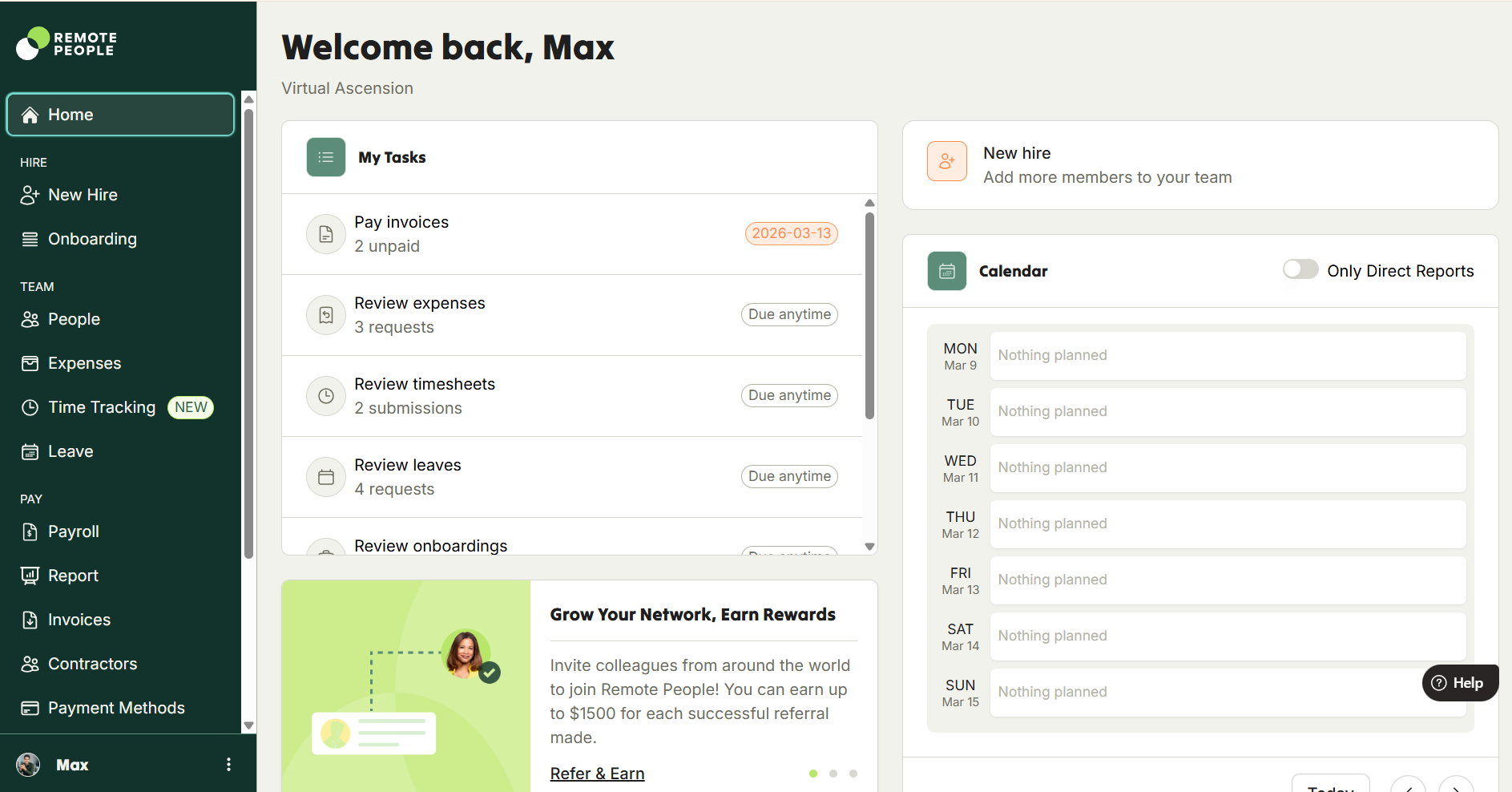
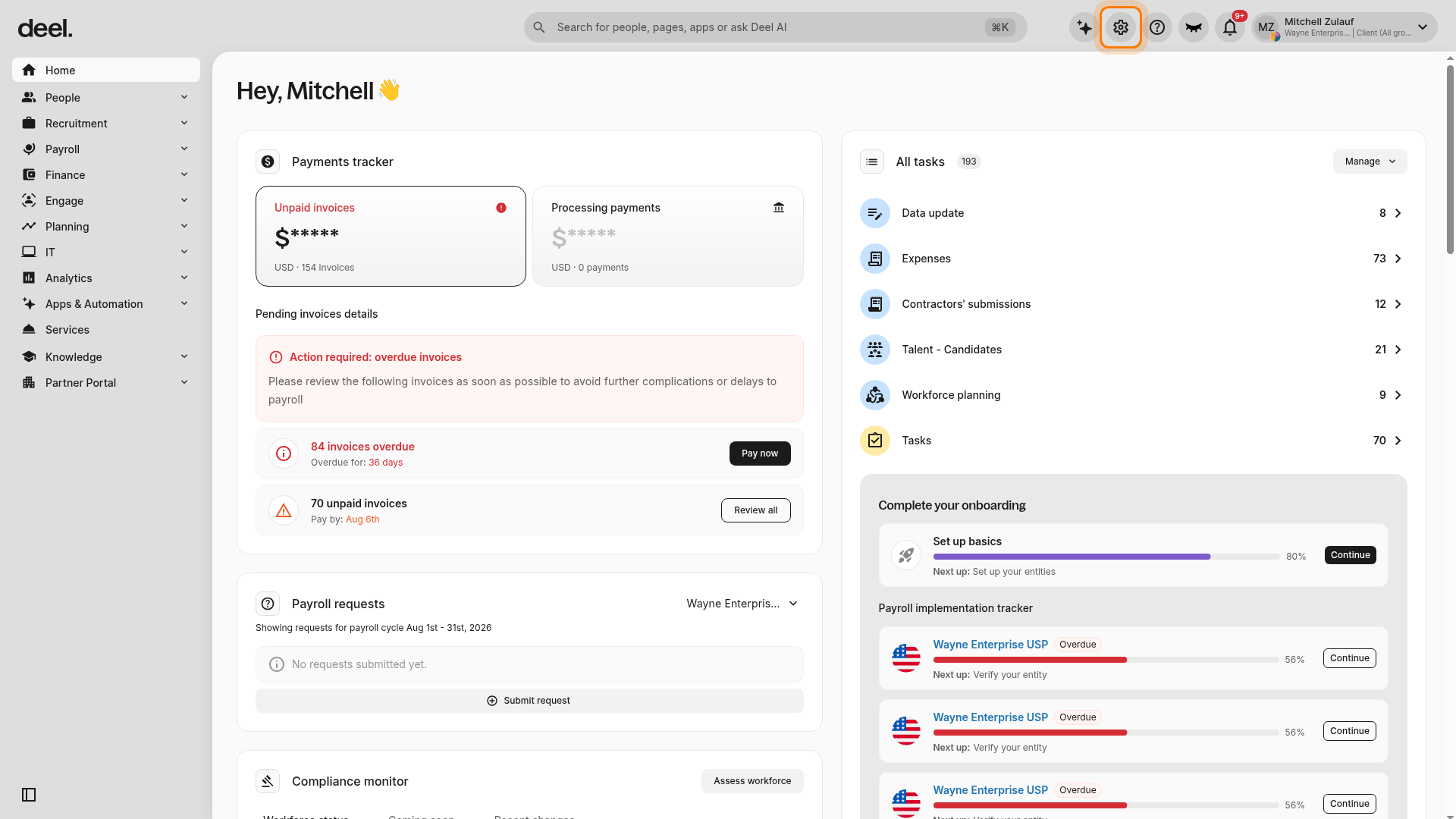
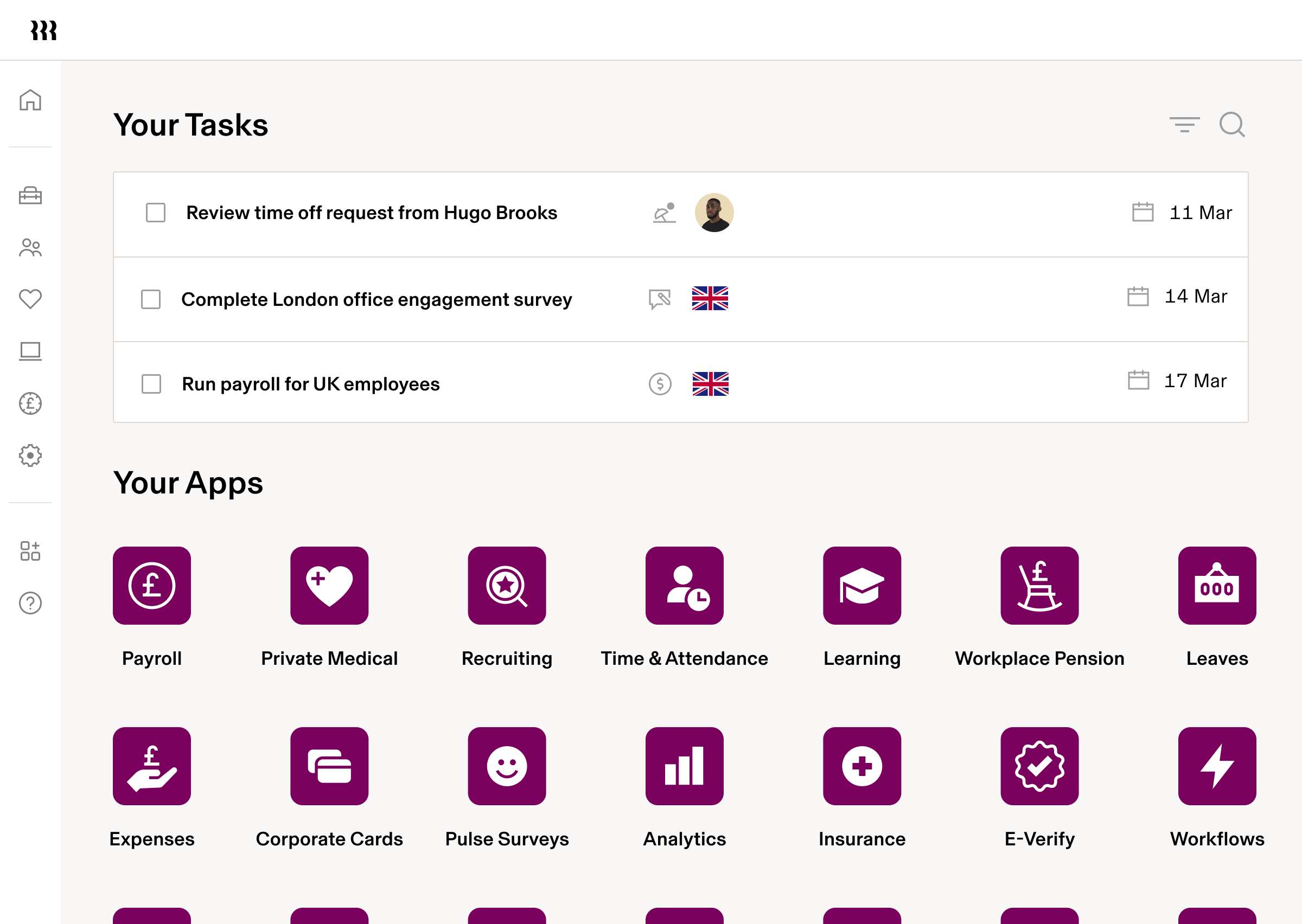
For a German hire, I’d shortlist RemotePeople first. It employs staff through its own licensed German entity (HRB 221030 B), which holds an AÜG licence in its own name, runs its European headquarters from Berlin and starts at USD 499 per employee per month. Deel, from USD 599 plus a mandatory Employer Liability Cost, fits when Germany is part of a wider employee and contractor programme. Rippling, from USD 499 plus its required platform, fits a team that already uses its HR or IT tools.

Before choosing, confirm the actual German employer, its AÜG evidence and a full quote, and check that the worker’s residence status or permit route allows the planned work.

1
Editorial pick
RemotePeople logo

4.9/5

RemotePeople

Hiring in new markets with local HR support

Starting fee
$499

per employee / month

Countries
150+
where you can hire

EOR Select from $199 for eligible hires.

Deposit
1 month

of gross salary

Deposit refund
Within 5 days

of the final payment

Why consider it

Recruitment and EOR services through one provider.

Dedicated account manager in both EOR plans.

Check the fit

Recruitment is separately priced. Confirm its fee and payment schedule.

Before signing: Confirm quote currency, billing commitment, deposits, funding deadlines and refund terms. EOR Select eligibility depends on the hiring country and employee salary.

Both EOR plans list local contracts, payroll and tax administration, and statutory benefits administration. Salary, employer contributions and benefit costs are separate.

Legal employer in Germany
✓ Verified on register

Employing entity
Own licensed employer entity, Berlin
HRB 221030 B · Amtsgericht Charlottenburg

AÜG licence
Held in its own name

Local office
Skalitzer Str. 85/86, 10997 Berlin
European headquarters; senior management on site

Visit RemotePeople ↗

2
Deel logo

4.7/5

Deel

Paying employees and contractors on one platform

Starting fee
$599

per employee / month

Countries
130+
where you can hire

Plus a mandatory Employer Liability Cost.

Deposit
1–1.5 months

of gross salary

Deposit refund
Within 60 days

of offboarding

Why consider it

EOR, contractor management and payroll for your own entities.

Month-to-month EOR service pricing available.

Check the fit

Ask for the country-specific Employer Liability Cost in your quote; it is mandatory.

Before signing: Confirm the Employer Liability Cost amount, benefit costs and any additional products. Monthly service terms do not remove employment notice, severance or other exit obligations.

The EOR pricing page lists 130+ countries. Broader platform coverage figures may include other services.

Legal employer in Germany
✓ Verified on register

Employing entity
Deel Germany GmbH
HRB 264857 · Amtsgericht München

AÜG licence
Held

Local office
Große Hamburger Str. 17, 10115 Berlin
Registered address

Visit Deel ↗

3
Rippling logo

4.5/5

Rippling

Setting up payroll, laptops and app access for new hires

Starting fee
$499

per employee / month

Countries
115
where you can hire

Plus the Rippling Platform, from $8 per employee / month.

Deposit
Per quote

based on gross salary

Deposit refund
Per contract

set in your agreement

Why consider it

EOR, payroll, HR records and benefits administration in one platform.

Shared workflows and reporting for domestic and international teams.

Check the fit

Ask for an itemised quote showing the required platform and each HR or IT module.

A paid Rippling Platform subscription is required on top of the EOR fee, from $8 per employee per month plus a monthly base fee. Rippling EOR starts at $499 per employee per month. Other HR and IT products are priced separately.

Rippling’s EOR page lists 115 countries. Confirm your hiring country and legal employer.

Employing entity
Rippling Germany GmbH
HRB 236172 B · Amtsgericht Charlottenburg

Local office
Confirm in your quote
Registered address: Augustenstr. 10, Munich

Visit Rippling ↗

No provider pays for a position on this page; some outbound links pay a referral fee. See the funding model and methodology.

Entity model and AÜG checks

All 10 EOR providers for Germany, side by side

Ask for current agency-licensing evidence for the hire.

The table records June 2026 provider models, fees and estimated onboarding times. Confirm the contracting employer and the AÜG licence required for the proposed assignment.

I use the provider comparisons below to weigh the services and quotes for a German hire. Their worldwide positions are listed in the overall ranking of employer of record providers. For a wider shortlist, browse EOR providers for Germany.

Provider

Best For

Starting feeDepositOnboarding
1 RemotePeople logo RemotePeople 4.9/5 Rating Hiring in new markets with local HR support Starting fee: $499 USD / monthDeposit: 1 monthOnboarding: 7–12 days

My take

RemotePeople employs German staff through its own licensed employer entity, registered at Amtsgericht Charlottenburg under HRB 221030 B. It holds an AÜG employee-leasing licence, with Agentur für Arbeit Kiel named as the responsible authority in its legal notice.

Germany is a substantial operational base for RemotePeople: its European headquarters is a full office at Skalitzer Str. 85/86, 10997 Berlin, with senior management based there. This local presence, alongside its own licensed employer entity, is a particular strength for businesses entering Germany. The office directory confirms the Berlin address.

Both RemotePeople EOR plans include employment contracts, payroll and tax administration, statutory benefits administration, a dedicated account manager and ongoing employment support.

EOR Global starts at USD 499 per employee per month. EOR Select starts at USD 199 for eligible countries and employee salary ranges. Salary, employer contributions and benefits are separate; the proposal sets the applicable plan, billing commitment, deposit and payroll funding terms.

When this provider fits

I’d shortlist RemotePeople for a business that wants a provider with its own licensed employer entity in Germany, an established Berlin office and senior management in Germany, alongside a dedicated account manager for day-to-day employment support.

Ask before signing

Who owns the assignment-limit and equal-pay calendar, and when will you present the transition options?

Deposit

1 month

Entity model

Own licensed employer entity

First year, one hire

$5,988 in service fees

Reviewed by Martynas PupkeviciusFact-checked by Michael Ennis

Starting fee

$499

EOR Global. EOR Select starts at $199 where the country and employee salary qualify.

Against the 10 starting fees

$199 lowest$699 highest
2 Deel logo Deel 4.7/5 Rating Paying employees and contractors on one platform Starting fee: $599 USD / monthDeposit: 1–1.5 monthsOnboarding: 3 days

My take

With Deel, I’d budget for its standard deposit of normally 1–1.5 months of gross salary. German incentive and variable-pay arrangements can raise the deposit above that range.

Deel’s global EOR service starts at USD 599 per employee per month, with month-to-month pricing available. Mandatory Employer Liability Cost is charged separately and varies by country. Salary, employer contributions, benefits and any additional services sit outside the starting service fee.

When this provider fits

Deel can be relevant when Germany is part of a wider employment and contractor programme.

Ask before signing

Which collective agreement, if any, changes this employee’s pay or assignment limits, and how are prior assignments counted?

Deposit

1–1.5 months

Entity model

Owned entity

First year, one hire

$7,188 in service fees

Reviewed by Martynas PupkeviciusFact-checked by Michael Ennis

Starting fee

$599

Month-to-month billing. Mandatory Employer Liability Cost is charged separately.

Against the 10 starting fees

$199 lowest$699 highest
3 Rippling logo Rippling 4.5/5 Rating Setting up payroll, laptops and app access for new hires Starting fee: $499 USD / monthDeposit: Per quoteOnboarding: 3–5 days

My take

Rippling has its own German group company, Rippling Germany GmbH, registered at Amtsgericht Charlottenburg under HRB 236172 B. Its registered business address is Augustenstraße 10, 80333 Munich.

This is a company-registration address; it should not be read as evidence of a staffed German operating office.

Rippling’s Germany EOR compliance guide confirms that its German EOR service holds an AÜG employee-leasing licence and describes an 18-month assignment model. I suggest confirming the named employer and current licence documentation in your proposal, together with the transition plan for a longer-term German hire.

EOR employees share HR records and workforce reporting with the rest of the organisation. App access and device management are separate products.

Rippling EOR starts at USD 499 per employee per month, plus the required Rippling Platform from USD 8 per employee per month plus a monthly base fee. Billing commitment and optional HR or IT modules are quote-specific.

When this provider fits

Rippling’s connected workflows may suit a team already using its HR or IT tools.

Ask before signing

Which German employment actions require work outside the dashboard, and who completes them?

Deposit

Per quote

Entity model

German group entity; AÜG-licensed EOR

First year, one hire

$5,988 in EOR fees

Reviewed by Martynas PupkeviciusFact-checked by Michael Ennis

Starting fee

$499

Plus the required Rippling Platform, from $8 per employee per month and a monthly base fee. Confirm the billing terms and selected products.

Against the 10 starting fees

$199 lowest$699 highest
4 G-P logo G-P 4.2/5 Rating Hiring abroad while keeping your existing HR system Starting fee: $599 USD / monthDeposit: 1–2.5 monthsOnboarding: 3–7 days

My take

G-P offers optional visa support, background checks and equity payroll management alongside its employment service. Additional services have their own eligibility and charges.

G-P’s global EOR fee starts at USD 599 per employee per month, with a tailored country proposal. There is no minimum duration for an EOR hire; the client’s billing, cancellation and employee exit terms remain separate contract terms.

Deposit

1–2.5 months

Entity model

100+ own entities, plus partners

First year, one hire

$7,188 in service fees

Reviewed by Martynas PupkeviciusFact-checked by Michael Ennis

Starting fee

$599

Confirm the included services and billing terms in your country quote.

Against the 10 starting fees

$199 lowest$699 highest
5 Oyster logo Oyster 4.5/5 Rating Using one onboarding process for hires across countries Starting fee: $699 USD / monthDeposit: ~1 monthOnboarding: 10–15 days

My take

Oyster’s automated Global Hiring workflow supports Team Member onboarding and automated agreements in Germany.

I’d plan for the signing step separately: electronic signature is unavailable in this workflow for Germany.

Oyster’s month-to-month EOR rate is USD 699 per employee per month. Annual seats are quoted separately. Standard annual billing is prepaid and non-refundable; quarterly or semiannual payment is available at a higher seat price. A seat can be reused for a replacement hire. Salary, employer costs, deposits and optional services are additional.

Deposit

~1 month

Entity model

Owned entity

First year, one hire

$8,388 in service fees

Reviewed by Martynas PupkeviciusFact-checked by Michael Ennis

Starting fee

$699

Monthly billing. Annual seats are quoted separately, prepaid and non-refundable.

Against the 10 starting fees

$199 lowest$699 highest
6 Multiplier logo Multiplier 4.1/5 Rating Managing payroll, leave and expenses in one place Starting fee: $459 USD / monthDeposit: 1+ monthsOnboarding: 5–8 days

My take

Multiplier Core starts at $499 per employee per month on monthly contracts, or $459 per employee per month billed annually.

The dollar currency is not specified. Country variations and compliance add-ons affect the quote. Growth adds integrations, custom reports and open API access. Implementation fees may apply, although the FAQ says setup is free; the quote must resolve that charge.

Deposit

1+ months

Entity model

Own entities and partners

First year, one hire

$5,508 in service fees

Reviewed by Martynas PupkeviciusFact-checked by Michael Ennis

Starting fee

$459

Core plan billed annually, or $499 per month on monthly billing. Confirm the dollar currency.

Against the 10 starting fees

$199 lowest$699 highest
7 Pebl logo Pebl 4.2/5 Rating Hiring people who need visa or relocation support Starting fee: $399 USD / monthDeposit: Per quoteOnboarding: 8–12 days

My take

Pebl, formerly Velocity Global, offers payroll and benefits administration together with employment support.

Immigration support and supplementary benefits are available as additional services.

Pebl lists an EOR fee of $399 per employee per month, but the general price does not specify the dollar currency or billing commitment. The country proposal determines availability, any offer period and renewal terms; salary, employer costs and additional services are separate.

Deposit

Per quote

Entity model

Affiliates and local partners

First year, one hire

$4,788 in service fees

Reviewed by Martynas PupkeviciusFact-checked by Michael Ennis

Starting fee

$399

Confirm the country price and billing commitment.

Against the 10 starting fees

$199 lowest$699 highest
8 Papaya Global logo Papaya Global 4.1/5 Rating Comparing payroll costs across countries in one report Starting fee: $499 USD / monthDeposit: 1–2 monthsOnboarding: 8–12 days

My take

Papaya provides an account manager who coordinates payroll, legal, finance and benefits specialists. Employees can also raise tickets through its worker app or WhatsApp.

Papaya’s EOR service starts at USD 499 per employee per month. The country quote must identify the billing commitment and any additional services. Salary and employer costs are separate.

Deposit

1–2 months

Entity model

Partner model; confirm employer

First year, one hire

$5,988 in service fees

Reviewed by Martynas PupkeviciusFact-checked by Michael Ennis

Starting fee

$499

The country quote sets the billing terms. Payroll-only processing is priced separately.

Against the 10 starting fees

$199 lowest$699 highest
9 Borderless AI logo Borderless AI 4.0/5 Rating Getting 24/7 help with overseas payroll and HR Starting fee: $579 USD / monthDeposit: 1.5–3 monthsOnboarding: 8–12 days

My take

A refundable deposit is due before onboarding. Borderless AI’s standard calculation is 1.5 months of gross salary plus employer costs, benefits and platform fees for ACH or three months for wire and other methods, with country variations.

Balances unpaid for 15 days, or more than two late payments during the term, can raise the deposit to six months. Refunds follow account closure and settlement of outstanding balances.

Borderless AI’s standard fee is USD 579 per employee per month. Eligible companies headquartered outside Canada can pay USD 399 on fees billed through 31 December 2026; USD 579 applies from 1 January 2027, including promotional customers. Some countries and employment types are priced separately. Salary and employer costs are additional.

Deposit

1.5–3 months

Entity model

Own entities

First year, one hire

$6,948 in service fees

Reviewed by Martynas PupkeviciusFact-checked by Michael Ennis

Starting fee

$579

Eligible companies headquartered outside Canada can pay $399 on fees billed through 31 December 2026.

Against the 10 starting fees

$199 lowest$699 highest
10 RemoFirst logo RemoFirst ⚠ Trustpilot warning 0.5/5 Rating Making a first overseas hire on a tight budget Starting fee: $199 USD / monthDeposit: About 1 monthOnboarding: 7–12 days

My take

We moved RemoFirst to last place on 8 November 2026: Trustpilot has suspended its rating for a breach of its guidelines and removed fake reviews.

RemoFirst says it works exclusively with vetted in-country partners. Here, that means a local partner company, not RemoFirst, would normally employ your hire, and payroll changes, questions and exits pass through both companies, which can slow answers. US$199 is RemoFirst’s starting fee and varies by country, so get this country’s quote before you compare. RemoFirst’s free contractor tier covers administration, including contract management and identity checks. Contractor payments cost USD 25 per contractor in months when a payment is processed; payment-provider and transfer fees may also apply.

RemoFirst’s global EOR fee starts at USD 199 per employee per month, with no minimum contract term or employee count. The country fee, deposit, payroll funding and add-ons depend on the proposal. Salary and employer costs are additional.

Deposit

About 1 month

Entity model

Partners, not own entities

First year, one hire

$2,388 in service fees

Reviewed by Martynas PupkeviciusFact-checked by Michael Ennis

Starting fee

$199

RemoFirst advertises no minimum contract term or employee count. Confirm any country-specific charges.

Against the 10 starting fees
$199 lowest$699 highest

The onboarding estimates exclude obtaining any new immigration permission.

Which top pick · Germany

Start with eligibility for the proposed work. Identify the actual legal employer, determine whether the arrangement is labour leasing and obtain any required AÜG evidence. Check the worker’s existing work rights or proposed residence route. If that residence route requires BA consent, the temporary-agency-work restriction must be addressed before an EOR hire can proceed.

Once the arrangement is confirmed, compare fees, service, contractual responsibilities and realistic payroll readiness. Request an itemised quote for the hire. The EOR cost calculator lets you compare the recurring amounts in USD.

Local German alternatives (unranked): a number of German firms provide staffing, employment and payroll services domestically. Lano is a platform rather than a licence holder: its own material says the partner EORs it works with hold the AÜG licences. FMC Group publishes an AÜG explainer but nowhere states that it holds a licence itself. Treat the licence question firm by firm and verify any candidate in the Bundesagentur für Arbeit register before signing. A Germany-only employer with no expansion plans may find a domestic provider with a verified AÜG licence sufficient. Compare their documented geographic coverage and German employment scope with your actual hiring plan.

Get your EOR discount

Get up to 30% off eligible EOR service fees. Your quote confirms the discount and terms.

Employment framework

Employment and payroll in Germany

Check who employs the worker and directs the assignment.

Assess labour leasing and immigration together

Where the actual arrangement is labour leasing (Arbeitnehmerüberlassung), assess the applicable AÜG requirements and obtain current licence evidence for the employing entity. The parties’ actual roles and working practices matter; calling the service EOR or using an owned entity does not decide the legal classification.

Separately, section 40(1)(2) of the Residence Act requires refusal of BA consent for temporary agency work when the proposed residence route requires that consent. An AÜG licence does not override this rule. Check any consent-free route or existing permission individually.

Track the assignment limit and equal-pay dates separately

For an arrangement covered by AÜG, the default assignment ceiling is 18 consecutive months with the same client. Permitted collective arrangements can change it. Previous assignments through the same or another lender count where the gap is no more than three months.

Equal treatment is a separate issue. The default includes essential conditions and pay for comparable client employees. A qualifying collective agreement may permit a pay departure for the first nine months; a longer permitted departure requires a staged route to equivalent pay by 15 months. Ask the provider to identify the actual agreement and comparison basis behind those dates.

Use two dates in the hiring plan: when pay treatment changes, if applicable, and when the assignment must end or move to a different employment arrangement permitted for the role. For a long-term role, ask for the transition options and costs at the proposal stage. Do not wait for an automated renewal notice to discover that the client needs a different employment setup.

Employment responsibilities

In an EOR arrangement, the identified legal employer signs the German employment contract and carries the employer obligations that apply. The client directs the agreed work, but may retain its own statutory duties and liabilities. Confirm each party’s responsibilities; the service agreement does not transfer every obligation or claim to the provider.

Social security and wage tax

Social-security registration

The EOR registers the employee through their chosen statutory health insurer, the collecting Krankenkasse, which distributes the pension, health, care and unemployment shares.

Wage tax and payroll

The EOR handles the wage-tax record with the Finanzamt and calculates salary, employee deductions and employer contributions.

Contribution timing

Social-security contributions are due in the month the wage is earned. The estimate is paid by the third-to-last bank working day, with any difference settled the following month.

Before the employee starts

1

Confirm the right to work

Check that the worker’s permission covers the proposed arrangement. If new permission is needed, assess the route, qualifications and BA-consent requirement.

2

Agree application support

Obtain the provider’s written scope.

3

Complete the employment file

Once the required permissions and arrangements are in place, complete the contract, collect tax, social-security and payroll details, and make the applicable registrations.

4

Set the payroll calendar

Agree pay dates, input deadlines and statutory reporting responsibilities.

Employer cost

Statutory employer contributions in Germany

Check the insurer’s rate and each contribution ceiling.

The table shows four main social-insurance branches, their selected 2026 assumptions and monthly contribution ceilings. Check the employee’s insurance position, insurer-specific rate, employer levies, accident insurance and benefits before completing a budget.

Fig. 2 · Four selected employer social-insurance contributions under the stated 2026 assumptions; other costs may apply.

Contribution Employer rate 2026 ceiling (monthly) Collected via
Contribution
Pension (Rentenversicherung)
Employee also pays 9.3%
Employer rate
9.3%
2026 ceiling (monthly)
€8,450 (€101,400/yr)
Collected via
Deutsche Rentenversicherung
Contribution
Health (Krankenversicherung)
7.3% general + half of ~2.9% additional
Employer rate
~8.75% (7.3% + ~1.45%)
2026 ceiling (monthly)
€5,812.50 (€69,750/yr)
Collected via
Krankenkasse
Contribution
Long-term care (Pflegeversicherung)
Saxony shifts 0.5pp to the employee
Employer rate
~1.8%
2026 ceiling (monthly)
€5,812.50 (€69,750/yr)
Collected via
Pflegekasse (via Krankenkasse)
Contribution
Unemployment (Arbeitslosenversicherung)
Employee also pays 1.3%
Employer rate
1.3%
2026 ceiling (monthly)
€8,450 (€101,400/yr)
Collected via
Bundesagentur für Arbeit

Fig. 3 · Four main employer social-insurance branches: selected 2026 rates and monthly ceilings.

The illustration uses pension at 9.3%, health at 8.75% (7.3% plus half the announced 2.9% average additional rate), care at 1.8% and unemployment at 1.3%. Together these selected rates equal 21.15% before applying each branch’s ceiling. They are not one universal employer rate: the health insurer’s actual additional contribution matters, and care-insurance treatment differs in Saxony. Private health insurance can also require a different calculation.

A complete employment budget must separately assess applicable employer levies, accident insurance, benefits and contractual payments. Provider service fees, currency conversion, setup, immigration and exit charges depend on the agreed service. Obtain an itemised proposal for the employee and employment arrangement; do not assume two providers will produce identical totals from the same gross salary.

Working time & leave

Working hours, overtime and statutory leave

Check daily hours and the leave floor for the workweek.

The Working Hours Act caps the day at 8 hours, and the Federal Holiday Act sets a 20-day statutory floor that most German contracts beat. Sick pay is six weeks at full salary before Krankengeld takes over.

Hours and overtime

Standard day 8 hours
Max day (with averaging) 10 hours
Effective weekly cap 48 hours
Daily rest 11 hours
Overtime premium By contract
Public holidays/yr 9 national + state

Fig. 4 · Hours and overtime in Germany · 8-hour standard day, 48-hour effective weekly cap

Statutory leave

Annual leave (statutory)
5-day week
20 days
Annual leave (typical) 25–30 days
Sick pay (full salary) 6 weeks
Maternity (Mutterschutz) 14 weeks
Parental leave (Elternzeit) up to 3 years

Fig. 5 · Statutory leave in Germany · 20-day statutory floor; most employers offer 25 to 30

The Federal Holiday Act sets a 20-day minimum on a 5-day week (24 on a 6-day week); most German employers offer 25 to 30 to compete. Maternity protection is 14 weeks, normally 6 before and 8 after the birth, paid through Mutterschaftsgeld plus an employer top-up. Parental leave runs up to 3 years per child with job protection, with parental allowance (Elterngeld) paid by the state for part of it.

Under the Continued Remuneration Act (Entgeltfortzahlungsgesetz) the employer pays 100 percent of salary for the first six weeks of an illness, after a four-week qualifying period of employment. From week seven the statutory health insurer pays Krankengeld at 70 percent of gross salary, capped at 90 percent of net, subject to a maximum of 78 weeks within three years for the same illness, including the preceding employer-paid period. The employer-paid six weeks fall on the EOR as the legal employer, and smaller employers recover part of it through the U1 apportionment scheme. The leave and PTO guide puts the same sick-pay line next to every other market’s.

Ending employment

Probation, notice and severance in Germany

Notice generally lengthens with service.

Notice lengthens with tenure under BGB section 622, dismissals need a valid reason once a firm passes ten staff, and there is no automatic statutory severance; the cost shows up as a settlement instead.

Tenure Employer notice (BGB §622) Effective date
Tenure
Probation (up to 6 months)
Employer notice (BGB §622)
2 weeks
Effective date
Any day
Tenure
Under 2 years
Employer notice (BGB §622)
4 weeks
Effective date
15th or end of month
Tenure
2 years
Employer notice (BGB §622)
1 month
Effective date
End of month
Tenure
5 years
Employer notice (BGB §622)
2 months
Effective date
End of month
Tenure
8 years
Employer notice (BGB §622)
3 months
Effective date
End of month
Tenure
10 years
Employer notice (BGB §622)
4 months
Effective date
End of month
Tenure
12 years
Employer notice (BGB §622)
5 months
Effective date
End of month
Tenure
15 years
Employer notice (BGB §622)
6 months
Effective date
End of month
Tenure
20 years
Employer notice (BGB §622)
7 months
Effective date
End of month

Fig. 6 · Employer notice periods by tenure, BGB §622 · no automatic statutory severance; the cost shows up as a settlement

Germany has no at-will employment. Once an employer regularly has more than ten employees, the Dismissal Protection Act applies and an ordinary dismissal needs a valid reason (conduct, capability or genuine operational need) once the employee has been there more than six months. A dismissal can be challenged at the labour court (Arbeitsgericht) within three weeks, and because reinstatement is a real outcome, most disputes settle with a payment. There is no automatic statutory severance; severance (Abfindung) arises as the price of a clean exit, and the courtroom benchmark is half a month of gross pay per year of service. The EOR, as legal employer, builds the documented case and runs the settlement.

Exit of a 3-year employee on €6,000/month Gross monthly: €6,000

Notice (2-year tier)

1 month to end of month, paid through payroll or worked
€6,000

Severance (Abfindung)

0.5 month × 3 years = 1.5 months × €6,000
€9,000

Accrued unused leave

Assume 8 days outstanding × €276.92 daily (€6,000 × 12 / 260)
€2,215

Indicative exit cost

Before employer social security on the worked notice month
€17,215

Fig. 7 · Exit calculation, 3 years at €6,000/month · severance uses the half-month-per-year settlement benchmark, not a statutory figure

The severance line uses the half-month-per-year benchmark from German labour-court settlement practice, which puts a three-year employee on 6,000 euros a month at about 9,000 euros in a mutual exit. The notice month is either worked or paid in lieu and requires employer contributions assessed under the worker’s actual insurance position, contribution bases, ceilings and other applicable payroll costs; the Abfindung itself is generally free of social-security contributions though it is taxable. The total excludes legal fees if a claim is filed. The same exit arithmetic for other markets is in the guide to termination across jurisdictions.

Payroll & tax

Payroll cycle and income tax in Germany

Agree separate dates for salary, funding and filings.

Agree the salary payment date, provider funding deadline and statutory filing calendar separately. Monthly payroll does not mean wage tax and social contributions share a deadline, or that every employer has the same wage-tax reporting period.

Income tax is withheld at source as wage tax (Lohnsteuer), a pay-as-you-earn deduction the employer remits to the tax office (Finanzamt). German income tax is progressive, rising from 0 across the basic tax-free allowance to 42 percent at the upper band and 45 percent for very high earners, plus the solidarity surcharge (Solidaritätszuschlag) on top incomes and church tax (Kirchensteuer) of 8 to 9 percent for registered members. The employee’s tax class (Steuerklasse) drives the monthly deduction. The employer calculates the withholding and follows the applicable wage-tax reporting period. Under §41a EStG, reporting and payment are generally due by the tenth day after that period; the period is normally monthly, with quarterly or annual filing where the statutory conditions apply.

Payroll runs monthly and salary is normally paid on the last working day of the month. The currency is the euro. Wage-based social contributions follow a different calendar. The estimated amount is normally payable by the third-last bank working day of the month in which it arises, with any remaining balance due with the following month. The contribution statement must arrive earlier, by the start of the second working day before that payment deadline. Check the collecting body’s published calendar and the provider’s funding cutoff. There is no statutory thirteenth-month salary or extra pay period; the Christmas bonus (Weihnachtsgeld) and any holiday bonus (Urlaubsgeld) are contractual or set by a collective agreement. At year end the employer issues the Lohnsteuerbescheinigung, the wage-tax certificate each employee uses to file their own return if required.

An employee earning above the compulsory-insurance threshold (77,400 euros a year in 2026) may opt out of statutory health insurance into private cover (PKV), in which case the employer pays a subsidy toward the private premium instead of the standard health share. A capable EOR handles this; a domestic payroll bureau without EOR scope may not carry the employer liability.

The employment contract

Contract requirements and 13th-month norms

Is a year-end bonus due under the employment terms?

German employment contracts are normally written in German, and while an English contract can be valid, the German version governs in a dispute, so the EOR supplies a German or bilingual contract. The Nachweisgesetz requires the employer to provide the principal employment particulars within the applicable deadlines. Current section 2 permits electronically transmitted text form under specified conditions, with a right to a signed written record on request and exclusions for specified sectors. Special contract-form requirements must be assessed separately. Breaching the written-particulars duty now carries a fine.

Fixed-term contracts (befristete Arbeitsverträge) are permitted but tightly controlled by the Part-Time and Fixed-Term Employment Act (TzBfG). Without an objective reason a fixed term is capped at two years, within which it may be extended up to three times; a fixed term with an objective reason, such as covering parental leave, can run longer. A fixed-term contract that is renewed beyond these limits, or used where the work is genuinely permanent, converts to an open-ended contract. The EOR uses a fixed term only where German law permits it and issues a standard open-ended contract for permanent roles.

There is no statutory thirteenth-month salary in Germany. A Christmas bonus (Weihnachtsgeld) is customary, reaching about half of all employees, mostly through collective agreements (Tarifverträge), and typically worth 50 to 100 percent of one month’s pay; some metal-sector agreements run higher. Where you offer one, write it into the contract as guaranteed or discretionary so the basis is clear, because an unconditional bonus paid for three consecutive years can become a binding entitlement through company practice (betriebliche Übung). The EOR pays any bonus through payroll and applies social security and Lohnsteuer to it like any other wage.

Which German employment documents can be handled online?

Current Nachweisgesetz rules allow essential employment particulars to be transmitted electronically in text form if the employee can access, save and print them and is asked to acknowledge receipt. The employee retains a right to the signed written record, and specified sectors are excluded from this option. A provider should distinguish that information duty from any special form requirement for the contract itself.

BGB section 623 requires statutory written form for a dismissal or mutual termination agreement and excludes electronic form. Approval in a dashboard is therefore not the complete legal act.

Ask who prepares and signs the document, how it is delivered and how receipt is recorded. The client should agree those steps with the legal employer before telling the employee that employment has ended. The effective date depends on valid notice.

Division of responsibility

What the EOR handles, and what stays with you

The EOR runs payroll. You direct the daily work.

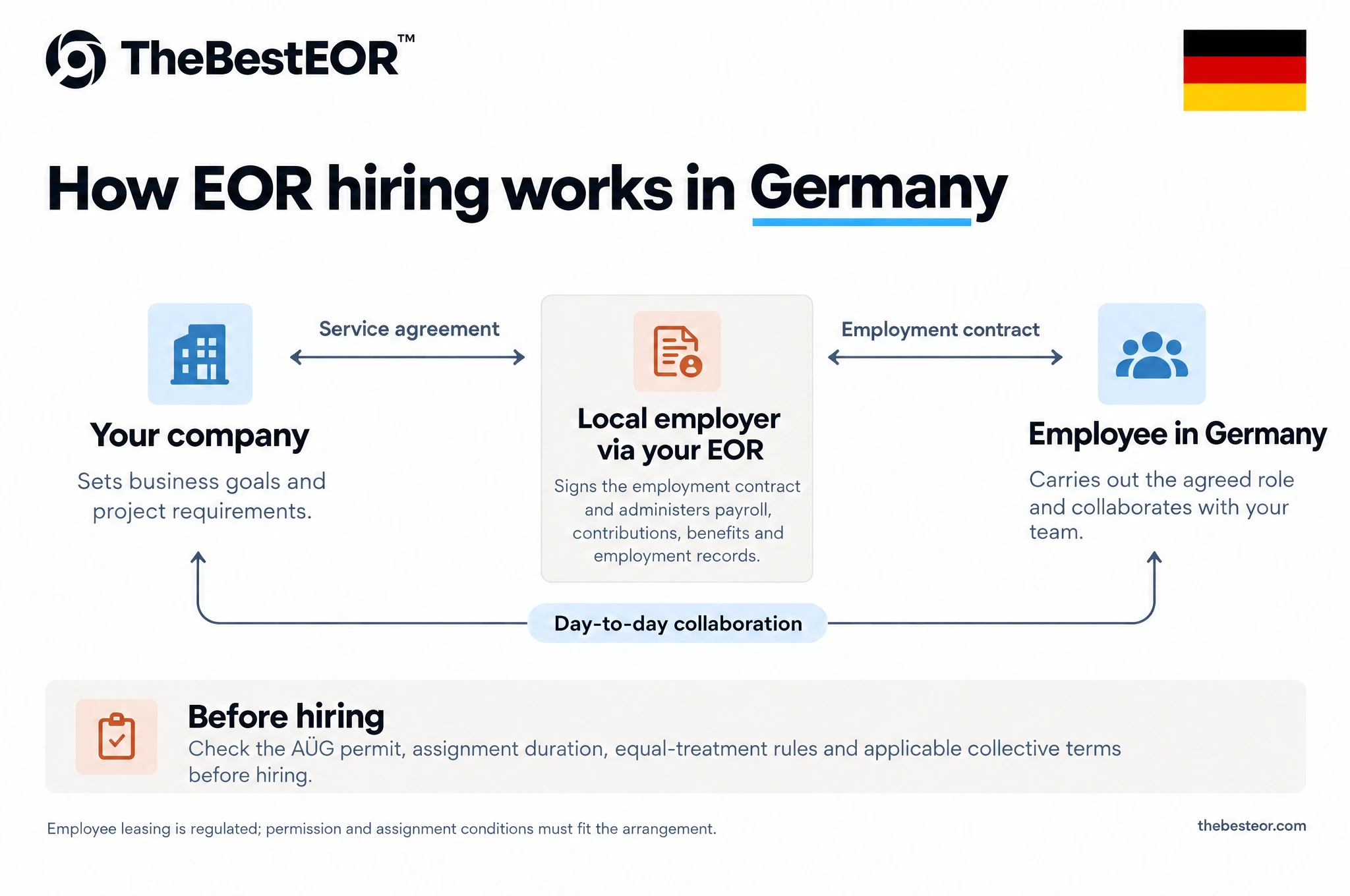
Employer of record in Germany diagram showing the service agreement, employment contract, and day-to-day collaboration between your company and the employee.
Employer of record in Germany: how your company, the local employer and the employee work together. Select the image to enlarge.

The EOR handles

1
The Arbeitsvertrag its German entity signs, and the statutory liability that comes with the signature
2
The AÜG labour-leasing licence on its own entity, or via the confirmed partner entity
3
Registration with a Krankenkasse and remittance of all four social-security branches
4
Lohnsteuer withholding and the annual Lohnsteuerbescheinigung
5
The German employment contract and Nachweisgesetz written particulars
6
Statutory leave, the six weeks of employer-paid sick leave and the payslip
7
Immigration support only where agreed and permitted for the worker’s status and proposed employment
8
Compliant offboarding, BGB §622 notice and the documented dismissal case

You keep

1
What the employee works on each day, and the deliverables you accept
2
The salary, bonus and allowance figures written into the offer
3
Hiring decisions, and the decision to end a role
4
Performance management and the grounds for any exit
5
Laptops and tooling, unless you add a provider’s device service (Rippling offers one)
6
The commercial relationship, and the IP-assignment wording you want mirrored in the German contract

Bogus self-employment (Scheinselbstständigkeit) needs its own review. Engaging a German worker as a freelancer when they work set hours under your direction can lead the Deutsche Rentenversicherung to reclassify them as an employee, which exposes you to up to four years of back social-security contributions, both employer and employee shares, plus penalties and possible criminal liability for the withheld employee contributions. An employment arrangement that meets local requirements can change how the worker is engaged from then on. It does not settle earlier classification liabilities. The misclassification guide covers the criteria German authorities apply. Our employee misclassification calculator lists the facts to collect before a status review.

Work permits

EU Blue Card and work permits

Updated 1 Jan 2026

The academic or qualifying comparable-qualification route at the standard threshold is consent-free; specified reduced-threshold routes and the IT-experience route require BA consent. Assess the complete route and the worker’s existing status before using these figures.

Permit route Salary requirement (2026) Key qualification check Duration BA consent
Permit route
EU Blue Card: standard academic route
Salary requirement (2026)
€50,700/year (€4,225/month)
Key qualification check
Recognised academic or qualifying comparable tertiary qualification; suitable job
Duration
Up to 4 years
BA consent
Not required under §18g(1), first sentence, if all route conditions are met
Permit route
EU Blue Card: reduced threshold
Salary requirement (2026)
€45,934.20/year (€3,827.85/month)
Key qualification check
Specified shortage occupation or qualifying recent graduate; all other conditions apply
Duration
Up to 4 years
BA consent
Required; not available for temporary agency work needing that consent
Permit route
EU Blue Card: IT-experience route
Salary requirement (2026)
€45,934.20/year (€3,827.85/month)
Key qualification check
Qualifying IT work and at least 3 years of relevant experience in the last 7 years, at the required level
Duration
Up to 4 years
BA consent
Required under §18g(2); a higher salary alone does not remove it
Permit route
Other skilled-worker or residence route
Salary requirement (2026)
Check the current route-specific salary and, where applicable, age-45-plus pension conditions
Key qualification check
Qualification, job, existing status and work restrictions depend on the route
Duration
Route-specific
BA consent
Check the actual requirement; §40(1)(2) applies to temporary agency work where residence-title consent is required

Fig. 8 · Selected 2026 Blue Card routes and BA-consent requirements.

Under Residence Act §40(1)(2), BA consent under §39 must be refused where the proposed work is temporary agency work. The BA’s AÜG instructions, section 3.1.1(4), apply this restriction to residence titles requiring its consent. First determine whether the actual arrangement is labour leasing and whether the worker needs such consent.

Section 18g(1) provides a consent-free Blue Card route for qualifying academic or comparable tertiary qualifications at 50% of the annual pension contribution ceiling: €50,700 in 2026. The specified shortage-occupation and recent-graduate routes at 45.3% (€45,934.20) require BA consent. The qualifying IT-experience route under §18g(2) also requires consent, even at the standard salary. These consent-required routes cannot supply the required approval for a temporary-agency-work arrangement covered by §40(1)(2).

Check all route conditions, including qualification or experience, occupation, job suitability and the offer’s minimum six-month duration. The dedicated government Blue Card guidance gives the current criteria. EU/EEA/Swiss nationality or an existing residence status may provide other work rights; check any conditions and employer-change requirements for the actual worker.

Ask the provider to describe its immigration-support service. Obtain a case-specific assessment before signing or fixing the start date.

Salary benchmarks

Indicative salary ranges

Compare annual and monthly gross pay in euros.

Gross annual and monthly in euros with a USD equivalent at roughly $1.15 to the euro. Ranges are 2026 market data from the StepStone Salary Report, Glassdoor and Robert Half; use the midpoint as a starting offer, not a ceiling.

Check current pay data for the role and location before you make an offer.

Role Gross EUR/year USD/year (approx)
Role
Software engineer
Gross EUR/year
€55,000–75,000
USD/year (approx)
$63,250–86,250
Role
Senior software engineer
Gross EUR/year
€75,000–100,000
USD/year (approx)
$86,250–115,000
Role
Product manager
Gross EUR/year
€65,000–90,000
USD/year (approx)
$74,750–103,500
Role
Accountant
Gross EUR/year
€45,000–60,000
USD/year (approx)
$51,750–69,000
Role
Customer support
Gross EUR/year
€35,000–48,000
USD/year (approx)
$40,250–55,200
Role
Sales manager
Gross EUR/year
€60,000–90,000
USD/year (approx)
$69,000–103,500
Role
HR manager
Gross EUR/year
€60,000–85,000
USD/year (approx)
$69,000–97,750
Role
Designer
Gross EUR/year
€48,000–68,000
USD/year (approx)
$55,200–78,200

Fig. 9 · Role salary benchmarks for Germany, 2026 · market ranges from StepStone, Glassdoor and Robert Half

A €55,000 salary exceeds the 2026 standard Blue Card threshold, but eligibility and any exemption from BA consent also depend on other conditions. Check the worker’s qualification, actual route and proposed working arrangement. A lower-paid customer-support or junior role does not automatically qualify for a shortage route or another permit.

Illustrative employment budget

A €5,400 salary example: selected monthly costs

Four employer contributions are shown for a Berlin hire.

This Berlin illustration uses €5,400 gross salary, four selected employer contribution rates and an illustrative $199 service-fee input converted at $1.15 per euro. For a different salary, estimate employer payroll costs in Germany. Confirm the actual employment costs in an itemised quote.

Software engineer, Berlin Gross base: €5,400/month
Gross salary €5,400

Pension employer (9.3%)

Within the €8,450 ceiling
€502

Health employer (~8.75%)

7.3% + employer half of ~2.9% additional
€473

Long-term care (~1.8%)

Employer share; Saxony differs
€97

Unemployment (1.3%)

Within the €8,450 ceiling
€70

Illustrative EOR service-fee input

$199 input at the illustrative $1.15/€ rate ≈ €173
€173

Selected monthly subtotal

Twelve displayed monthly subtotals ≈ €80,580; excludes additional costs
€6,715

Fig. 10 · Selected monthly costs for a €5,400 Berlin salary, using stated 2026 contribution assumptions and an illustrative service fee. Additional costs are excluded.

The four displayed employer contributions sum to €1,142. Each component is rounded to the nearest euro before adding the €5,400 salary and illustrative €173 service fee, producing a displayed subtotal of €6,715 per month, or €80,580 for twelve identical months.

This subtotal excludes applicable employer levies, accident insurance, additional benefits or bonuses, currency charges, setup and immigration costs, and termination-related costs. Actual insurer rates and employment terms may change the calculation. Ask providers to quote the same worker, salary, benefits and service scope, then compare the complete itemised budgets.

EOR vs your own entity

Compare an EOR proposal with the cost of your own GmbH

Budget for capital, payroll and accounting.

Compare both arrangements over the same period and headcount. Include registration, employer readiness, payroll and accounting support, employee costs, service fees, capital requirements and exit obligations. Incorporation and an AÜG licence address different questions; check that the proposed hiring arrangement is legal and compliant before comparing costs.

Factor EOR Your own GmbH
Factor
Setup cost
EOR
Confirm setup and other one-off charges in the proposal
Your own GmbH
€25,000 share capital (€12,500 paid in) + ~€1,000–2,500 notary & registration
Factor
Time to first hire
EOR
Case-specific; employment, onboarding and work-permission requirements must be satisfied
Your own GmbH
3–6 weeks (notary, Handelsregister, bank, tax & social-security registration)
Factor
Per-employee cost
EOR
Salary + applicable employer costs + quoted service fees and extras
Your own GmbH
Salary + applicable employer costs + payroll support and allocated company overhead
Factor
Ongoing admin
EOR
Provider runs payroll, filings & AÜG
Your own GmbH
Tax adviser (Steuerberater), annual accounts, your own payroll & Lohnsteuer
Factor
Compliance liability
EOR
EOR employer duties; client duties may remain
Your own GmbH
On you and the managing director (Geschäftsführer)

There is no universal headcount at which an EOR becomes more expensive. Required share capital is a funding requirement, not the same thing as a professional fee; assess it separately from expenses.

The EOR vs entity guide can help structure the comparison. Obtain current quotes and check that each employment arrangement is legal and compliant. If a company is established later, plan any staff transfer around employment rights, work permission and payroll continuity.

FAQ

EOR in Germany: common questions

Which licence and permit does the arrangement need?

What is the best EOR in Germany?

RemotePeople is the top-rated EOR for Germany in our 2026 ranking (4.9/5), followed by Deel (4.7/5) and Rippling (4.5/5). We opened paid accounts with all 10 providers on this page, priced real hires and ran payroll.

RemotePeople employs German staff through its own licensed entity in Berlin (HRB 221030 B), which holds an AÜG licence in its own name. EOR Global starts at USD 499 per employee per month, and EOR Select at USD 199 where the hire qualifies. Deel starts at USD 599 plus a mandatory Employer Liability Cost; Rippling starts at USD 499 plus its required platform subscription.

How does an employer of record work in Germany?

A German employer of record becomes the worker’s legal employer through its own German entity, while your company directs the day-to-day work. The EOR signs the German employment contract, registers the employee with a statutory health insurer (Krankenkasse), withholds wage tax (Lohnsteuer) and pays the employer’s share of pension, health, long-term care and unemployment insurance.

Where the arrangement counts as labour leasing (Arbeitnehmerüberlassung), the employer needs an AÜG licence, an assignment to the same client is limited to 18 consecutive months by default, and equal-treatment rules apply.

How fast can an EOR onboard an employee in Germany?

Estimated onboarding times for Germany run from 3 to 15 days across the 10 providers we tested. Deel estimates 3 days, Rippling 3–5, G-P 3–7, Multiplier 5–8, RemotePeople 7–12 and Oyster 10–15.

These are not guaranteed start dates and exclude obtaining any new immigration permission.

First confirm that the actual employment arrangement is legal and compliant and the worker may perform the proposed work. Where a residence title requires BA consent, the restriction on temporary agency work must be resolved before an EOR hire can proceed. Agree the documents, permissions and realistic start date for the actual case.

How much does an EOR cost in Germany per month?

Published EOR service fees for Germany run from USD 199 to USD 699 per employee per month across the 10 providers we tested. RemotePeople starts at USD 499 (USD 199 on EOR Select where eligible), Rippling at USD 499 plus its required platform, Deel and G-P at USD 599, and Oyster at USD 699. On top of the fee you pay gross salary plus employer social insurance: the four main branches add about 21% of salary at the selected 2026 rates, before contribution ceilings.

Compare the quoted service fee separately from salary and employment costs. The four-branch contribution example on this page is not a universal 21% rate or a complete employment budget: insurer rates, employer levies, accident insurance, benefits, currency charges and contract terms can affect the total. Ask for a German proposal covering the actual worker, salary, benefits and exit terms. Any refundable deposit is a separate funding requirement, subject to its return terms.

What employer social-security contributions are mandatory in Germany?

The main branches include pension, health, long-term care and unemployment insurance. Apply the worker’s actual insurance status, branch-specific bases and ceilings, insurer-specific health rate and relevant regional treatment. The calculation uses selected rates that sum to 21.15% before caps; it does not include every employer levy or accident-insurance cost.

Does an EOR in Germany need an AÜG licence?

Where the actual arrangement is temporary agency work, an AÜG licence is generally required. Check the contracting employer, the parties’ working practices and any applicable exception.

Obtain current licence evidence for the actual employer where required, and assess immigration separately. Under Residence Act §40(1)(2), BA consent must be refused for temporary agency work where the proposed residence route requires that consent. Consent-free routes and existing work rights need their own case-specific checks.

What is the minimum wage in Germany in 2026?

13.90 euros per hour, in force from 1 January 2026, up from 12.82 euros in 2025. It rises again to 14.60 euros on 1 January 2027 under the Minimum Wage Commission decision. The statutory minimum applies nationwide; many sectors set higher floors through collective agreements (Tarifverträge).

How much notice applies when terminating in Germany?

Under section 622 of the Civil Code (BGB), notice during probation is two weeks and the base period is four weeks to the fifteenth or the end of a month. Employer notice then lengthens with tenure: one month at two years, two months at five, three at eight, rising to seven months after twenty years. Dismissals at firms with more than ten staff also need a valid social reason under the Dismissal Protection Act.

Is there statutory severance pay in Germany?

There is no automatic statutory severance for an ordinary dismissal. Severance arises in practice through a settlement (Abfindung) to avoid an unfair-dismissal claim, and the courtroom benchmark is half a month of gross pay per year of service. A three-year employee on 6,000 euros a month would typically settle at about 9,000 euros, plus the paid-out notice period, which the EOR negotiates and processes.

What currency and payroll cycle does Germany use?

Germany uses the euro. Payroll commonly runs monthly, but salary dates and provider funding deadlines should be agreed. Wage tax is generally reported and paid by the tenth day after the applicable reporting period, normally monthly with statutory quarterly or annual cases. Wage-based social contributions are normally estimated and paid by the third-last bank working day of the current month, with a remaining balance due the following month; the contribution statement is due earlier. Use the employer’s actual filing period and current official calendar. Contractual or collective-agreement bonuses require separate payroll treatment.

Can I convert a German contractor to an EOR employee?

A move to employment may be possible after reviewing the classification and proposed arrangement. A German freelancer who works set hours under your direction can be reclassified by the Deutsche Rentenversicherung, exposing you to up to four years of back social-security contributions plus penalties. Do not assume a one-to-two-week conversion where new immigration permission is needed. Any earlier classification and contribution issues require separate assessment.

Do I need a GmbH to hire one person in Germany?

You may be able to hire without forming a GmbH. A GmbH needs 25,000 euros of share capital with at least 12,500 euros paid in, mandatory notarisation, and three to six weeks to register. There is no universal headcount at which an EOR becomes more expensive. Compare written EOR proposals with setup costs, required capital, payroll and accounting support, ongoing company overhead, employee costs and exit obligations over the same time horizon.

How long does an EU Blue Card take in Germany?

Timing depends on the case, documents and responsible authorities. Check the current appointment and processing position before agreeing a start date; a provider’s payroll estimate is not a Blue Card timeline.

Eligibility comes first. Under §18g(1), the qualifying academic or comparable-qualification route at €50,700 gross a year in 2026 does not require BA consent. Specified reduced-threshold routes at €45,934.20 and the qualifying IT-experience route require consent. Where the arrangement is temporary agency work, §40(1)(2) prevents the required consent.

Confirm the actual route, existing work rights, qualifications and employer before proceeding. Use the current government Blue Card guidance and obtain case-specific advice.

Sources and as-of dates

Article references

Sources below identify the relevant rule or collecting body. The payroll-deadline and cost-scope sources were checked on 23 September 2026.

Hiring facts Checked 2 Oct 2026

Hiring facts

Checked 2 October 2026
Eligibility, local and collective rules apply. EOR fees extra.

Social-security rates 2026 5 sources

2026 general rates: pension 18.6% (employer 9.3%); unemployment 2.6% (employer 1.3%); statutory health insurance 14.6% plus a fund-specific additional contribution, with a 2026 average of 2.9%, shared equally. The employer long-term care share is 1.8%, or 1.3% in Saxony. These are the standard rates for ordinary insured employment; special contribution rules can apply.

Contribution ceilings 2026 (Beitragsbemessungsgrenze) 2 sources

Effective 1 January 2026: general pension and unemployment contribution ceiling €8,450/month (€101,400/year); health and long-term care ceiling €5,812.50/month (€69,750/year). The ordinary annual earnings threshold for exemption from compulsory statutory health insurance is €77,400; a special €69,750 threshold applies to qualifying employees privately insured on 31 December 2002.

AÜG and actual working arrangements 4 sources

BA Fachliche Weisungen AÜG, cited edition 22 May 2026, valid from 1 July 2026: section 1.3 on actual circumstances and section 3.1.1(4), page 57, on immigration consent. Accessed 23 September 2026. The underlying rules are directly set out in AÜG §12(1) and Residence Act §40(1)(2); BMAS explains the labour-leasing test.

Residence Act §40(1)(2) 3 sources

Residence Act §40(1)(2): BA consent under §39 must be refused for temporary agency work. This is a consent rule, not a blanket prohibition on every foreign worker or EOR arrangement. The route-specific requirements in §18g must also be met. Accessed 23 September 2026.

Notice periods 1 source

German Civil Code (BGB) §622: basic notice is four weeks to the 15th or end of a calendar month; employer notice increases with tenure to seven months at 20 years. During an agreed probation period of no more than six months, notice is two weeks. Collective agreements and permitted contractual rules can alter these defaults.

Dismissal protection 3 sources

General dismissal protection under the Kündigungsschutzgesetz normally applies after more than six months’ service in establishments with more than ten counted employees; part-time weighting and pre-2004 transitional rules matter. Section 1a provides severance of 0.5 month’s earnings per year for a specific redundancy procedure where the employer offers it in the notice and the employee lets the challenge period expire.

Leave and working time 4 sources

Statutory annual leave is equivalent to 20 days on a five-day week. The normal working-day limit is eight hours, extendable to ten if the average remains eight over six calendar months or 24 weeks. Eligible employees generally receive up to six weeks of employer-paid sickness absence after four weeks’ continuous employment. Statutory Krankengeld is then normally 70% of contributory gross pay, capped at 90% of net; the maximum for the same illness is 78 weeks within three years, including the employer-paid period.

Minimum wage 1 source

Statutory minimum wage: €13.90 gross/hour from 1 January 2026, rising to €14.60 on 1 January 2027.

EU Blue Card routes and 2026 thresholds 2 sources

Residence Act §18g and government Blue Card requirements. Standard qualifying academic/comparable route: €50,700 gross/year without BA consent; specified reduced-threshold routes: €45,934.20 gross/year with consent. The qualifying IT-experience route also requires consent. The qualification or experience, suitable job and other route conditions must be satisfied. Accessed 23 September 2026.

Income tax (Lohnsteuer) 4 sources

Income tax is progressive, with upper marginal rates of 42% and 45%. Employers calculate wage-tax withholding using the employee’s tax class and other ELStAM details. Solidarity surcharge applies subject to its exemption thresholds; church tax applies where the employee is liable. Monthly withholding is common, but other payroll periods are recognised.

GmbH formation 2 sources

A GmbH needs €25,000 share capital; for a standard cash formation, at least €12,500 must be paid before registration. The formation documents require notarisation and Handelsregister registration. A one-person UG can start with €1 of fully paid cash capital. The 3–6-week timing and approximately €1,000–2,500 fee range are planning estimates, not fixed statutory requirements; obtain case-specific timing and fees.

Salary benchmarks 2 sources

Salary context: Stepstone Salary Report 2026 methodology and Robert Half Germany’s software-engineer benchmarks. These datasets are not directly interchangeable: Stepstone generally reports 2025 total-pay levels, while Robert Half reports starting base salaries. USD equivalents use an illustrative rate of US$1.15 per €1.

Provider pricing, entity model and onboarding 10 sources

Wage-tax reporting and payment 1 source

Income Tax Act §41a(1)–(2): wage-tax reporting and payment are due by the tenth day after the applicable reporting period, with statutory monthly, quarterly and annual cases. Checked 23 September 2026.

Social-contribution calendar 2 sources

Variable employer-cost assumptions 3 sources

Assignment limits, equal treatment and written-form rules Checked 19 Oct 2026

AÜG section 1: assignment rules — Default 18-month assignment limit, prior assignments and qualifying collective deviations; actual integration and instructions. Checked 19 October 2026.

AÜG section 8: equal treatment — Equal treatment default, collective-agreement pay deviations, nine-month and qualifying 15-month rules; prior assignment counting. Checked 19 October 2026.

Nachweisgesetz section 2: employment particulars — Current conditional text-form/electronic-transmission route, employee paper-copy entitlement and sector exceptions. Checked 19 October 2026.

BGB section 623: termination form — Dismissal and mutual termination require statutory written form; electronic form is excluded. Checked 19 October 2026.

To expand your shortlist, browse EOR providers for Germany. Once you have proposals, enter the recurring amounts in USD in the EOR cost calculator. The country guides cover other hiring markets.

This guide is for general information only and does not provide legal, tax, accounting, or financial advice. For advice about your business, consult a qualified professional familiar with the rules where you hire. The research methodology explains how TheBestEOR assesses sources.