


Guide overview
EOR benefits, at a glance.
Compare actual employee cover, eligibility, cost and continuity.
Compare both statutory administration and supplementary benefits using the actual country, employee eligibility and policy terms. Ask for evidence of enrolment, itemized premiums and administration charges, cover dates, exclusions and claims support. When switching EORs, confirm replacement cover and arrangements for waiting periods and open claims, and keep the employee informed throughout.
Eligibility
Check the employee
Confirm the country, employee conditions and policy terms.
Enrolment
Ask for evidence
Record when cover starts and proof of enrolment.
Premiums
Itemise the quote
Separate premiums from administration charges.
Switching
Plan continuity
Check replacement cover, waiting periods and open claims.
Check before acting
Compare policy terms, exclusions and claims support rather than benefit names, and keep the employee informed.
What to record in the worksheet
Scope
Benefit / plan · Eligibility and dependants · Network / exclusions
Evidence and follow-up
Waiting period / cover start · Premium / employee share · Separate administration · Claims / support · Evidence / open condition
An employer of record (EOR) administers the benefits required for that employee under local rules. You may also be able to buy supplementary cover. For budgeting, keep employer contributions, insurance premiums and any administration charges separate from the EOR service fee.
1. Who owns the benefits plan
Ask who holds each policy or sponsors each scheme. The same employee’s health cover, pension and meal benefits can sit with different organizations. For each one, identify the employer, insurer and administrator. Then establish what your company can choose or change within its budget.
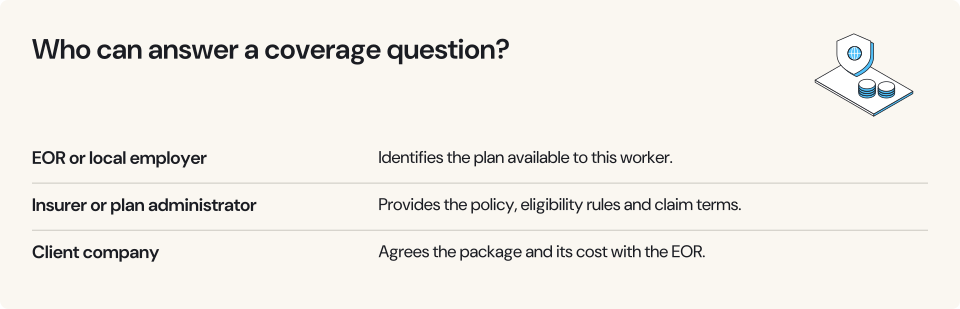
A pooled master plan can cover employees of several clients. A client-specific plan may give you a choice of cover levels or contribution rates. Ask for the policyholder, insurer and eligibility terms before drawing conclusions about price or flexibility.
Who holds the policy also depends on the provider’s structure. Owned-entity providers can hold group policies directly. Deel, for example, advertises own-entity coverage in 130+ countries, but confirm the actual employer and policyholder for your country. Partner-network providers such as RemoFirst typically attach your hires to the local partner’s existing plans or sell a global product on top (RemoHealth, from $55 per person per month). Both models need country-specific policy checks; compare the actual choices, eligibility and continuity terms.
Compare benefits by cover, not by plan name
Ask for policy documents and written answers for the named employee and country.
| Compare | Ask for | Resolve before enrollment |
|---|---|---|
Compare
Eligibility
|
Ask for
Employee and dependant eligibility, underwriting and exclusions.
|
Resolve before enrollment
Who will actually be covered.
|
Compare
Dates
|
Ask for
Enrollment deadline, effective date, waiting period and end date.
|
Resolve before enrollment
Any gap between old and new cover.
|
Compare
Usable care
|
Ask for
Hospital network, medicines, excesses and annual limits.
|
Resolve before enrollment
Whether the employee can continue current treatment.
|
Compare
Real cost
|
Ask for
Premium, employee contribution, taxes and administration charges.
|
Resolve before enrollment
Compare equivalent benefits and keep unknown fees unresolved.
|
Compare
Open claims
|
Ask for
Rules for ongoing treatment, disability and claims after departure.
|
Resolve before enrollment
Which insurer remains responsible and what approvals are needed.
|
Compare
Retirement and tenure
|
Ask for
Scheme details, account access and treatment of prior service.
|
Resolve before enrollment
Which rights persist and which require a formal transition arrangement.
|
The same premium can buy different cover. Before ending a plan, get written confirmation of what carries over for this employee under the policy and local law.
Confirm the coverage end date and treatment of ongoing claims.
Confirm the actual coverage start date and any waiting periods.
Agree continuity and claims arrangements; a claim need not be closed to be managed.
Explain confirmed dates, unresolved points and any employee actions early.
Suggested benefits transition sequence.
2. The statutory layer: what the law requires
Local law and applicable collective agreements establish statutory requirements. Providers still differ in how they administer, document and deliver those obligations.
Budget statutory employer obligations separately from gross salary. Check how the EOR invoices each item and whether it adds a disclosed administration charge or markup. The EOR cost guide explains which cost categories to confirm for your country.
3. Supplementary benefits: options to check locally
Assess supplementary cover against the role, location, employee needs and actual policy.
Obtain the policy, enrollment window and confirmed cover date before making an offer. The leave, sick days, and PTO guide separates statutory minima from illustrative additional offers.
4. Statutory vs supplementary benefits in 8 countries
| Country | Statutory contribution, pay or benefit obligation (coverage conditions apply) | Supplementary options to investigate; not a market benchmark |
|---|---|---|
Country
Germany
|
Statutory contribution, pay or benefit obligation (coverage conditions apply)
Health: 7.3% + half of insurer add-on (avg 2.9% in 2026); pension, unemployment, care insurance
|
Supplementary options to investigate; not a market benchmark
bAV pension conversion with 15% employer top-up where it saves the employer social-security contributions
|
Country
UK
|
Statutory contribution, pay or benefit obligation (coverage conditions apply)
Auto-enrolment: 8% total, employer min 3%, on £6,240–£50,270 (2025/26 and 2026/27)
|
Supplementary options to investigate; not a market benchmark
Private medical insurance; pension match above 3%
|
Country
France
|
Statutory contribution, pay or benefit obligation (coverage conditions apply)
Mutuelle, employer pays ≥50%; prévoyance for cadres at 1.5% of capped salary
|
Supplementary options to investigate; not a market benchmark
Family-level mutuelle upgrades; meal vouchers
|
Country
Netherlands
|
Statutory contribution, pay or benefit obligation (coverage conditions apply)
8% holiday allowance; 6.10% Zvw levy up to €79,409 (2026); sector pension where mandated
|
Supplementary options to investigate; not a market benchmark
Pension above sector minimum; commuting allowance
|
Country
Brazil
|
Statutory contribution, pay or benefit obligation (coverage conditions apply)
13th salary; FGTS 8%; vale-transporte beyond 6% employee share
|
Supplementary options to investigate; not a market benchmark
Health plan; meal or food card
|
Country
India
|
Statutory contribution, pay or benefit obligation (coverage conditions apply)
EPF: confirm covered wages, membership and current scheme ceiling. Gratuity: confirm service and worker category, current statutory wages, formula and cap; direct fixed-term employment and contract labour need separate checks.
|
Supplementary options to investigate; not a market benchmark
Family group medical cover: verify actual eligibility, policy and local offer evidence
|
Country
Canada
|
Statutory contribution, pay or benefit obligation (coverage conditions apply)
Outside Quebec: employer CPP 5.95% on pensionable earnings between C$3,500 and C$74,600, plus CPP2 4% on C$74,600–C$85,000 (2026); EI premiums and eligibility rules apply. Quebec has QPP and separate rates.
|
Supplementary options to investigate; not a market benchmark
Extended health and dental: assess actual public-cover gaps and policy options
|
Country
Australia
|
Statutory contribution, pay or benefit obligation (coverage conditions apply)
Super guarantee 12%; from 1 July 2026, use qualifying earnings (QE) and Payday Super timing, subject to coverage, caps and permitted exceptions.
|
Supplementary options to investigate; not a market benchmark
Salary packaging; health allowances in senior offers
|
Fig. 1 · Statutory employer obligations and illustrative supplementary options across 8 countries · selected 2026 rates; see each row’s effective date and coverage conditions
5. How much you can customize, by provider and country
Obtain the current country-specific insurer, policy and quote from Deel or any other provider. For RemoHealth, verify the actual product, country policy, medical/dental/vision scope, employee eligibility and bundled price. For Oyster or Papaya Global, identify the actual employer, broker, insurer and policyholder in your quote. If a local partner supplies the plan, apply the partner-plan checks from section 1.
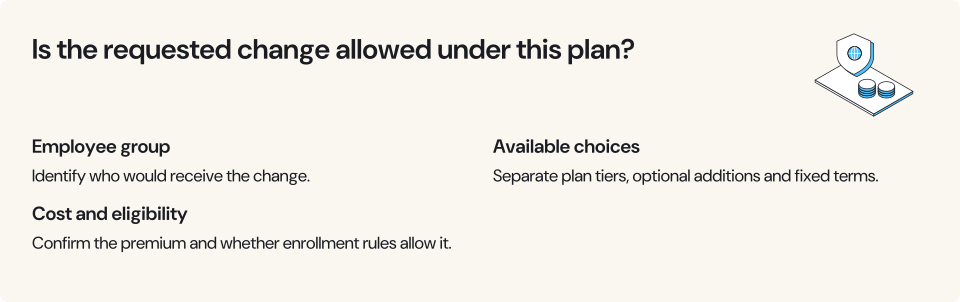
Separate these questions for the actual country and employee:
6. The markup: how EORs price supplementary plans
Ask for the insurer’s premium first. If the EOR adds a fixed fee or a percentage, find out which services that charge buys. For a packaged offer such as RemoHealth, get a local broker to quote the same cover and compare the total price per person.
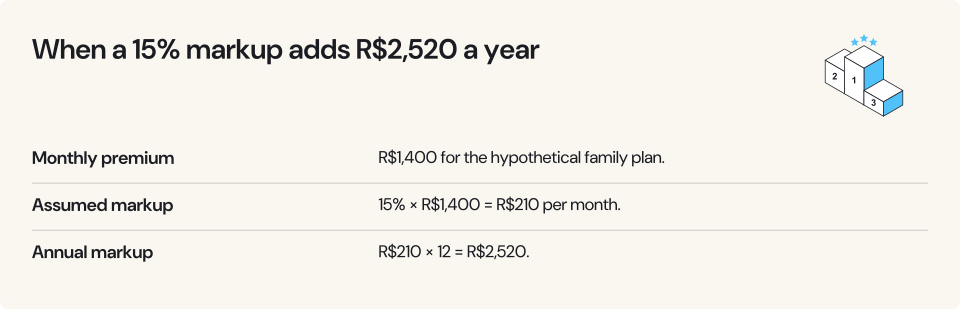
For a hypothetical R$1,400 monthly family plan, an assumed 15% markup adds R$210 a month, or R$2,520 a year on top of the EOR fee. Check whether the actual quote has that charge and shows it separately.
Negotiate the markup before you sign. Ask for the insurer premium, the administration charging basis (fixed, percentage-based, bundled or included) and supporting itemization where available. Record any agreed pricing disclosure and administration charge in the contract.
7. Which benefits carry over to a new EOR
Check continuity and registration even where existing rights or balances remain with the employee. Social-insurance contributions sit in government systems under the employee’s own ID, and a UK auto-enrolment pot stays invested in the pension scheme whoever employs them next. A Brazilian FGTS account is a state fund in the worker’s name.
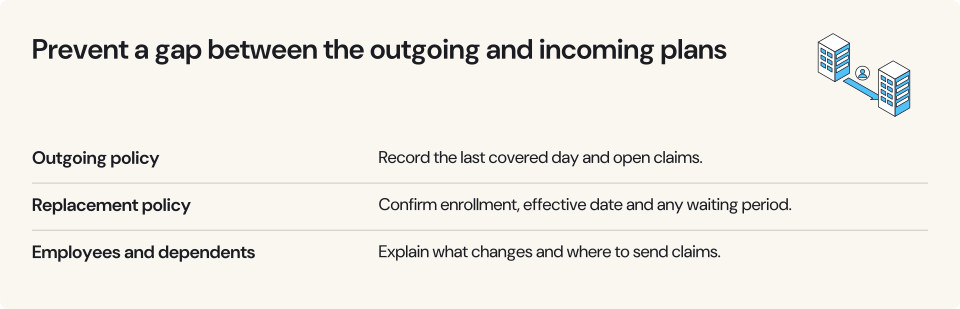
Ask who holds the old policy, when it ends and whether the employee can continue or transfer their cover. A new plan can bring a different insurer, waiting period or level of cover. If an employee in Brazil uses a particular hospital, check that hospital against the new plan’s network before agreeing the switch.
Indian gratuity and open claims. For covered permanent employees in India, gratuity generally requires five years of continuous service, with statutory exceptions such as death or disablement. Direct fixed-term employment has separate conditions; confirm the worker’s actual category and service under the operative Code. Before changing EOR, confirm how local law and the transfer terms treat prior service and any gratuity liability. Obtain the agreed continuity and payment arrangements in writing. For an open sickness or disability claim, obtain written confirmation of which insurer remains responsible, any continuing eligibility conditions and how the transition affects the claim.
When you switch EOR providers, allow time for the insurer to confirm enrolment before you set an end date for the old cover.
Plan continuity around confirmed cover dates
Suppose the old policy ends on 30 June and enrolment documents for a proposed 1 July start are due by 20 June. Sending the forms is only the first step. Get the insurer’s acceptance and check waiting periods, ongoing treatment, dependants and open claims. If acceptance is late, agree how to cover the gap and record that agreement before the old policy ends.
8. Nine questions to put in writing before you sign
Send these with your RFP for each country and ask for written answers, which can become contract exhibits.
If the price or the last day of cover is still unclear, hold approval. Ask the provider to name who will answer, give a date and point you to the clause that applies.
Give the employee a plain-language benefit summary
Tell employees when they qualify, how much they pay and when their cover begins. Explain what the policy covers or excludes, how to enrol or make a claim, and whom to contact. Link to the policy. If an eligibility decision or start date is pending, tell the employee who will update them and when.
Download the employee benefits comparison worksheet
Request the actual plan documents and compare eligibility, dependants, network, exclusions, waiting periods, premiums and employee contributions. Keep a separate administration fee outside the insurance premium. Record the cover start and any item still awaiting written confirmation.
| The working record | Fields to complete |
|---|---|
The working record
Scope
|
Fields to complete
Benefit / plan · Eligibility and dependants · Network / exclusions
|
The working record
Evidence and follow-up
|
Fields to complete
Waiting period / cover start · Premium / employee share · Separate administration · Claims / support · Evidence / open condition
|
9. Frequently asked questions
Can I bring my own benefits broker or plan to an EOR?
Do statutory benefits cost extra on top of the EOR fee?
How do I find out the markup on supplementary plans?
What happens to health cover when I switch EOR providers?
The old policy’s end date and any continuation rights depend on the plan and local law; obtain written confirmation. The new EOR’s plan can bring new waiting periods and different cover levels. Time the cut-over so there is no coverage gap, and resolve responsibility for any open claim before switching.
Are EOR group plans worse than what a local employer offers?
Compare the actual policy and price. A master plan pools the EOR’s client employees in a country, but the size of the pool and its pricing depend on the policy. The trade-off is that you pick from the EOR’s insurer panel and tiers instead of designing your own plan. Obtain comparable local quotes when reviewing the package, including cover, eligibility and administration costs.
10. Sources
The sources behind this guide, grouped by topic. Dates show when we last checked a page. Prices and terms change, so confirm them in your quote.
Benefit mandates by country
11 sourcesBrazil · Ministry of Labour
Brazil · Planalto
The 13th salary.
Brazil · Planalto
The FGTS severance fund and its 8% monthly deposit.
France · Service Public
Employer obligations for complementary health cover
Under the ANI, in force since 2016.
France · uimm.lafabriquedelavenir.fr
ANI of 17 November 2017 on cadre prévoyance
Cadre prévoyance contribution and priority for death benefits. Checked 15 Oct 2026
Germany · gesetze-im-internet.de
15% employer top-up on bAV salary conversion, to the extent it saves the employer social-security contributions.
India · Ministry of Labour & Employment
India · Press Information Bureau (PIB)
The four Labour Codes, including the Code on Social Security, 2020
The codes are in force from 21 November 2025. Worker-specific gratuity eligibility requires the operative rules. Checked Sep 2026
India · Ministry of Labour & Employment
FAQ of 16 March 2026 on revised wages and fixed-term employment versus contract labour
Checked 7 Oct 2026
Netherlands · Business.gov.nl
United States · Department of Labor (DOL)
Used in the benefits example. Checked 3 Oct 2026
Contribution rates and thresholds
10 sourcesAustralia · ATO
Australia · ATO
Qualifying earnings and contribution timing from 1 July 2026. Checked 15 Oct 2026
Canada · CRA
Canada · CRA
2026 CPP/CPP2 earnings bands and contributions, outside Quebec
Checked 15 Oct 2026
Germany · Federal Ministry of Health
Statutory health insurance contribution rates and average additional contribution, 2026
India · EPFO
Provident fund coverage, eligible wages and contribution rules
India · Press Information Bureau (PIB)
EPF release of 23 September 2026
States a ₹25,000 monthly coverage and contribution ceiling, citing the 17 September Gazette, subject to scheme and eligibility conditions. Verify how the change applies to each employee. Checked 15 Oct 2026
Netherlands · Belastingdienst
Zvw employer levy percentage and maximum contribution base, 2026
United Kingdom · The Pensions Regulator
Auto-enrolment earnings thresholds
Thresholds for 2025/26 and 2026/27.
United Kingdom · The Pensions Regulator
Used in the benefits example. Checked 3 Oct 2026
Provider benefits and pricing
3 sourcesDeel
Published EOR coverage: full legal employment in 130+ countries.
Oyster
Supplementary packages are brokered through partner insurers.
RemoFirst
RemoHealth from $55 per person per month.
If you spot a changed price or a conflicting source, send it through the contact page and we’ll review it.
This guide is for general information only and does not provide legal, tax, accounting, or financial advice. For advice about your business, consult a qualified professional familiar with the rules where you hire. Read our research methodology to learn how we assess sources.